 June 2025 in “Rapid Communications in Mass Spectrometry”
 The new method improves protein extraction and analysis in hair, aiding biomedical and forensic work.
January 2026 in “Colloids and Surfaces B Biointerfaces” A silicone treatment makes damaged hair more water-resistant and stronger.
 June 2024 in “International journal of biological macromolecules”
 The hydrogel effectively stops bleeding and heals diabetic wounds quickly.
September 2016 in “Toxicology letters” The 5050 MHA42MCS45 hydrogel blend is suitable for repairing load-bearing soft tissues.

Chirality influences the structure, strength, and biological uses of peptide-based hydrogels.
2 citations
,
July 1999 in “JEADV. Journal of the European Academy of Dermatology and Venereology/Journal of the European Academy of Dermatology and Venereology” Proteolytic enzymes damaged hair follicle stem cells in transgenic mice.
16 citations
,
June 1992 in “Journal of Investigative Dermatology” Using enzymes to link proteins makes hair repair treatments more effective and long-lasting.

The hydrogel platform speeds up healing in diabetic wounds.
 August 2024 in “Clinical Cosmetic and Investigational Dermatology”
 Enzyme injections can effectively treat epidermoid cysts without surgery.
 4 citations
,
January 2007 in “Sen'i Gakkaishi”
4 citations
,
January 2007 in “Sen'i Gakkaishi” Permed hair degrades faster and shows more damage after protease treatment compared to untreated hair.
 March 2026 in “Preprints.org”
 Chirality affects the structure, strength, and function of peptide-based hydrogels.
May 2026 in “European Cells and Materials” The new delivery system improves Alzheimer's symptoms by releasing Huperzine A slowly and effectively.
 29 citations
,
August 2005 in “Biopolymers”
29 citations
,
August 2005 in “Biopolymers” L-cysteine slows down the breaking of bonds in hair due to electrostatic interactions.
 January 2024 in “Authorea (Authorea)”
 Using laccase to add poly(tyrosine) to wool makes it less likely to shrink and stronger.
5 citations
,
January 2017 in “Chalmers Publication Library (Chalmers University of Technology)” Cubosomes enhance antimicrobial peptide stability and effectiveness.
 January 2013 in “Sen'i Gakkaishi”
 Microfibrils are key for permanent waves, and hydrolyzed keratin improves wave formation and hair condition.
10 citations
,
January 1994 Hair can be straightened using different chemicals, not just strong alkali.
 June 2025 in “Asia-Pacific Journal of Molecular Biology and Biotechnology”
 Papain from papaya may help treat cardiovascular diseases by breaking down fibrin.
165 citations
,
May 2023 in “Science Advances” The hydrogel speeds up healing of infected wounds by providing oxygen and fighting bacteria.
May 2010 in “Europe PMC (PubMed Central)” Near-infrared probes can safely and effectively image cysteine protease activity for disease diagnosis.
 4 citations
,
August 2014 in “Journal of molecular structure”
4 citations
,
August 2014 in “Journal of molecular structure” Chemical treatments on bleached black hair change its internal structure by breaking and reforming bonds, and treatments with hydrolyzed eggwhite protein help repair it.
 3 citations
,
January 2007 in “Journal of health science”
3 citations
,
January 2007 in “Journal of health science” The enzymatic method can effectively identify chemical treatments on hair.
9 citations
,
April 1970 in “Biochemical pharmacology” Stilbamidine and hydroxystilbamidine inhibit enzyme release from lysosomes and have effects similar to cortisol and chloroquine.
135 citations
,
October 1997 in “Journal of biological chemistry/The Journal of biological chemistry” Trichohyalin is modified by enzymes to form strong structures in hair cells.
 18 citations
,
February 2015 in “Acta Crystallographica Section D: Structural Biology”
18 citations
,
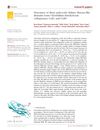
February 2015 in “Acta Crystallographica Section D: Structural Biology” The study concludes that certain domains in Clostridium histolyticum enzymes are structurally unique, bind calcium to become more stable, and play distinct roles in breaking down collagen, with potential applications in medicine and drug delivery.
January 2000 in “Zhongguo yixue wulixue zazhi” Different human hair keratin types have unique structures that affect how they dissolve and can be used to create self-tendons.
3 citations
,
January 2002 in “Springer eBooks” Alkaline hair relaxers damage hair, but cationic and non-ionic polymers can help reduce this damage.
 April 2026 in “Lithuanian University of Health Sciences”
 Cinnamic acid in hydrogels can effectively fight fungi but spreads less than in solution.
 47 citations
,
January 2017 in “RSC Advances”
47 citations
,
January 2017 in “RSC Advances” Keratin peptides can change hair shape gently without harsh chemicals.