31 citations
,
July 2023 in “Nutrients” Vitamin D may help reduce thyroid antibodies and improve thyroid function in Hashimoto's Thyroiditis.
3 citations
,
August 2025 in “International Journal of Molecular Sciences” Women with PCOS have higher levels of thyroid autoantibodies.
 2 citations
,
May 2023 in “Current Nutrition Reports”
2 citations
,
May 2023 in “Current Nutrition Reports” Eating a Mediterranean diet and taking certain supplements may improve symptoms of PCOS.
 2 citations
,
February 2023 in “BMC women's health”
2 citations
,
February 2023 in “BMC women's health” Birth control pills change the activity of certain inflammation and blood clotting genes in women with PCOS.
 2 citations
,
January 2018 in “Open Journal of Obstetrics and Gynecology”
2 citations
,
January 2018 in “Open Journal of Obstetrics and Gynecology” A significant number of Nigerian women struggling with infertility have Polycystic Ovary Syndrome, with the exact percentage varying based on the diagnostic criteria used.
 1 citations
,
July 2023 in “Frontiers in Immunology”
1 citations
,
July 2023 in “Frontiers in Immunology” Oxidative stress and immune dysfunction are linked to both Hashimoto's thyroiditis and polycystic ovary syndrome, with diet and specific treatments important for managing these conditions.
 April 2022 in “Medicina estética”
 Minoxidil is the only FDA-approved treatment for female hair loss, with other potential treatments needing more research for effectiveness.
 14 citations
,
January 1990 in “Fertility and Sterility”
14 citations
,
January 1990 in “Fertility and Sterility” Some patients with high prolactin levels don't show symptoms because they have a form of the hormone that's less active.
 June 1995 in “International Journal of Gynecology & Obstetrics”
 Cabergoline is more effective and has fewer side effects than bromocriptine for treating women with hyperprolactinemic amenorrhea.
 May 2025 in “Clinical Endocrinology”
 Metformin lowers prolactin in men with normal hair but not in those with early hair loss.
 December 2021 in “International Journal of Biomedicine”
 Hyperprolactinemia should be treated before confirming a PCOS diagnosis.
 February 2021 in “Facta Universitatis”
 Too much prolactin can cause menstrual problems, infertility, and sexual issues in women.
 11 citations
,
February 2013 in “Clinical Endocrinology”
11 citations
,
February 2013 in “Clinical Endocrinology” A small number of premenopausal female blood donors had high prolactin levels, often due to stress, and retesting is recommended to prevent misdiagnosis.
11 citations
,
March 1991 in “PubMed” Hormonal imbalances, including high prolactin and thyroid issues, contribute to hair growth problems in women.
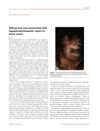 2 citations
,
February 2014 in “Journal of the European Academy of Dermatology and Venereology”
2 citations
,
February 2014 in “Journal of the European Academy of Dermatology and Venereology” High levels of prolactin in the blood can be linked to widespread hair loss.
2 citations
,
January 1989 in “PubMed” Hypothyroidism and hyperprolactinemia may cause hair loss in women.
1 citations
,
July 2024 in “Journal of Medical and Life Science” Hormones, genes, and oxidative stress interact to cause hirsutism and PCOS.
 1 citations
,
January 2021 in “Acta dermatovenerologica Alpina, Pannonica et Adriatica (Tiskana izd.)”
1 citations
,
January 2021 in “Acta dermatovenerologica Alpina, Pannonica et Adriatica (Tiskana izd.)” High prolactin levels might be linked to hair loss in autoimmune thyroid disease, but more research is needed.
 November 2023 in “Manuju”
 Treating hyperprolactinemia can help manage PCOS symptoms.
 April 2022 in “PANACEA JOURNAL OF MEDICAL SCIENCES”
 People with both obvious and not-so-obvious underactive thyroid issues often have higher levels of the hormone prolactin.
 January 2020 in “Nihon rinsho hifukaikai zasshi”
 A woman's temporary hair loss was caused by high prolactin levels from her medication.
Letrozole combined with Cabergoline improves ovulation and pregnancy rates in women with PCOS and high prolactin levels compared to Letrozole alone.
 1540 citations
,
October 2008 in “Fertility and Sterility”
1540 citations
,
October 2008 in “Fertility and Sterility” The report concludes that PCOS is mainly a condition of excess male hormones and its definition may change as new information is discovered.
 78 citations
,
November 2008 in “Fertility and Sterility”
78 citations
,
November 2008 in “Fertility and Sterility” Amenorrhea is relatively rare and initial testing should check FSH, TSH, and prolactin levels.
 38 citations
,
October 2006 in “Fertility and Sterility”
38 citations
,
October 2006 in “Fertility and Sterility” The document concludes that identifying the cause of amenorrhea is crucial for proper treatment.
 35 citations
,
March 2012 in “Experimental and Clinical Endocrinology & Diabetes”
35 citations
,
March 2012 in “Experimental and Clinical Endocrinology & Diabetes” The conclusion is that accurately identifying the cause of high androgen levels in women with PCOS is crucial and requires specific tests.
 30 citations
,
July 2004 in “Fertility and Sterility”
30 citations
,
July 2004 in “Fertility and Sterility” Amenorrhea is when a woman doesn't have periods, with primary amenorrhea starting by age 15 or within five years of breast development, and secondary amenorrhea when periods stop for three months. It affects 3-4% of women not pregnant, breastfeeding, or in menopause, mainly due to polycystic ovary syndrome, hypothalamic amenorrhea, hyperprolactinemia, and ovarian failure.
 21 citations
,
September 2004 in “Fertility and Sterility”
21 citations
,
September 2004 in “Fertility and Sterility” Amenorrhea, or the absence of periods, should be evaluated by age 15 or within five years of early breast development, and is most commonly caused by conditions like polycystic ovary syndrome and hypothalamic amenorrhea.
4 citations
,
April 2024 in “Women s Health Reports” PCOS is common among female health science students, linked to hormonal issues and family history, and early diagnosis is important.
 March 2026 in “Nutrients”
 Vitamin D is needed for metformin to lower prolactin effectively.