3 citations
,
March 2016 in “Experimental Dermatology” A mutation in the hairless gene speeds up severe itchy skin in mice on a special diet.
 39 citations
,
April 2020 in “IntechOpen eBooks”
39 citations
,
April 2020 in “IntechOpen eBooks” Drug repurposing is a cost-effective way to find new uses for existing drugs, speeding up treatment development.
 1 citations
,
November 2015 in “Hair transplant forum international”
1 citations
,
November 2015 in “Hair transplant forum international” Dr. Rassman believes hair restoration surgery will significantly improve in the future.
January 2026 in “Advanced Healthcare Materials” The new bioreactor improves skin grafts by evenly stretching cells and monitoring conditions for better growth.
 October 2023 in “IBRO neuroscience reports”
 Rat hair follicle stem cells have functional oxytocin receptors, useful for studying neuropsychiatric disorders.
January 2018 in “bioRxiv (Cold Spring Harbor Laboratory)” The mutant HR bmh protein mis-localizes in cells, affecting skin and hair development.
 2 citations
,
December 2018 in “Novos Estudos Jurídicos”
2 citations
,
December 2018 in “Novos Estudos Jurídicos” Predictive computational analyses have evolved biopower by using technology to track and predict individual and group behaviors.
30 citations
,
October 2009 in “Journal of Veterinary Internal Medicine” A Pomeranian dog had rickets due to a new gene mutation, leading to severe symptoms and euthanasia.
 July 2003 in “Hair transplant forum international”
 The document's conclusion cannot be provided because the document is not accessible or understandable.
1 citations
,
September 2025 in “Viruses” Hantavirus survivors often face long-term health issues, needing ongoing care.
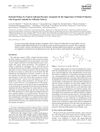 11 citations
,
May 2010 in “Journal of Medicinal Chemistry”
11 citations
,
May 2010 in “Journal of Medicinal Chemistry” A new compound was created in 2010 that can control oil production when applied to the skin, and its effects are completely reversible after two weeks.
 August 2013 in “Nature Reviews Drug Discovery”
 New treatments for cancer and skin disorders show promise in disrupting harmful cell interactions and promoting hair growth.
3 citations
,
July 2025 in “Gels” Engineered protein hydrogels improve medical treatments by mimicking natural body structures.
 38 citations
,
February 2006 in “British Journal of Clinical Pharmacology”
38 citations
,
February 2006 in “British Journal of Clinical Pharmacology” The study found that combining different databases gives a better estimate of drug side effects in hospitals.
46 citations
,
November 2004 in “Lipids” PPARs help regulate skin health and could be used to treat skin disorders.
 June 2018 in “Global Journal of Reproductive Medicine”
 Idiopathic hirsutism may be linked to increased skin enzyme activity, and new treatments like laser and eflornithine cream show promise.
23 citations
,
October 2008 in “Journal of medicinal chemistry” PF-998425 is a new, effective, and non-phototoxic treatment for skin conditions related to androgens.
TRPV4 channels in the skin may enhance the effects of acupuncture.
 2 citations
,
August 2022 in “Federal Practitioner”
2 citations
,
August 2022 in “Federal Practitioner” A severe medication reaction required long treatment and led to hair loss and thyroid issues.
March 2007 in “Journal of Plastic Reconstructive & Aesthetic Surgery” A new method was developed to create better skin models for healing and reconstruction.

The study improved and was accepted despite initial concerns about data clarity, methodology, and potential overfitting.
 January 2016 in “Hair transplant forum international”
 The document's content cannot be processed or understood.
2 citations
,
February 2025 in “Advanced Healthcare Materials” Perhexiline can effectively target ovarian cancer cells left after treatment.
January 2015 in “Faculty of 1000 Research Ltd” BPH treatment improved with personalized medicine, new drugs, and less invasive surgeries.
 4 citations
,
September 2013 in “Expert Review of Endocrinology & Metabolism”
4 citations
,
September 2013 in “Expert Review of Endocrinology & Metabolism” Different types of polycystic ovary syndrome show varying levels of insulin resistance, with the 'PHO' type being the most insulin resistant.
 January 2025 in “PROTEOMICS”
 Drug repositioning is a promising way to quickly develop new treatments, especially for rare diseases.
June 2023 in “Zenodo (CERN European Organization for Nuclear Research)” 246 citations
,
February 2021 in “Trends in Pharmacological Sciences” Drug repurposing offers a faster, cheaper way to find treatments for rare diseases.
216 citations
,
June 2015 in “PLANT PHYSIOLOGY” OsPHR3 can help breed rice that efficiently uses phosphate without growth issues.