
This rare genetic disorder causes permanent hair loss and skin bumps from birth.
 19 citations
,
May 2006 in “Clinical and Experimental Dermatology”
19 citations
,
May 2006 in “Clinical and Experimental Dermatology” Researchers found a new mutation causing total hair loss from birth.
Careful diagnosis is crucial for premature pubarche, as 20% of cases have other conditions.
 3 citations
,
June 2022 in “European journal of human genetics”
3 citations
,
June 2022 in “European journal of human genetics” A new type of pachyonychia congenita linked to a specific keratin gene mutation was found in two Pakistani families.
 September 2022 in “JAAD case reports”
 The man has a genetic skin condition called pachyonychia congenita.
 18 citations
,
August 2018 in “The FASEB journal”
18 citations
,
August 2018 in “The FASEB journal” Rabbits lacking the Hoxc13 gene show similar hair and skin issues to humans with ECTD-9, making them good for research on this condition.
The hydrogel helps bone growth and healing in jaw and facial defects.
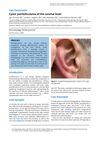 March 2026 in “Dermatology Online Journal”
 Cystic panfolliculoma is a rare, harmless tumor that can be confused with other skin tumors.
 January 2025 in “JCEM Case Reports”
 Enzyme replacement therapy may help alleviate symptoms in complex cases like this.
September 2016 in “Toxicology letters” The 5050 MHA42MCS45 hydrogel blend is suitable for repairing load-bearing soft tissues.
14 citations
,
June 2005 in “PubMed” A rare ear cyst contained hair fragments.
 31 citations
,
September 2013 in “Stem Cells”
31 citations
,
September 2013 in “Stem Cells” Smad1 and Smad5 are essential for hair follicle development and stem cell sleepiness.
37 citations
,
June 2000 in “Experimental dermatology” The Lanceolate hair-J mutation in mice mimics human hair disorders like Netherton's syndrome.
1 citations
,
November 2023 in “Indian Journal of Dermatology” A 6-year-old Asian boy has a rare scalp condition causing hair loss and thickening, with unclear causes and no effective treatment.
January 2000 in “The Mouseion at the JAXlibrary (Jackson Laboratory)” The lanceolate hair-J mutation in mice helps understand human hair disorders like Netherton's syndrome.
 September 2016 in “Journal of Dermatological Science”
 Björnstad syndrome causes twisted hair from birth.
1 citations
,
March 2022 in “Journal of biological chemistry/The Journal of biological chemistry” Removing a specific gene in certain skin cells causes hair loss in mice by disrupting hair follicle development.

Recognizing mild or atypical cases of ectodermal dysplasia is crucial for better treatment and future planning.
2 citations
,
January 2007 in “Actas Dermo-Sifiliográficas” Two cases of hairy elbows syndrome were described, with normal skin texture and symmetrical hair growth.
3 citations
,
January 2021 in “Veterinary dermatology” A litter of cats had a hair condition similar to a mouse mutation, leading to hair loss and abnormal hair and skin.
 33 citations
,
March 2006 in “Seminars in cutaneous medicine and surgery”
33 citations
,
March 2006 in “Seminars in cutaneous medicine and surgery” The document explains how to identify different hair problems using a microscope.
 17 citations
,
June 2011 in “The journal of investigative dermatology/Journal of investigative dermatology”
17 citations
,
June 2011 in “The journal of investigative dermatology/Journal of investigative dermatology” The G60S Connexin43 mutation causes hair growth issues and poor hair quality in mice, similar to human ODDD patients.
4 citations
,
December 2014 in “Indian Journal of Dermatology” A rare skin condition with cysts was found on a 5-year-old boy's scalp.
22 citations
,
September 2003 in “Journal of Investigative Dermatology” New mutations in the EBP gene cause CDPX2, affecting bones, skin, eyes, and hair, with females generally less affected than males.
 September 2024 in “Cureus”
 A 10-year-old boy's nail condition is mainly cosmetic and improves over time with treatment.
5 citations
,
November 1979 in “PubMed” A hereditary condition causes hair loss and twisted hair in some family members.
July 2024 in “LA CIENCIA AL SERVICIO DE LA SALUD Y NUTRICIÓN” The condition is harmless, doesn't worsen, and needs no invasive treatment.
January 2011 in “Revista Portuguesa de Endocrinologia Diabetes e Metabolismo” Congenital adrenal hyperplasia may be linked to adrenal myelolipoma.
 13 citations
,
May 1996 in “Archives of Disease in Childhood”
13 citations
,
May 1996 in “Archives of Disease in Childhood” Siblings with signs of virilization should be tested for non-classical congenital adrenal hyperplasia, which does not affect adult height but may impact fertility and well-being if untreated.
50 citations
,
January 1941 in “Annals of Internal Medicine” Idiopathic hypoparathyroidism is rare and can be managed with dihydrotachysterol.