1 citations
,
December 2023 in “Molecules/Molecules online/Molecules annual” JAK inhibitors show promise for treating various skin diseases.
3 citations
,
July 2023 in “International journal of molecular sciences” Stress may contribute to hair loss in alopecia areata by affecting immune responses and cell death in hair follicles.
October 2025 in “Cosmetics” Genetic insights can lead to personalized treatments for acne, androgenetic alopecia, and alopecia areata.
September 2025 in “Frontiers in Immunology” Atopic dermatitis and alopecia areata share immune and genetic factors, and targeted therapies may help both.
July 2025 in “Cell & Bioscience” Specific immune cells and pathways contribute to hair follicle inflammation and hair loss, suggesting potential treatments for lichen planopilaris.
 April 2025 in “International Journal of Molecular Sciences”
 New treatments for hair loss show promise with advanced therapies and better targeting.
24 citations
,
July 2021 in “Pharmaceutics” Ruxolitinib cream effectively targets and treats inflammatory skin diseases.
26 citations
,
June 2024 in “Frontiers in Immunology” SOCS1 and SOCS3 help control skin inflammation and are important for developing treatments for skin diseases.
 March 2026 in “Molecules”
 Dang Gui may help treat immune-related diseases by boosting and regulating the immune system.
December 2025 in “Cosmetics” New treatments for alopecia show promise in restoring hair growth by targeting immune and hormonal factors.
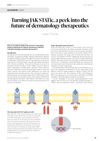 August 2024 in “New Zealand Medical Student Journal”
 JAK inhibitors show promise for treating skin diseases effectively and safely.

CD4 T cells need IFN-γ to cause hair loss in alopecia areata.
 51 citations
,
July 2010 in “Trends in Endocrinology and Metabolism”
51 citations
,
July 2010 in “Trends in Endocrinology and Metabolism” Prolactin may play a significant role in skin and hair health and could be a target for treating skin and hair disorders.
 November 2025 in “Frontiers in Immunology”
 Stem cell activity influences autoimmune disease outcomes by affecting immune responses and tissue regeneration.
 148 citations
,
December 2018 in “Journal of autoimmunity”
148 citations
,
December 2018 in “Journal of autoimmunity” Alopecia areata is an autoimmune disease causing patchy hair loss, often with other autoimmune disorders, but its exact causes are unknown.
 1 citations
,
January 2023 in “Portuguese Journal of Dermatology and Venereology”
1 citations
,
January 2023 in “Portuguese Journal of Dermatology and Venereology” JAK inhibitors effectively treat skin conditions and topical forms are safer.

New treatments for vitiligo may focus on protecting melanocyte stem cells from stress and targeting specific pathways involved in the condition.
 1 citations
,
September 2024 in “IP Indian Journal of Clinical and Experimental Dermatology”
1 citations
,
September 2024 in “IP Indian Journal of Clinical and Experimental Dermatology” Topical tofacitinib is a safe and effective treatment for autoimmune skin disorders.
 May 2025 in “Galen Medical Journal”
 New targeted therapies for psoriasis show promise but face challenges like side effects and treatment resistance.
 77 citations
,
June 2017 in “Advances in Therapy”
77 citations
,
June 2017 in “Advances in Therapy” New treatments for Alopecia Areata, like JAK inhibitors, show promise for hair regrowth and are likely to change future treatment approaches.
 1 citations
,
April 2018 in “Journal of Investigative Dermatology”
1 citations
,
April 2018 in “Journal of Investigative Dermatology” Tofacitinib helped most patients with alopecia areata regrow hair and changes in immune cells were linked to the treatment's effectiveness.
 November 2025 in “Turkish Journal of Dermatology”
 Both baricitinib and tofacitinib effectively reduce alopecia areata severity, with tofacitinib showing more improvement over longer use.
 22 citations
,
April 1998 in “Dermatologic Clinics”
22 citations
,
April 1998 in “Dermatologic Clinics” Interferons are effective for some skin conditions and cancers, but can have side effects and need more research for optimal use.
 4 citations
,
July 2025 in “Frontiers in Immunology”
4 citations
,
July 2025 in “Frontiers in Immunology” Early intervention with JAK inhibitors may prevent alopecia areata progression.
 January 2025 in “Universidad de Córdoba Insitutional Repository (Universidad de Córdoba)”
 An imbalanced scalp microbiome may worsen alopecia areata severity and inflammation, but treatment can partially restore balance.
 27 citations
,
January 2020 in “Experimental Dermatology”
27 citations
,
January 2020 in “Experimental Dermatology” Immune cells affect hair growth and could lead to new hair loss treatments.
 24 citations
,
December 2018 in “Life sciences”
24 citations
,
December 2018 in “Life sciences” Lysophosphatidic acid is important for skin health and disease, and could be a target for new skin disorder treatments.
 9 citations
,
May 2023 in “Inflammation Research”
9 citations
,
May 2023 in “Inflammation Research” New small molecule drugs show promise in treating complex skin diseases but need more safety research.
 4 citations
,
November 2023 in “Frontiers in immunology”
4 citations
,
November 2023 in “Frontiers in immunology” New treatments targeting T-cell pathways are needed for better alopecia areata management.
 2 citations
,
December 2022 in “PNAS nexus”
2 citations
,
December 2022 in “PNAS nexus” SCD-153 shows promise as an effective topical treatment for alopecia areata.