 4 citations
,
December 2025 in “Frontiers in Immunology”
4 citations
,
December 2025 in “Frontiers in Immunology” Autoimmune thyroid disease raises the risk of many health issues but lowers the risk of lung cancer and allergic rhinitis.
 3 citations
,
January 2022 in “PLoS ONE”
3 citations
,
January 2022 in “PLoS ONE” The amnion bilayer dressing improved healing and reduced scarring in full-thickness burns.
 1 citations
,
October 2023 in “Life science alliance”
1 citations
,
October 2023 in “Life science alliance” Pantethine may boost the immune system's ability to fight sarcoma.
 March 2026 in “Frontiers in Pharmacology”
 Exprecell™ is as effective as traditional methods but produces more f-PRF and is simpler to use.
 January 2026 in “Journal of Biomedical Research”
 Small extracellular vesicles from stem and immune cells show promise for treating various diseases but face challenges in clinical use.
 May 2019 in “The journal of investigative dermatology/Journal of investigative dermatology”
 Age-related hair loss is linked to the decline and dysfunction of hair follicle stem cells.

Alopecia areata is an autoimmune disease affecting hair follicles and may harm heart health.
 January 2008 in “Annals of Nutrition and Metabolism”
 Parthenolide promotes hair growth in mice and may influence pathways related to male pattern baldness.
 April 2018 in “Journal of Investigative Dermatology”
 Cutaneous lupus patients have higher levels of certain immune cells in their blood and skin.
79 citations
,
October 2003 in “PubMed” Overexpression of PKCepsilon leads to increased TNFalpha, promoting metastatic squamous cell carcinoma in mice.
October 2025 in “Cell Death and Disease” CD271 is crucial for maintaining healthy skin and preventing inflammation.
April 2023 in “Journal of Investigative Dermatology” Targeting mTOR in myeloid cells may help reduce psoriasis symptoms.
 48 citations
,
January 2024 in “Immune Network”
48 citations
,
January 2024 in “Immune Network” IL-15 is key for T cell function and could help improve treatments for immune-related diseases.
November 2025 in “The Journal of Immunology” A humanized IL-2 fusion protein boosts T regulatory cells and helps control hair loss in Alopecia Areata.
 11 citations
,
October 2001 in “Dermatologic Clinics”
11 citations
,
October 2001 in “Dermatologic Clinics” The document concludes that DAB389-IL2 is promising for treating refractory cutaneous T-cell lymphoma, but more research is needed on its effectiveness and side effect management.
 January 2022 in “bioRxiv (Cold Spring Harbor Laboratory)”
 The gp130 receptor helps in tissue regeneration and disease progression, and manipulating it could improve healing and prevent disease.
 278 citations
,
March 2013 in “Gut”
278 citations
,
March 2013 in “Gut” Anti-IL-12/IL-23 antibody therapy effectively treats psoriasiform skin lesions in IBD patients.
89 citations
,
March 1996 in “Proceedings of the National Academy of Sciences” CD18-deficient mice developed psoriasis-like skin disease, useful for studying inflammatory skin disorders.
April 2016 in “Journal of Investigative Dermatology” Blocking certain proteins can significantly regrow hair in severe alopecia areata.
38 citations
,
March 1997 in “Journal of interferon & cytokine research” IL-1β inhibits human hair follicle growth.
15 citations
,
June 2015 in “F1000Research” Psoriasis may be chronic because it lacks certain immune system controls that prevent overreaction.
July 2024 in “Journal of Investigative Dermatology” IL-13 protein is much higher in the skin of atopic dermatitis patients than in healthy skin.
 5 citations
,
February 2019 in “bioRxiv (Cold Spring Harbor Laboratory)”
5 citations
,
February 2019 in “bioRxiv (Cold Spring Harbor Laboratory)” Rapamycin may help treat Leigh syndrome by targeting protein kinase C.
September 2019 in “The journal of investigative dermatology/Journal of investigative dermatology” A new mutation in the STING protein causes a disease with lupus-like symptoms and responds well to a specific inhibitor treatment.
July 2024 in “Journal of Investigative Dermatology” PH-762 shows promise in treating skin cancer by effectively targeting and silencing PD-1 in tumors with minimal side effects.
 7 citations
,
October 2024 in “Frontiers in Immunology”
7 citations
,
October 2024 in “Frontiers in Immunology” A humanized CXCL12 antibody may delay and treat alopecia areata by altering the immune response.
2 citations
,
June 2018 in “The Medical Journal of Cairo University/The Medical Journal of Cairo University” Platelet Rich Plasma reduces psoriasis symptoms but isn't enough alone for treatment.
1 citations
,
August 2021 in “Journal of Investigative Dermatology” ASLAN004 was safe and well-tolerated, supporting further development for treating certain diseases.
 68 citations
,
November 2015 in “The Journal of Allergy and Clinical Immunology”
68 citations
,
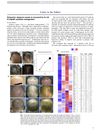
November 2015 in “The Journal of Allergy and Clinical Immunology” Blocking IL-12/IL-23p40 helped reverse severe hair loss in patients.
 2 citations
,
January 2024 in “Advances in Dermatology and Allergology”
2 citations
,
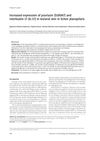
January 2024 in “Advances in Dermatology and Allergology” S100A7 and IL-17 may contribute to inflammation in lichen planopilaris.