24 citations
,
January 2018 in “Development” Frizzled 3 and Frizzled 6 together control the orientation of mouse hair follicles.
Ivarmacitinib effectively regrows hair in severe alopecia areata.
 August 2019 in “Research Square (Research Square)”
 Certain long non-coding RNAs in cashmere goats affect hair growth when treated with a specific growth factor.
28 citations
,
November 2018 in “American Journal of Medical Genetics Part A” ODC1 gene mutations cause a neurodevelopmental disorder with large head size, hair loss, and facial abnormalities.
31 citations
,
October 2002 in “Journal of Investigative Dermatology” IL-10 may worsen alopecia areata instead of helping it.
1 citations
,
January 2013 Glucosylceramides are essential for healthy skin and proper wound healing.
 July 2020 in “Research Square (Research Square)”
 Selective breeding can enhance immunity in dairy cattle.
 April 2023 in “Journal of Investigative Dermatology”
 Type 1/17 inflammation in psoriasis increases skin cell growth due to a molecule that could be a new treatment target.
 81 citations
,
November 2012 in “Journal of the National Cancer Institute”
81 citations
,
November 2012 in “Journal of the National Cancer Institute” The tumor suppressor gene FLCN affects mitochondrial function and energy use in cells.
9 citations
,
April 2018 in “Canadian Journal of Animal Science” LEF-1 boosts cell growth in goat hair follicles, aiding cashmere production.
 37 citations
,
April 2011 in “Journal of Biological Chemistry”
37 citations
,
April 2011 in “Journal of Biological Chemistry” LEF1 interacts with Vitamin D Receptor, affecting hair follicle regeneration and this could be linked to hair loss conditions.
July 2025 in “Journal of Investigative Dermatology”  24 citations
,
January 2019 in “Theranostics”
24 citations
,
January 2019 in “Theranostics” Loss of Pten in certain hair follicle stem cells increases skin cancer risk.
July 2026 in “Dermatology Practical & Conceptual” IL-17 and IL-23 inhibitors can cause skin reactions that may require different treatments.
Deleting the MAD2L1 gene is tolerated in certain mouse cancer models.
May 2018 in “The journal of immunology/The Journal of immunology” Mutations in the FOXN1 gene cause severe immune issues but don't affect hair and nails.
 June 2024 in “Archives of Medical Science”
 Telitacicept effectively improved hair regrowth in a woman with lupus and alopecia.

BLTP1 and KIF27 gene mutations can help breed better wool sheep.
June 2020 in “The journal of investigative dermatology/Journal of investigative dermatology” Scientists found new and known long non-coding RNAs in mouse hair follicle stem cells that may be important for stem cell function and could be targets for cancer treatment.
 November 2023 in “The journal of investigative dermatology/Journal of investigative dermatology”
 ARQ-234, a protein designed to treat atopic dermatitis, shows increased effectiveness in early testing.
 December 2023 in “The journal of cell biology/The Journal of cell biology”
 The mTurq2-Col4a1 mouse model shows how the basement membrane develops in live mammals.
 34 citations
,
April 2018 in “EMBO journal”
34 citations
,
April 2018 in “EMBO journal” The protein SLC1A3 is important for activating skin stem cells and is necessary for normal hair and skin growth in mice.
 7 citations
,
June 2010 in “Journal of The American Academy of Dermatology”
7 citations
,
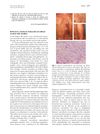
June 2010 in “Journal of The American Academy of Dermatology” Tranilast successfully treated a man's skin sarcoidosis when other treatments failed.
52 citations
,
February 2012 in “PloS one” Lack of Ctip2 in skin cells delays wound healing and disrupts hair follicle stem cell markers in mice.
55 citations
,
October 2008 in “American Journal Of Pathology” mIGF-1 in skin cells speeds up wound healing and hair growth in mice without harmful effects.
April 2016 in “The journal of investigative dermatology/Journal of investigative dermatology” The ALADIN score can predict how well patients with alopecia areata will respond to JAK inhibitor treatments.
33 citations
,
March 2018 in “Italian Journal of Dermatology and Venereology” Cutaneous lupus erythematosus is a chronic skin disease that can progress to systemic lupus in some cases and requires treatment to prevent recurrences and scarring.
 8 citations
,
November 2022 in “Cureus”
8 citations
,
November 2022 in “Cureus” Lulican™ shampoo is more effective and better tolerated than Ketoconazole for treating scalp seborrheic dermatitis.
 11 citations
,
August 2010 in “Developmental neurobiology”
11 citations
,
August 2010 in “Developmental neurobiology” Ptprq has multiple forms that change during inner ear development.
 100 citations
,
March 2006 in “Journal of biological chemistry/The Journal of biological chemistry”
100 citations
,
March 2006 in “Journal of biological chemistry/The Journal of biological chemistry” Cystatin M/E strongly inhibits cathepsin V and cathepsin L, important for skin formation.