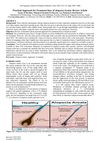
 July 2023 in “The Egyptian Journal of Hospital Medicine ”
 The conclusion is that emotional support and a variety of treatments are important for alopecia areata, but more research is needed.
 June 2023 in “Dermatology and therapy”
 The Middle East and Africa need better data, treatment consensus, and support for Alopecia Areata.
 October 2022 in “The Egyptian Journal of Hospital Medicine”
 Topical corticosteroids are the preferred first treatment for children with Alopecia Areata.
 March 2022 in “Marmara University Open Access System”
 Digital games are part of new media but need a deeper look at their complex nature and cultural roots.
 February 2021 in “Journal of pharmaceutical and biological sciences”
 No cure exists for alopecia areata, and treatments are personalized.
 January 2021 in “arXiv (Cornell University)”
 Self-supervised learning improves medical image classification accuracy.
 October 2020 in “Veterinary Dermatology”
 New treatments and diagnostic methods for various animal skin conditions showed promising results.
Alopecia Areata is treated with drugs and therapies to reduce inflammation and immune response.
 March 2018 in “Suez Canal University Medical Journal”
 New drugs targeting the JAK-STAT pathway show promise for treating inflammatory skin diseases.
Botulinum toxin type A significantly reduces scalp psoriasis severity compared to placebo.
 April 2015 in “Andrology”
 HNG may help prevent the negative effects of chemotherapy on sperm production and white blood cell counts.
 October 2013 in “Journal of Investigative Dermatology”
 Collagen VII helps skin heal and stay strong, sirolimus may lower skin cancer risk in kidney transplant patients, high-molecular-mass hyaluronan helps naked mole rats resist cancer, dermal γδ T cells aid in hair growth in rodents, and overexpression of IL-33 in mouse skin causes itchiness, offering a model for studying allergic inflammation treatments.

TLR3 signaling enhances the immunosuppressive properties of human periodontal ligament stem cells.
 9 citations
,
January 2018 in “Acta dermato-venereologica”
9 citations
,
January 2018 in “Acta dermato-venereologica” A substance called poly(I:C) increases a protein called carbonic anhydrase II in skin cells, which might help with skin defense and healing.
 October 2020 in “Our Dermatology Online”
 Chronic bacterial infections of hair follicles can cause ongoing skin inflammation.
55 citations
,
November 2010 in “Journal of Allergy and Clinical Immunology” The L412F variant of TLR3 is linked to skin infections, more viral infections, and autoimmune issues.
August 2021 in “Journal of Investigative Dermatology” ILC1-like cells can cause alopecia areata by disrupting hair follicle immunity, suggesting a new treatment approach.
33 citations
,
August 2000 in “Experimental Cell Research” 6 citations
,
August 2016 in “Journal of Visualized Experiments” The CUBIC protocol allows detailed 3D visualization of proteins in mouse skin biopsies.
13 citations
,
September 2012 in “Cell & tissue research/Cell and tissue research” pCLCA2 protein may help maintain skin structure and function.
June 2026 in “Strathprints: The University of Strathclyde institutional repository (University of Strathclyde)” Topical IKKα inhibitors may help prevent CCS tumours.
26 citations
,
June 2024 in “Frontiers in Immunology” SOCS1 and SOCS3 help control skin inflammation and are important for developing treatments for skin diseases.
December 2015 in “OPAL (Open@LaTrobe) (La Trobe University)” QLT0267 stops hair follicle cell growth and movement.
 9 citations
,
May 2012 in “PLOS ONE”
9 citations
,
May 2012 in “PLOS ONE” ILK is essential for skin development, pigmentation, and healing.
 23 citations
,
August 2018 in “Biochimica and biophysica acta. Molecular and cell biology of lipids”
23 citations
,
August 2018 in “Biochimica and biophysica acta. Molecular and cell biology of lipids” Different sPLA2 enzymes affect immunity, skin and hair health, reproduction, and may be potential targets for therapy.
 April 2018 in “Journal of Investigative Dermatology”
 CENPV, a new partner of CYLD, helps regulate ciliary acetylated tubulin and is overexpressed in certain skin tumors.
20 citations
,
July 2017 in “Journal of Investigative Dermatology” IL-1 receptor absence in mice leads to skin cysts and changes in immune response after UVB exposure.
 July 2023 in “British journal of dermatology/British journal of dermatology, Supplement”
 Skin tumors with CYLD cutaneous syndrome show more NF-κB activity and less organized collagen.
November 2022 in “Journal of Investigative Dermatology” ILC1-like cells can cause alopecia areata by themselves.
 May 2024 in “British journal of dermatology/British journal of dermatology, Supplement”
 CYLD deficiency in skin tumors disrupts hair follicle cell processes and protein secretion.