5 citations
,
February 2025 in “Scientia Horticulturae” Enterobacter sp. SA187 helps tomato plants grow better in salt and heat by boosting stress-related responses.
 5 citations
,
February 2022 in “Acta Biomaterialia”
5 citations
,
February 2022 in “Acta Biomaterialia” Nanomaterials can improve hair care products and treatments, including hair loss and alopecia, by enhancing stability and safety, and allowing controlled release of compounds, but their safety in cosmetics needs more understanding.
4 citations
,
August 2025 in “Molecules” Medicinal plants show promise for skin disorders but need more research for safe clinical use.
4 citations
,
August 2025 in “Journal of Food Science” Tremella fuciformis polysaccharide has many health benefits and potential uses in food, medicine, and cosmetics.
2 citations
,
July 2025 in “Biopolymers” Eggshells can be used to sustainably and cheaply produce important compounds like glycosaminoglycans.
2 citations
,
June 2025 in “Biomolecules” Microbiome analysis, BEVs, and AI can improve PCOS diagnosis and treatment.
 2 citations
,
November 2022 in “Frontiers in Pharmacology”
2 citations
,
November 2022 in “Frontiers in Pharmacology” Local healers in Addis Ababa use 81 medicinal plants, mainly from the Asteraceae family, to treat skin and general diseases, with Echinops kebericho being an endangered plant important in their practices.
2 citations
,
July 2025 in “Frontiers in Veterinary Science” MicroRNAs and AI can improve cashmere goat hair quality and aid in hair disorder diagnosis.
1 citations
,
October 2025 in “Journal of Personalized Medicine” Weight loss improves PCOS symptoms and overall health.
1 citations
,
July 2025 in “Stem Cell Research & Therapy” Stem cell technology may improve hair loss treatments by providing more effective and personalized options.
1 citations
,
May 2025 in “Frontiers in Veterinary Science” A severe virus outbreak in yaks on the Qinghai-Tibet Plateau caused high death rates and requires targeted control measures.
 1 citations
,
July 2023 in “Foods”
1 citations
,
July 2023 in “Foods” Mushrooms offer benefits for food, energy, and water security, and have potential uses in health and environmental applications.
 1 citations
,
January 2023 in “Metabolites”
1 citations
,
January 2023 in “Metabolites” Changes in gut bacteria can contribute to the development of Polycystic Ovary Syndrome (PCOS), affecting metabolism, immunity, and causing inflammation. Treatments may involve adjusting these factors.

Contractile hydrogels help wounds heal faster and with less scarring.
 July 2026 in “Pharmaceuticals”
 Aging and chronic diseases impair muscle repair, but integrated therapies like exercise and gene editing may help.
 June 2026 in “Frontiers in Medicine”
 Hair-loss trials have increased, but need more diverse participants and standardized measures.
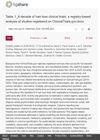
More hair-loss studies are needed with standardized outcomes and diverse participants.
April 2026 in “Regenerative Medicine” Significant progress and investment in advanced therapies and regenerative medicine continue.
 February 2026 in “Bioengineering”
 EV-based therapies are advancing but need to overcome challenges for full potential.
 February 2026 in “Animals”
 Methionine supplementation in low-protein diets improves growth, fur quality, and gut health in blue foxes.
Scalp microbiome in young women is mainly affected by sensitivity, sebum, and lifestyle.
January 2026 in “Regenerative Biomaterials” Advanced hydrogels can autonomously deliver drugs to treat radiation skin injuries, but challenges remain for clinical use.
December 2025 in “Biology” Male and female mice handle stress differently.
November 2025 in “F1000Research” Certain fungi may contribute to hair loss in cynomolgus macaques.
 August 2025 in “Nutrients”
 Eating more antioxidant-rich foods and less alcohol may help reduce hair loss.
 July 2025 in “Journal of Drug Delivery and Therapeutics”
 Herbal remedies like ginseng and green tea may help regenerate hair follicles damaged by pesticides.
Periplaneta americana extract promotes hair growth and is safe for treating hair loss.
May 2025 in “Ecology and Evolution” The Indus River dolphin has low genetic diversity due to a past bottleneck and human impact.
 February 2025 in “PLoS ONE”
 Androgenetic alopecia starts earlier in males than females, with different treatments, and is linked to income, education, alcohol use, and mental health.
February 2025 in “Skin Research and Technology” New non-invasive techniques can improve diagnosis and treatment of scalp and hair diseases.