 January 2015 in “Indian Journal of Dermatology, Venereology and Leprology”
 The document concludes that various skin conditions have specific characteristics and treatments, and highlights the importance of vitamin D in managing these dermatological issues.
 10 citations
,
August 2016 in “Oxford Medical Case Reports”
10 citations
,
August 2016 in “Oxford Medical Case Reports” Tocilizumab therapy may cause skin and hair conditions like halo naevi, vitiligo, and alopecia areata.
May 2025 in “Australasian Journal of Dermatology” COVID-19 infection or vaccination may trigger lichen planus.
 140 citations
,
March 2013 in “The journal of immunology/The Journal of immunology”
140 citations
,
March 2013 in “The journal of immunology/The Journal of immunology” Memory regulatory T cells need IL-7, not IL-2, to stay in peripheral tissues.
Immunological skin diseases in pigs are rare and can be caused by immune system issues or external factors.
 May 2023 in “Dermatology Reports”
 The study found that skin conditions in COVID-19 patients can signal serious internal organ damage and may be life-threatening.
 November 2024 in “Journal of the European Academy of Dermatology and Venereology”
 More effective treatments are needed for alopecia areata, hidradenitis suppurativa, and vitiligo.
 4 citations
,
May 2018 in “Journal of Neuro-Ophthalmology”
4 citations
,
May 2018 in “Journal of Neuro-Ophthalmology” New treatments for relapsing multiple sclerosis are more effective and convenient but have higher risks of serious side effects.
 39 citations
,
November 2016 in “Pharmaceutics”
39 citations
,
November 2016 in “Pharmaceutics” The hair follicle pathway significantly affects how easily water-loving chemicals pass through the skin.
 47 citations
,
November 2012 in “Pharmaceutical research”
47 citations
,
November 2012 in “Pharmaceutical research” Surface-modified nanoparticles mainly use non-follicular pathways to enhance skin permeation of ibuprofen and could improve treatment for inflammatory skin diseases.
 86 citations
,
August 2021 in “Polymers”
86 citations
,
August 2021 in “Polymers” Microneedles are effective for drug delivery, vaccinations, fluid extraction, and treating hair loss, with advancements in manufacturing like 3D printing.
Early diagnosis and treatment are crucial for skin emergencies and drug reactions.
 9 citations
,
May 2023 in “Inflammation Research”
9 citations
,
May 2023 in “Inflammation Research” New small molecule drugs show promise in treating complex skin diseases but need more safety research.

Immune therapy for cancer can cause rare hair loss but doesn't stop treatment success.
 November 2022 in “Journal of Investigative Dermatology”
 The study found that skin inflammation and immune response pathways are activated in Solar Urticaria patients after UV exposure, unlike in healthy people.
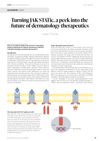 August 2024 in “New Zealand Medical Student Journal”
 JAK inhibitors show promise for treating skin diseases effectively and safely.
April 2026 in “The Journal of Dermatology” Vitiligo patients have higher risks of autoimmune diseases, infections, and skin cancer.
 4 citations
,
February 2022 in “JEADV Clinical Practice”
4 citations
,
February 2022 in “JEADV Clinical Practice” COVID-19 can cause various skin issues in children, mostly not severe, with chilblain-like lesions being common, especially in adolescents.
 June 2026 in “Frontiers in Cell and Developmental Biology”
 MicroRNAs can help regenerate hair by influencing stem cells and immune responses, but delivery challenges exist.
7 citations
,
June 1994 in “International journal of biochemistry/International Journal of Biochemistry” The document discusses various skin disorders and new therapeutic approaches.
 February 2012 in “Australasian Journal of Dermatology”
 Some moles can disappear naturally, maintenance therapy for Stage 1 mycosis fungoides may not be necessary, allergic skin reactions in children are rising, weekly methotrexate for psoriasis is more effective than daily, long-term finasteride use improves hair growth with few side effects, and petrolatum improves UV therapy for psoriasis.
October 2025 in “Journal of Applied Genetics” Autoinflammatory skin diseases are complex, increasingly common, and significantly affect quality of life.
 13 citations
,
August 2020 in “Frontiers in Immunology”
13 citations
,
August 2020 in “Frontiers in Immunology” Gamma delta T cells in the skin help with healing and defense but can also cause autoimmune issues, and more research is needed to understand how they are activated.
October 2023 in “Journal of the European Academy of Dermatology and Venereology” Integrating lived experiences into health frameworks is crucial for addressing skin diseases and mental health effectively.
 March 2010 in “Anti-inflammatory & anti-allergy agents in medicinal chemistry”
 Biologic agents can be effective for rheumatic diseases but have risks like infections and require careful monitoring and patient information.
 45 citations
,
April 2019 in “International Immunology”
45 citations
,
April 2019 in “International Immunology” The study concluded that immune cells attacking hair follicles cause hair loss in alopecia, with genetics and environment also playing a role, and highlighted the potential of certain treatments.
January 2026 in “Pharmaceutics” New drug delivery systems show promise in effectively treating pathological scars.
 December 2024 in “Journal of Clinical Medicine of Kazakhstan”
 Vitiligo treatments include JAK inhibitors, UVB phototherapy, and dietary changes, with emotional support being important.
5 citations
,
March 2025 in “Pediatric Dermatology” Alopecia areata in children is caused by the immune system attacking hair follicles due to genetic factors.
52 citations
,
October 2007 in “Molecular Therapy” Injecting lentiviral vectors into early gestation mice effectively targets skin stem cells for potential gene therapy.