December 2025 in “Rare Metals” Smart biomaterials and dressings show promise in treating chronic skin diseases by improving drug delivery and minimizing side effects.
December 2025 in “International Journal of Molecular Sciences” Exosome-based therapies show promise for treating alopecia areata but need more research.
 December 2025 in “Zenodo (CERN European Organization for Nuclear Research)”
 Onion juice is most effective for hair regrowth, while garlic, ginger, and clove support scalp health.
 December 2025 in “Zenodo (CERN European Organization for Nuclear Research)”
 Onion juice is most effective for hair regrowth, while garlic, ginger, and clove help with scalp health.
December 2025 in “Cosmetics” Gut bacteria differences could help diagnose and treat alopecia areata.
November 2025 in “JOURNAL OF EXPERIMENTAL ZOOLOGY INDIA” Thymol is a promising natural treatment for hair regrowth and inflammation in alopecia areata, performing better than betamethasone.
 November 2025 in “The Journal of Medical Sciences”
 Intralesional triamcinolone is more effective than cryotherapy for treating alopecia areata in middle-aged adults.
September 2025 in “Journal of Drug Delivery Science and Technology” Vitamin D3-coated nanoparticles effectively deliver caffeine for alopecia treatment with minimal side effects.
August 2025 in “JEADV Clinical Practice” Dupilumab successfully treated a woman's alopecia areata and bullous pemphigoid, leading to full hair regrowth and symptom resolution.
Carnosic acid from rosemary and sage may be a promising natural treatment for hair loss.
May 2025 in “International Ayurvedic Medical Journal” Ayurvedic Shamana therapy effectively treats alopecia areata with minimal side effects.
May 2025 in “Clinical and Translational Allergy” Atopic dermatitis and alopecia areata have a major global socioeconomic impact, needing more research and better healthcare alignment.
February 2025 in “Journal of the European Academy of Dermatology and Venereology” Oral dutasteride is a recommended first treatment for frontal fibrosing alopecia.
January 2025 in “Clinical and Experimental Dermatology” Anti-inflammatory diets may help hair regrowth in alopecia areata.
 October 2024 in “International Journal For Multidisciplinary Research”
 Wedelolactone may help treat chronic diseases due to its strong antioxidant properties.
 January 2024 in “Dermatology practical & conceptual”
 Lymecycline may help with Frontal Fibrosing Alopecia but needs more research.
 July 2023 in “Health science reports”
 Alopecia Areata is linked to a higher risk of several diseases, which vary with age and sex.
 January 2023 in “International journal of dermatology, venereology and leprosy sciences”
 People with alopecia areata have different blood markers that suggest inflammation and immune system issues compared to healthy individuals.
Low-level laser therapy reduces symptoms and inflammation in frontal fibrosing alopecia.
 September 2021 in “Han'gug mi'saengmul saengmyeong gong haghoeji/Han-guk misaengmul saengmyeong gonghak hoeji”
 Tetrathelmis tetrathele extract may help prevent hair loss and improve scalp health.
April 2021 in “Journal of Investigative Dermatology” Arg1+ macrophages may play a role in causing alopecia areata.
 May 2020 in “JAAD case reports”
 Using anthralin and calcipotriene together might help treat tough cases of alopecia areata, but more research is needed to understand how it works.
May 2020 in “Lithuanian University of Health Sciences” Alopecia areata is an autoimmune disease causing hair loss, with treatments often ineffective but new options are being researched.
April 2019 in “The journal of investigative dermatology/Journal of investigative dermatology” Blocking JAK1 or JAK3 helps reverse hair loss in a mouse model of alopecia areata.
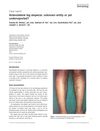 September 2018 in “International Journal of Dermatology”
 Anterolateral leg alopecia is a benign, nonprogressive hair loss condition on the lower legs that is not well understood and may resolve on its own.
 April 2017 in “Journal of Investigative Dermatology”
 Certain microRNAs may protect against hair loss in alopecia areata and could be potential treatment targets.
 July 2015 in “Journal of the Dermatology Nurses’ Association”
 A 66-year-old woman experienced hair loss due to Frontal Fibrosing Alopecia, a condition with no consistently effective treatment, but it usually stabilizes over time. More research is needed for better understanding and treatment options.
 1 citations
,
June 2017 in “Skin”
1 citations
,
June 2017 in “Skin” Apremilast may help treat lichen planopilaris and frontal fibrosing alopecia when other treatments fail.
 September 2024 in “Portuguese Journal of Dermatology and Venereology”
 CCCA and LPP may be related hair loss conditions influenced by genetics and environment, needing early treatment.
8 citations
,
August 2016 in “Journal of Cutaneous Pathology” Scalp biopsies are crucial for diagnosing hair loss causes in cutaneous lymphoma patients.