October 2025 in “Clinical and Experimental Dermatology” Fibrosing alopecia can be stabilized or improved with anti-inflammatory treatments and hair growth agents.
August 2025 in “JEADV Clinical Practice” Dupilumab successfully treated a woman's alopecia areata and bullous pemphigoid, leading to full hair regrowth and symptom resolution.
August 2025 in “World Academy of Sciences Journal” Topical metformin shows promise for skin treatments but needs more testing for safety and effectiveness.
 May 2025 in “Scientific Reports”
 Oxyresveratrol promotes hair growth and may help treat hair loss.
 May 2025 in “International Journal for Research in Applied Science and Engineering Technology”
 Herbal shampoos are effective, eco-friendly, and improve hair and scalp health.
 March 2025 in “International Journal For Multidisciplinary Research”
 The herbal hair oil improves hair growth and scalp health.
January 2025 in “Clinical and Experimental Dermatology” Anti-inflammatory diets may help hair regrowth in alopecia areata.
 February 2024 in “Acta dermato-venereologica”
 This type of hair loss is probably often missed and treatments reducing inflammation might work well.
 November 2023 in “Clinical, Cosmetic and Investigational Dermatology”
 A man's rash caused by Finasteride improved after stopping the drug and starting new treatments.
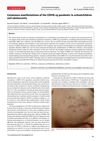 January 2023 in “Acta dermatovenerologica Alpina, Pannonica et Adriatica (Tiskana izd.)”
 The article concludes that schoolchildren and adolescents experienced various skin issues during the COVID-19 pandemic, including acne from masks and other skin reactions from the virus and vaccines.
 December 2022 in “Journal of Education, Health and Sport”
 Covid-19 can cause different types of hair loss, which can affect people's mental and social well-being.
 November 2022 in “JAAD case reports”
 A man with skin and hair symptoms improved partially with specific treatment.
 October 2021 in “Rheumatology Science and Practice”
 TNF-α inhibitors may cause complete hair loss in some patients with ankylosing spondylitis.
May 2020 in “Lithuanian University of Health Sciences” Alopecia areata is an autoimmune disease causing hair loss, with treatments often ineffective but new options are being researched.

30% supramolecular salicylic acid is safe and effective for treating mild to moderate facial acne.
 January 2019 in “Springer eBooks”
 Acne can appear or persist in adulthood due to hormonal changes, external factors, or substance use, and requires appropriate treatment.
 May 2015 in “Journal of The American Academy of Dermatology”
 Some people may temporarily lose more hair in certain areas after a hair transplant.
 November 2012 in “South African Family Practice”
 The article concludes that early treatment of alopecia is crucial to prevent permanent hair loss.
Hair loss can happen after severe H1N1 flu but usually grows back in 4 months.
 June 2026 in “Zenodo (CERN European Organization for Nuclear Research)”
 The herbal oil may help reduce hair loss and improve hair health.
 March 2026 in “Zenodo (CERN European Organization for Nuclear Research)”
 Rice water is effective for improving skin and hair health.
 March 2026 in “Journal of Medicinal Plants Studies”
 Murraya koenigii is effective for diabetes, digestion, skin issues, and hair growth.
 January 2026 in “RSC Advances”
 Panax notoginseng may help with oral ulcers and hair growth.
November 2025 in “Journal of Investigative Dermatology” N,N-Dimethylglycine sodium salt may improve skin health and treat hair loss.
 September 2025 in “International Journal of Biology Pharmacy and Allied Sciences”
 Rosemary is effective for hair and skin health due to its anti-inflammatory and antioxidant properties.

Resident doctors had more facial skin discoloration than medical students during COVID-19.
 January 2025 in “Pakistan Veterinary Journal”
 Microneedling may help regrow hair in dogs with certain types of alopecia.
 May 2024 in “Journal of medicinal food”
 Jojoba oil has many uses beyond skincare, including health benefits and pharmaceutical applications.

Herbal ingredients in cosmetics are popular for their benefits and fewer side effects.
 March 2024 in “Journal of medicinal plants studies”
 Hibiscus has medicinal benefits but can be toxic in high doses and is unsafe for pregnant women and infants.