January 2013 in “edoc (University of Basel)” TRF1 is crucial for creating and maintaining stem cells and marks both pluripotent and adult stem cells.
14 citations
,
December 1998 in “British Journal of Cancer” Truncated hHb1 keratin may play a role in breast cancer cell transformation.
May 2009 in “OPAL (Open@LaTrobe) (La Trobe University)” Suppressing the HGPS mutation may improve symptoms and suggest reversibility.
 59 citations
,
April 2016 in “Cell Reports”
59 citations
,
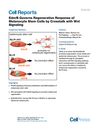
April 2016 in “Cell Reports” EdnrB signaling helps melanocyte stem cells regenerate and could be targeted to treat pigmentation issues.
 12 citations
,
October 2021 in “Cells”
12 citations
,
October 2021 in “Cells” Targeting a protein that blocks hair growth with microRNAs could lead to new hair loss treatments, but more research is needed.
 2 citations
,
May 2012 in “Indian drugs”
2 citations
,
May 2012 in “Indian drugs” Finasteride, a hair loss treatment, works better and is more stable when delivered through specially prepared gels, leading to increased hair growth.
 June 2018 in “The Journal of Sexual Medicine”
 Finasteride helps female-pattern hair loss.
5 citations
,
June 2024 in “Pharmacological Research” FOL-026 peptide may help hair growth and cardiovascular health by improving blood flow and cell functions.
 54 citations
,
December 2014 in “Wound Repair and Regeneration”
54 citations
,
December 2014 in “Wound Repair and Regeneration” PRP injections may improve hair thickness and density in female hair loss patients.
 6 citations
,
May 2012 in “Archives of Dermatological Research”
6 citations
,
May 2012 in “Archives of Dermatological Research” A new mutation in the HR gene is linked to a rare form of hair loss with limb deformities.
5 citations
,
December 2016 in “Microscopy Research and Technique” EPI-NCSCs from hair follicles may help treat brain development issues in mice.
 47 citations
,
April 2012 in “The Plant Journal”
47 citations
,
April 2012 in “The Plant Journal” Phosphorylation of certain parts of the PIN3 protein is crucial for its role in plant root growth and response to gravity.

Advances in RNA research and skin models offer hope for better skin healing without scarring.
June 2020 in “Research Square (Research Square)” The study found key long non-coding RNAs involved in yak hair growth cycles.
Pashmina goats produce long hair-fiber due to specific gene expressions related to hair growth.
November 2022 in “Journal of Investigative Dermatology” ILC1-like cells can cause alopecia areata by themselves.
85 citations
,
March 2008 in “Journal of Cell Science” The mutation causing Hutchinson-Gilford progeria syndrome leads to severe skin problems and early death in mice.
January 2025 in “Repository of Digital Objects for Teaching Research and Culture (University of Valencia)” Non-coding RNAs may be key in diagnosing and treating rare skin disorders.
January 2026 in “Applied Sciences” Cyclic ADP-ribose helps regulate calcium and signals that promote hair growth in hair follicle cells.
April 2011 in “The FASEB Journal” Profilin1 speeds up wound healing.
8 citations
,
April 1997 in “Experimental Dermatology” hHbl gene is active in hair shaft cells and some pilomatricomas.
1 citations
,
June 2022 in “Gene reports” The analysis found genes linked to skin and hair development are more active in Pashmina goats, which may explain their long-fiber production.
26 citations
,
December 1990 in “Journal of Biological Chemistry” Two specific genes are more active during hair growth in mice.
 22 citations
,
April 2020 in “Scientific reports”
22 citations
,
April 2020 in “Scientific reports” Changthangi goats have specific genes that help produce Pashmina wool.
77 citations
,
April 2005 in “Journal of Investigative Dermatology” Repetin is a protein involved in skin and hair development, binding calcium and compensating for other proteins when needed.
PTHrP is important for bone formation and may be targeted for osteoporosis treatment and longevity therapies.
 19 citations
,
December 2015 in “European Journal of Human Genetics”
19 citations
,
December 2015 in “European Journal of Human Genetics” A rare ITGB6 gene variant causes intellectual disability, hair loss, and dental issues.
 4 citations
,
April 2021 in “Frontiers in Immunology”
4 citations
,
April 2021 in “Frontiers in Immunology” Different types of RNAs are found in varying amounts in patients with Polycystic Ovary Syndrome, suggesting they could be important in the disease's development and potentially used as disease markers.
April 2018 in “Journal of Investigative Dermatology” Id2 gene helps keep hair follicle stem cells inactive.
 April 2026 in “BMC Genomics”
 Hair type differences in cashmere goats are linked to keratin and cytoskeletal organization.