 7 citations
,
March 2020 in “PloS one”
7 citations
,
March 2020 in “PloS one” α-parvin is necessary for skin and hair growth and for the correct orientation of skin cells.
 7 citations
,
March 2017 in “Journal of dermatology”
7 citations
,
March 2017 in “Journal of dermatology” The conclusion is that accurately identifying folliculosebaceous tumors requires understanding their clinical signs and microscopic features.
 7 citations
,
November 2014 in “Histochemistry and Cell Biology”
7 citations
,
November 2014 in “Histochemistry and Cell Biology” The we/we wal/wal mice have defects in hair growth and skin layer formation, causing hair loss, useful for understanding alopecia.
 6 citations
,
January 2016 in “Journal of Stem Cell Research & Therapy”
6 citations
,
January 2016 in “Journal of Stem Cell Research & Therapy” Notch1 signaling is crucial for improving wound healing and skin regeneration by affecting stem cell behavior.
 6 citations
,
May 2013 in “PloS one”
6 citations
,
May 2013 in “PloS one” The Foxn1(-/-) nude mouse shows disrupted and expanded skin stem cell areas due to high Lhx2 levels.
 5 citations
,
January 2016 in “Stem Cells International”
5 citations
,
January 2016 in “Stem Cells International” Certain skin cells near the base of hair muscles may help renew and stabilize skin, possibly affecting skin disorder understanding.
 5 citations
,
October 2014 in “Journal of cosmetic and laser therapy”
5 citations
,
October 2014 in “Journal of cosmetic and laser therapy” Combining physical dermabrasion with chemical peeling is more effective for skin treatment than chemical peeling alone.
 4 citations
,
October 2018 in “Cell Stem Cell”
4 citations
,
October 2018 in “Cell Stem Cell” Hox genes control hair growth patterns in mammals by regulating stem cell activity in the skin.
 4 citations
,
January 2013 in “Advances in Experimental Medicine and Biology”
4 citations
,
January 2013 in “Advances in Experimental Medicine and Biology” Certain transcription factors are key in controlling skin stem cell behavior and could impact future treatments for skin repair and hair loss.
 4 citations
,
January 2013 in “Humana Press eBooks”
4 citations
,
January 2013 in “Humana Press eBooks” Scientists found ways to identify and collect skin stem cells, which vary by skin area and are delicate.
 4 citations
,
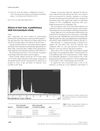
February 2007 in “Journal of the European Academy of Dermatology and Venereology”
4 citations
,
February 2007 in “Journal of the European Academy of Dermatology and Venereology” The study suggests silicon might be important for healthy hair, as less silicon was found in people with hair loss.
 3 citations
,
November 2023 in “Frontiers in cell and developmental biology”
3 citations
,
November 2023 in “Frontiers in cell and developmental biology” Melanocytes are important for skin and hair color and protect the skin from UV damage.
 3 citations
,
May 2022 in “Oncogene”
3 citations
,
May 2022 in “Oncogene” Vav2 and Vav3 proteins help control skin stem cell numbers and activity in both healthy and cancerous cells.
 3 citations
,
November 2018 in “Curēus”
3 citations
,
November 2018 in “Curēus” The cause and importance of misplaced oil glands in the hair follicle are not well understood.

New treatments for vitiligo may focus on protecting melanocyte stem cells from stress and targeting specific pathways involved in the condition.
 3 citations
,
January 2012 in “Elsevier eBooks”
3 citations
,
January 2012 in “Elsevier eBooks” Burn scars form abnormally due to changes in wound healing, and more research is needed to improve treatments.
 2 citations
,
August 2020 in “Scientific reports”
2 citations
,
August 2020 in “Scientific reports” Genes related to keratin, skin cell differentiation, and immune functions are key in hedgehog skin and spine development.
 2 citations
,
November 2017 in “PloS one”
2 citations
,
November 2017 in “PloS one” Some vitamin D analogs can thicken skin and reduce pore size like a common acne treatment, with one analog also affecting skin growth factors.
 2 citations
,
January 2013 in “Elsevier eBooks”
2 citations
,
January 2013 in “Elsevier eBooks” The document explains the genetic causes and characteristics of inherited hair disorders.
 2 citations
,
November 2003 in “Humana Press eBooks”
2 citations
,
November 2003 in “Humana Press eBooks” Hair follicle cells can help heal wounds and study skin diseases.
 1 citations
,
October 2022 in “Scientific reports”
1 citations
,
October 2022 in “Scientific reports” Nestin identifies specific progenitor cells in hair follicles that can become outer root sheath cells.
 1 citations
,
May 2021 in “Research Square (Research Square)”
1 citations
,
May 2021 in “Research Square (Research Square)” Micro-injury can help regrow hair and repigment vitiligo by activating specific cells.
 1 citations
,
January 2020 in “E3S web of conferences”
1 citations
,
January 2020 in “E3S web of conferences” The study found that injecting spores directly into rabbit skin effectively caused fungal skin infections, with symptoms worsening over time.
 1 citations
,
November 2018 in “bioRxiv (Cold Spring Harbor Laboratory)”
1 citations
,
November 2018 in “bioRxiv (Cold Spring Harbor Laboratory)” Signals from skin cells controlled by Rac proteins help turn certain precursor cells into white fat cells.
 1 citations
,
January 2018 in “Methods in molecular biology”
1 citations
,
January 2018 in “Methods in molecular biology” The research found ways to activate melanocyte stem cells for potential treatment of skin depigmentation conditions.
 1 citations
,
February 2017 in “International journal of anatomy and research”
1 citations
,
February 2017 in “International journal of anatomy and research” Understanding fetal skin development helps diagnose congenital skin diseases.
 1 citations
,
July 2011 in “The Egyptian Journal of Anatomy”
1 citations
,
July 2011 in “The Egyptian Journal of Anatomy” Both TCA and GA peels effectively improved skin thickness and collagen without significant differences.
 June 2026 in “Functional Foods in Health and Disease”
 Olive leaf extract may help improve skin aging, especially for those who don't exercise regularly.
 May 2026 in “Journal of Health and Allied Sciences NU”
 Optimized culture conditions improve human epidermal stem cell growth for skin regeneration.
 March 2026 in “Frontiers in Immunology”
 Regulatory T cells help heal skin wounds by reducing inflammation and promoting tissue repair.