 January 2026 in “Frontiers in Medicine”
 FFA and FAPD might be related or stages of the same disease.
30 citations
,
October 1994 in “Journal of Cutaneous Pathology” Multiple perifollicular fibromas may actually be unrecognized cases of Birt-Hogg-Dubé syndrome.
 1 citations
,
July 2005 in “Informa Healthcare eBooks”
1 citations
,
July 2005 in “Informa Healthcare eBooks” Hair follicles could be used for targeted drug delivery, with liposomal systems showing promise for this method.
 March 2018 in “Benha Journal of Applied Sciences”
 Finger length ratio is not linked to hirsutism or hormone levels.
 1 citations
,
July 2005 in “Drugs and the pharmaceutical sciences”
1 citations
,
July 2005 in “Drugs and the pharmaceutical sciences” Targeting drugs to hair follicles can treat skin conditions, but reaching deep follicle areas is hard and needs more research.
46 citations
,
November 2014 in “Journal of Cutaneous Pathology” Recognizing diverse presentations of folliculotropic mycosis fungoides is crucial to avoid diagnostic errors.
 5 citations
,
May 2004 in “Dermatologic Surgery”
5 citations
,
May 2004 in “Dermatologic Surgery” A hair restoration technique was introduced that mixes different types of hair groupings to reduce procedure time, limit damage, and potentially increase hair density, suggesting more hair can be transplanted than previously thought.
 7 citations
,
June 2015 in “The anatomical record”
7 citations
,
June 2015 in “The anatomical record” Hexi cashmere goats' hair growth varies by stage, with Hoxc13 linked to hair activity.
1 citations
,
January 2007 in “The Internet Journal of Dermatology” A rare, harmless skin tumor was found on a man's nose.
 May 2026 in “Journal of Cutaneous and Aesthetic Surgery”
 Trichoscopy helps monitor changes and detect issues after hair transplants.
 April 2026 in “Zenodo (CERN European Organization for Nuclear Research)”
 Hair follicles can be used to deliver drugs effectively, especially using nanoparticles, for treating skin conditions.
May 2025 in “Skin Appendage Disorders” Frontal fibrosing alopecia can be diagnosed by examining facial areas and treated with specific medications to stop its progression.
 19 citations
,
August 1993 in “Journal of Cutaneous Pathology”
19 citations
,
August 1993 in “Journal of Cutaneous Pathology” Alopecia causes smaller hair follicles and affects growth-related structures.
 18 citations
,
June 2017 in “Journal of The American Academy of Dermatology”
18 citations
,
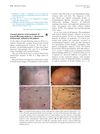
June 2017 in “Journal of The American Academy of Dermatology” Trichoscopy helps diagnose frontal fibrosing alopecia, even with unusual patterns.
 39 citations
,
July 2015 in “British Journal of Dermatology”
39 citations
,
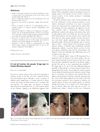
July 2015 in “British Journal of Dermatology” The pseudo 'fringe sign' can also appear in frontal fibrosing alopecia, not just in traction alopecia, showing that this condition may be more common than thought.
 April 2023 in “The journal of investigative dermatology/Journal of investigative dermatology”
 Folliculotropic mycosis fungoides has unique molecular features and cell interactions that could guide targeted therapy.
 1 citations
,
December 2017 in “Anais Brasileiros de Dermatologia”
1 citations
,
December 2017 in “Anais Brasileiros de Dermatologia” Frontal fibrosing alopecia can mimic traction alopecia but has distinct features like facial papules and eyebrow thinning.
 4 citations
,
January 2018 in “Advances in Experimental Medicine and Biology”
4 citations
,
January 2018 in “Advances in Experimental Medicine and Biology” The document concludes that hair follicles have a complex environment and our understanding of it is growing, but there are limitations when applying animal study findings to humans.
 September 2024 in “Meditsinskiy sovet = Medical Council”
 As women age, hair follicles decrease in number and hair width tends to reduce.

New methods efficiently isolate dermal papilla cells from hair follicles, preserving their characteristics better than traditional methods.
18 citations
,
June 1992 in “Acta Histochemica” Human hair follicles have a unique cell distribution and differentiation pattern during growth.
April 2023 in “Dohuk medical journal” Trichoscopy effectively differentiates Androgenetic Alopecia from Telogen Effluvium.

Activin A and Follistatin affect how mouse hair follicles grow.
1 citations
,
July 2025 in “Biomaterials Advances” 3D cultures respond better to minoxidil, while 2D cultures respond better to DHT.
 14 citations
,
July 2009 in “Current Opinion in Otolaryngology & Head and Neck Surgery”
14 citations
,
July 2009 in “Current Opinion in Otolaryngology & Head and Neck Surgery” Hair restoration techniques like follicular unit transplant surgery and follicular unit extraction are effective, with ideal graft placement density between 20-30 units per cm². Medications like Minoxidil and Finasteride can help maintain and regrow hair.

The document concludes that the FOLLYSIS© system improves hair transplant processes and patient monitoring with high accuracy and less skin trauma.
September 2023 in “JEADV Clinical Practice” Dermoscopy helps diagnose folliculotropic mycosis fungoides by identifying specific skin patterns.
 1 citations
,
August 2022 in “International Journal of Molecular Sciences”
1 citations
,
August 2022 in “International Journal of Molecular Sciences” FGF12 is important for hair growth and could be targeted for hair loss treatment.
 25 citations
,
August 1998 in “Dermatologic Surgery”
25 citations
,
August 1998 in “Dermatologic Surgery” Dissecting microscopes give more and better quality hair grafts than magnifying loupes.
6 citations
,
March 2005 in “Journal of the American Academy of Dermatology” Follicular dystrophy in immunocompromised patients may be linked to medication or viral factors and can improve with treatment changes.