 March 2026 in “Biomedicines”
 Antera 3D® offers more precise and detailed scar assessment than traditional methods.
13 citations
,
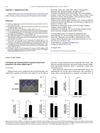
September 2021 in “Frontiers in Cell and Developmental Biology” Suspension culture is best for stem cell differentiation into endoderm cells.
 11 citations
,
June 2012 in “Journal of Dermatological Science”
11 citations
,
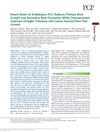
June 2012 in “Journal of Dermatological Science” Scientists identified a group of human skin cells with high growth and regeneration potential.
 38 citations
,
June 2018 in “Plant & cell physiology/Plant and cell physiology”
38 citations
,
June 2018 in “Plant & cell physiology/Plant and cell physiology” Changing the amount of PLC5 in Arabidopsis affects root growth and drought resistance, with less PLC5 slowing root growth and more PLC5 improving drought tolerance but hindering root hair growth.
106 citations
,
June 1990 in “Journal of Investigative Dermatology” January 2026 in “JPRAS Open” PDLLA scalp injections improved hair regrowth in most patients with non-scarring alopecia.
May 2013 in “Optometry and Vision Science” Experience-dependent plasticity offers rehabilitation potential for macular degeneration, partial orthokeratology slows myopia, and axis misalignment affects astigmatism surgery effectiveness.
3 citations
,
October 2021 in “Dermatologic Therapy” PRP with microneedling improves hair growth and patient satisfaction more than injections for androgenetic alopecia.
30 citations
,
September 2011 in “International Wound Journal” Platelet-rich plasma gel helps heal chronic wounds better than before treatment.
 April 2018 in “Journal of Investigative Dermatology”
 Desmoglein 3 organization in cell connections changes without calcium, affecting cell adhesion.
 January 2025 in “Plastic Surgery and Reconstructive Medicine”
 Plasmatherapy improves immune status in vitiligo patients, especially those with segmental vitiligo.
28 citations
,
October 2014 in “Development” Fz3 and Fz6 can partially replace each other in tissue polarity and axon guidance.
 10 citations
,
April 2007 in “Aesthetic Plastic Surgery”
10 citations
,
April 2007 in “Aesthetic Plastic Surgery” The new patient-controlled expansion technique for breast reconstruction is safe, efficient, and cost-effective.
Hair follicles can effectively absorb nano-sized particles, making them potential targets for localized drug delivery.
44 citations
,
May 2022 in “Journal of Assisted Reproduction and Genetics”  August 2004 in “Journal of the American College of Surgeons”
 Dermagraft and Dermalogen had a lot of granulation, while Alloderm, Integra, and ADM had good blood vessel growth for skin healing.
16 citations
,
July 2017 in “Journal of American Association for Pediatric Ophthalmology and Strabismus” The modified Crawford technique resulted in less lagophthalmos and better cosmetic outcomes for patients with lateral droop.
 September 2009 in “Hair transplant forum international”
 Changing the direction of cuts can make it easier to put in implants.
2 citations
,
January 2022 in “Annals of Dermatology” Treatment type and patch size affect hair regrowth patterns in alopecia areata.
47 citations
,
August 2024 in “Science Advances” The new sprayable wound mask helps heal wounds without scars.
 May 2013 in “Proceedings of SPIE”
 Researchers created a system that accurately aligns laser beams automatically.
Placental cell medium boosts blood vessel growth in lab tests.
Human placental extract effectively and safely improves melasma, ulcers, and alopecia areata.
3 citations
,
September 2024 in “Journal of Microbiology and Biotechnology” Human placenta extract reduces inflammation and symptoms in atopic dermatitis.
20 citations
,
September 2022 in “Journal of Biomedical Optics” PBM helps improve cell survival in 3D tissue engineering.
January 2026 in “International Journal of Surgery Case Reports” Home IPL devices safely and effectively reduce hair and prevent pilonidal disease recurrence.
April 2025 in “Assiut Veterinary Medical Journal/Maǧallaẗ Asyūṭ al-ṭibiyyaẗ al-baytariyyaẗ” Platelet-rich plasma speeds up early skin wound healing.
7 citations
,
February 2002 in “Veterinary Dermatology” Intracorneal vacuoles are common in parakeratotic skin diseases in dogs, especially with more parakeratosis.
 June 2023 in “Research Square (Research Square)”
 Hyaluronic acid and polycaprolactone improve skin regeneration, with polycaprolactone having a stronger effect on healing and tissue repair.
 January 2025 in “Journal of Pharmaceutical Research Science & Technology”
 Dissolving microneedles offer efficient, minimally invasive drug delivery through the skin.