22 citations
,
September 1982 in “Journal of ultrastructure research” Wool follicle cells are more complex than previously thought.
4 citations
,
November 2016 in “The Journal of Dermatology” Pili torti hair is fragile due to loose keratin filaments and weak disulfide bonds.
April 2025 in “Journal of Diabetes & Metabolic Disorders” Monitoring TGF-β and linc-PINT expression may help identify and treat high-risk heart arrhythmia patients.
26 citations
,
June 2010 in “Electrophoresis” New techniques helped identify rare wool proteins by reducing dominant ones.
December 2018 in “European Journal of Pediatric Dermatology/PD. European journal of pediatric dermatology” Segmental vitiligo affects hair follicle melanocytes, causing small, uniform depigmented spots.
2 citations
,
April 2019 in “Experimental Dermatology” Hair follicles respond differently to pulling forces in various regions.
September 2021 in “Morphologia” Dermal fibroblasts have at least three distinct types, each with unique roles in skin structure and hair development.
35 citations
,
September 2003 in “Archives of dermatology” Tiger tail bands in hair are caused by wavy hair fibers with melanin, unlike straight fibers in normal hair.
EDM is better for isolating and growing human foreskin fibroblasts, and PPP helps repair UVB damage.
 1 citations
,
December 2017 in “Anais Brasileiros de Dermatologia”
1 citations
,
December 2017 in “Anais Brasileiros de Dermatologia” Frontal fibrosing alopecia can mimic traction alopecia but has distinct features like facial papules and eyebrow thinning.
36 citations
,
July 1988 in “Archives of Dermatological Research” Pili annulati is caused by a protein metabolism disorder affecting hair structure.
February 2026 in “Small Ruminant Research” The IRF2BP2 gene affects sheep fleece quality by influencing fiber traits.
January 2025 in “SSRN Electronic Journal”  1 citations
,
July 2020 in “Benha Journal of Applied Sciences”
1 citations
,
July 2020 in “Benha Journal of Applied Sciences” Trichoscopy is useful for diagnosing Frontal Fibrosing Alopecia.
15 citations
,
January 2018 in “Advances in experimental medicine and biology” Keratin proteins are crucial for hair growth and structure.
15 citations
,
December 1972 in “Journal of Investigative Dermatology” 2 citations
,
May 2022 in “bioRxiv (Cold Spring Harbor Laboratory)” Rare Gli1+ fibroblasts are crucial for skin wound healing.
 25 citations
,
June 2018 in “Journal of The American Academy of Dermatology”
25 citations
,
June 2018 in “Journal of The American Academy of Dermatology” Genes linked to fibrosis are more active in people with central centrifugal cicatricial alopecia.
 December 2016 in “Journal of Dermatology and Dermatologic Surgery”
 IFHUT shows better hair growth than FUE, but needs improvements in positioning, speed, and accuracy.
 24 citations
,
November 1978 in “Biochemistry”
24 citations
,
November 1978 in “Biochemistry” α-type filaments in guinea pig hair follicles have unique structural features.
 1 citations
,
September 2021 in “Journal of The American Academy of Dermatology”
1 citations
,
September 2021 in “Journal of The American Academy of Dermatology” Hair loss in both Androgenetic Alopecia and Alopecia Areata is often accompanied by inflammation around hair follicles, but the location and severity of this inflammation varies.
 63 citations
,
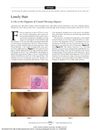
October 2011 in “Archives of Dermatology”
63 citations
,
October 2011 in “Archives of Dermatology” Isolated long hairs at the original hairline can help diagnose Frontal Fibrosing Alopecia.
 16 citations
,
February 2010 in “Journal of the European Academy of Dermatology and Venereology”
16 citations
,
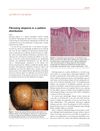
February 2010 in “Journal of the European Academy of Dermatology and Venereology” Fibrosing alopecia in a pattern distribution is a unique hair loss condition that may respond to antiandrogen therapy.
 April 2018 in “The journal of investigative dermatology/Journal of investigative dermatology”
 Skin heals with scars because only one type of fibroblast is used, not a mix.
 September 2023 in “International Journal of Dermatology”
 Younger people are at a higher risk for Fibrosing Alopecia in a Pattern Distribution than previously thought, with common symptoms and possible involvement of mast cells in its development.
 April 2025 in “Veterinary Dermatology”
 Dermoscopy is useful for identifying skin lesions in dogs, with specific features distinguishing infundibular keratinising acanthomas from follicular cysts.
 January 2015 in “Hair transplant forum international”
 The document's conclusion cannot be provided because the content is not available.
41 citations
,
January 2001 in “Journal of Investigative Dermatology” 4 citations
,
July 2010 in “International Journal of Cosmetic Science” Curved human hair has different structures on its convex and concave sides.
4 citations
,
November 2024 in “Journal of Advanced Research” Targeting NMMHC IIA may help treat blood-brain barrier damage.