 5 citations
,
January 2020 in “Skin appendage disorders”
5 citations
,
January 2020 in “Skin appendage disorders” Oral dutasteride works better for hair loss, but has more sexual side effects; intralesional dutasteride is a possible alternative.
December 2025 in “Journal of Cosmetic Dermatology” Intralesional dutasteride improves hair growth in androgenic alopecia with minimal side effects.
2 citations
,
March 2022 in “Journal of The European Academy of Dermatology and Venereology” Combining dutasteride injections with oral minoxidil may improve hair regrowth more than using oral minoxidil alone.
 1 citations
,
July 2018 in “Journal of dermatology & cosmetology”
1 citations
,
July 2018 in “Journal of dermatology & cosmetology” Hyaluronic acid successfully treated skin atrophy caused by corticosteroid injections.
 August 2024 in “JEADV Clinical Practice”
 Mesotherapy with dutasteride improves hair growth and reduces symptoms in frontal fibrosing alopecia.
December 2025 in “Actas Dermo-Sifiliográficas” Use a combination of oral dutasteride, topical treatments, and hydroxychloroquine to manage frontal fibrosing alopecia.
 14 citations
,
April 2019 in “International Journal of Women's Health”
14 citations
,
April 2019 in “International Journal of Women's Health” Some treatments can stabilize Frontal Fibrosing Alopecia, but more research is needed to find effective treatments, and hair transplants often fail.
Antimalarial agents are effective for LPP, and intralesional steroids are effective for FFA.
 95 citations
,
November 2016 in “Journal of The American Academy of Dermatology”
95 citations
,
November 2016 in “Journal of The American Academy of Dermatology” Treatments for permanent hair loss from scarring aim to stop further loss, not regrow hair, and vary by condition, with partial success common.
 26 citations
,
June 2018 in “Australasian Journal of Dermatology”
26 citations
,
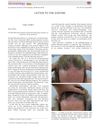
June 2018 in “Australasian Journal of Dermatology” Stopping sunscreen use on the forehead led to hair regrowth in a woman with frontal fibrosing alopecia.
 14 citations
,
December 2010 in “Dermatologica Sinica”
14 citations
,
December 2010 in “Dermatologica Sinica” New treatments for hair loss show promise, but more development is needed, especially for tough cases.
 8 citations
,
October 2018 in “Journal of The American Academy of Dermatology”
8 citations
,
October 2018 in “Journal of The American Academy of Dermatology” The review suggests there's no agreed treatment for Frontal Fibrosing Alopecia, but hydroxychloroquine and 5a-reductase inhibitors are most effective. New treatments like platelet-rich plasma and LED light could help if standard treatments fail.
 7 citations
,
October 2015 in “Actas Dermo-Sifiliográficas”
7 citations
,
October 2015 in “Actas Dermo-Sifiliográficas” New treatments for Frontal Fibrosing Alopecia show promise, especially finasteride and dutasteride, with most patients seeing improvement or stabilization.
 5 citations
,
March 2014 in “Journal of The American Academy of Dermatology”
5 citations
,
March 2014 in “Journal of The American Academy of Dermatology” The study suggests hormonal factors may play a role in Frontal Fibrosing Alopecia and that treatments like oral antiandrogens and steroids could be beneficial.
Early combination therapy can effectively regrow hair in frontal fibrosing alopecia.
 November 2024 in “Cureus”
 Early diagnosis and personalized treatment can prevent damage from dissecting cellulitis after hair restoration surgery.
 August 2023 in “Journal of The American Academy of Dermatology”
 Early treatment is key for permanent hair loss disorders, with options ranging from medications and phototherapy to immunomodulators and antibiotics, depending on severity and type.
January 2023 in “Dermatologic Therapy” Intralesional corticosteroids and 5-alpha-reductase inhibitors are the best treatments for frontal fibrosing alopecia.
 June 2022 in “Journal of The European Academy of Dermatology and Venereology”
 Microneedling with topical dutasteride improves hair growth in men with hair loss and is safe to use.
 March 2026 in “Revista Ibero-Americana de Humanidades, Ciências e Educação”
 Using dutasteride during hair transplants improves results and reduces hair loss.
 January 2026 in “International Journal of Dermatology Venereology and Leprosy Sciences”
 Intradermal dutasteride effectively and safely improves hair growth in early-stage androgenetic alopecia.
 69 citations
,
August 2008 in “Journal of The European Academy of Dermatology and Venereology”
69 citations
,
August 2008 in “Journal of The European Academy of Dermatology and Venereology” Oral dutasteride and topical pimecrolimus can safely and effectively treat Frontal Fibrosing Alopecia, leading to significant hair regrowth.
 17 citations
,
June 2016 in “Australasian Journal of Dermatology”
17 citations
,
June 2016 in “Australasian Journal of Dermatology” Treatment with dutasteride, minoxidil, and artificial hair transplantation improved appearance but caused folliculitis.
 September 2025 in “International Journal of Innovative Technologies in Social Science”
 Dutasteride is more effective than finasteride for hair loss, but more research is needed on safety and dosing.
 41 citations
,
April 2012 in “Journal of The European Academy of Dermatology and Venereology”
41 citations
,
April 2012 in “Journal of The European Academy of Dermatology and Venereology” Dutasteride-containing mesotherapy effectively treats female hair loss, improving density and thickness with minimal side effects.
 May 2023 in “JAAD international”
 Minoxidil-dutasteride tattooing can potentially help regrow hair, especially in men who already have some thin hair.
August 2023 in “Journal of Investigative Dermatology” Dutasteride may help treat frontal fibrosing alopecia.
 January 2024 in “Journal of the Egyptian Women's Dermatologic Society (Print)”
 Combining minoxidil with dutasteride and microneedling is more effective for female pattern hair loss than just dutasteride and microneedling.
 February 2025 in “JAAD International”
 Five monthly sessions of minoxidil-dutasteride-copper peptide tattooing significantly improve hair regrowth in men with androgenetic alopecia.
 1 citations
,
July 2024 in “Journal of the European Academy of Dermatology and Venereology”
1 citations
,
July 2024 in “Journal of the European Academy of Dermatology and Venereology” Oral dutasteride is effective and safe for treating frontal fibrosing alopecia.