2 citations
,
August 2024 in “Preprints.org” Fluocinolone may help treat scalp symptoms in ichthyosis patients.
 68 citations
,
September 2003 in “British Journal of Dermatology”
68 citations
,
September 2003 in “British Journal of Dermatology” Shrinking skin cancer increases the chance of cancer in nearby lymph nodes.
 March 2025 in “Pain Physician”
 Cooling the skin before injections reduces pain for patients with hair loss.
33 citations
,
June 2021 in “Dermatologic Therapy” COVID-19 vaccines can trigger autoimmune flares but are still beneficial for patients with autoimmune conditions.
 April 2025 in “Vestnik dermatologii i venerologii”
 JAK inhibitors like tofacitinib are effective and safer for severe alopecia areata than glucocorticosteroids.
 123 citations
,
September 1987 in “JAMA”
123 citations
,
September 1987 in “JAMA” IL-2 treatment causes skin eruptions and other reversible side effects, and may play a role in psoriasis.
 4 citations
,
April 2021 in “Journal of Cosmetic Dermatology”
4 citations
,
April 2021 in “Journal of Cosmetic Dermatology” Intradermal injections improve hair density and thickness better, while derma roller is more convenient.
7 citations
,
March 2023 in “Lasers in Surgery and Medicine” Ablative fractional laser treatment nearly matches the gene reduction effects of topical vismodegib in skin cancer.
5 citations
,
August 1998 in “PubMed” Intravenous cyclophosphamide effectively treated steroid-resistant lupus cystitis and peritonitis.
 7 citations
,
January 2017 in “International Journal of Dermatology”
7 citations
,
January 2017 in “International Journal of Dermatology” Superficial cryotherapy significantly improves eyebrow hair growth in alopecia universalis patients.
4 citations
,
October 2025 in “Journal of Cosmetic Dermatology” Unregulated exosome-based injections can cause severe skin reactions and scarring.
97 citations
,
January 1996 in “Clinical infectious diseases/Clinical infectious diseases (Online. University of Chicago. Press)” Fluconazole is somewhat effective for skin-related sporotrichosis but less so for severe forms, and should be a backup treatment.
 March 2004 in “Journal of The American Academy of Dermatology”
 Patients with systemic lupus erythematosus and hair loss had fewer hair follicles and non-scarring alopecia; direct immunofluorescence was not helpful in diagnosing lupus in these cases.
21 citations
,
March 2002 in “PubMed” High-dose steroid pulse therapy effectively regrows hair in severe multifocal alopecia areata.
1 citations
,
April 2022 in “Clinical Cosmetic and Investigational Dermatology” Topical treatment improved rare scalp lichen amyloidosis.
 1 citations
,
March 2019 in “Journal of Interdisciplinary Medicine”
1 citations
,
March 2019 in “Journal of Interdisciplinary Medicine” A patient with multiple sclerosis developed skin reactions after Daclizumab treatment, requiring more data on the drug's effects.
 February 2026 in “Dermatology and Therapy”
 Sonidegib is effective and safe for treating advanced basal cell carcinoma, but biopsies are needed to confirm tumor clearance.
July 2025 in “Journal of Clinical Medicine” Platelet-rich concentrates can be an alternative treatment for oral lichen planus, especially when steroids don't work.
 11 citations
,
September 1999 in “Journal of the European Academy of Dermatology and Venereology”
11 citations
,
September 1999 in “Journal of the European Academy of Dermatology and Venereology” Immunomodulatory therapies are effective for treating cutaneous lymphoma, particularly in early stages.
 6 citations
,
October 2015 in “Clinical Case Reports”
6 citations
,
October 2015 in “Clinical Case Reports” A woman with acromegaly experienced severe hair loss from a drug called Lanreotide Autogel, which improved after stopping the treatment.
24 citations
,
November 2023 in “International Journal of Molecular Sciences” PRP and ADSC therapies show promise in improving symptoms of genital lichen sclerosus with minimal side effects.
22 citations
,
September 2020 in “The journal of investigative dermatology/Journal of investigative dermatology” The study's results on the effectiveness of low-dose IL-2 for alopecia areata and its impact on immune cells were not provided.
 7 citations
,
June 2010 in “Journal of The American Academy of Dermatology”
7 citations
,
June 2010 in “Journal of The American Academy of Dermatology” Tranilast successfully treated a man's skin sarcoidosis when other treatments failed.
77 citations
,
January 1993 in “Skin Pharmacology and Physiology” Steroids stop hair growth temporarily but don't block the signals that start it.
2 citations
,
January 2023 in “Dermatologic Therapy” CEFFE injections effectively and safely improve postinflammatory hyperpigmentation.
 March 2024 in “Clinical and experimental dermatology”
 Topical corticosteroids may be a safe and effective treatment for severe alopecia areata in children.
24 citations
,
March 2009 in “Archives of dermatological research” The combination of oral PUVA and corticosteroids helps regrow hair in severe alopecia areata.
 April 2020 in “Rheumatology”
 Many patients with Giant Cell Arteritis did not follow their steroid treatment plans properly.
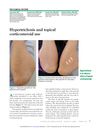 February 2022 in “Cleveland Clinic Journal of Medicine”
 Prolonged use of topical corticosteroids can cause excessive hair growth.