 1 citations
,
January 2022 in “The Egyptian Journal of Hospital Medicine ”
1 citations
,
January 2022 in “The Egyptian Journal of Hospital Medicine ” Cryotherapy and steroid injections are similarly effective and safe for treating alopecia areata.
 14 citations
,
November 2020 in “International Journal of Molecular Sciences”
14 citations
,
November 2020 in “International Journal of Molecular Sciences” Advanced therapies like gene, cell, and tissue engineering show promise for hair regrowth in alopecia, but their safety and effectiveness need more verification.
 7 citations
,
July 2019 in “International journal of research in dermatology”
7 citations
,
July 2019 in “International journal of research in dermatology” Intralesional triamcinolone acetonide is more effective than platelet-rich plasma for treating scalp alopecia areata.
 2 citations
,
January 2022 in “Skin appendage disorders”
2 citations
,
January 2022 in “Skin appendage disorders” A combination of methotrexate injections and CO2 laser treatment led to complete hair regrowth in two patients with hard-to-treat alopecia.
 1 citations
,
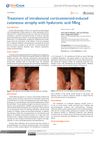
July 2018 in “Journal of dermatology & cosmetology”
1 citations
,
July 2018 in “Journal of dermatology & cosmetology” Hyaluronic acid successfully treated skin atrophy caused by corticosteroid injections.
 May 2026 in “Scholars Journal of Medical Case Reports”
 Intralesional betamethasone and oral hydroxychloroquine improved hair loss in a woman with frontal fibrosing alopecia.
 November 2025 in “The Journal of Medical Sciences”
 Intralesional triamcinolone is more effective than cryotherapy for treating alopecia areata in middle-aged adults.
 September 2025 in “The health sciences AUS.”
 Intralesional triamcinolone acetonide effectively treats acne keloidalis nuchae with minimal side effects.
LGF injections may improve early Peyronie's disease by reducing penile curvature and plaque size.
Both treatments for localized alopecia areata are equally effective.
Combining epinephrine with a steroid may help regrow hair in severe alopecia areata cases.
 January 2008 in “Springer eBooks”
 Thyroid hormone may be useful for treating various skin conditions and needs more research.
 January 2024 in “International Journal of Dermatology Research”
 PRP is more effective than triamcinolone for treating alopecia areata.
 October 2023 in “Benha Journal of Applied Sciences”
 Methotrexate and vitamin D3 are potentially more effective and safer than triamcinolone for treating localized alopecia areata.
Fractional CO2 laser is more effective and safer than steroid injections for treating alopecia areata.
 25 citations
,
February 2014 in “British journal of dermatology/British journal of dermatology, Supplement”
25 citations
,
February 2014 in “British journal of dermatology/British journal of dermatology, Supplement” Intralesional triamcinolone acetonide can regrow hair in alopecia areata but often has temporary effects and side effects.
 5 citations
,
January 2020 in “Skin appendage disorders”
5 citations
,
January 2020 in “Skin appendage disorders” Oral dutasteride works better for hair loss, but has more sexual side effects; intralesional dutasteride is a possible alternative.
 April 2026 in “Dermatology and Therapy”
 TNFα inhibitors are effective and well-tolerated for treating severe scalp cellulitis.
 January 2026 in “BULLETIN OF STOMATOLOGY AND MAXILLOFACIAL SURGERY”
 Both treatments help hair regrowth, but Botulinum Toxin-A has fewer side effects.
Combining systemic steroids and dithranol can effectively regrow hair in severe alopecia areata.
 September 2025 in “Journal of Skin and Stem Cell”
 The combination of calcipotriol and PRP is the most effective treatment for alopecia areata.
 January 2025 in “Indian Journal of Unani Medicine”
 Wet cupping may improve hair health in androgenetic alopecia without side effects.
 January 2023 in “International Journal of Pharmaceutical Research and Development”
 Nanotechnology therapies can help improve quality of life for those with hair loss.
 May 2017 in “IOSR journal of dental and medical sciences”
 Both Betasalic ointment and 5% minoxidil are effective and safe for treating Alopecia Areata.
 January 2015 in “Our Dermatology Online”
 Intralesional triamcinolone is the most effective treatment for hair regrowth in alopecia areata patients.
 January 2015 in “Przegla̧d dermatologiczny”
 Intralesional triamcinolone is the most effective treatment for alopecia areata, followed by excimer light therapy, and then topical minoxidil. The scalp responds better to treatment than the beard area.
 48 citations
,
January 2011 in “International journal of trichology”
48 citations
,
January 2011 in “International journal of trichology” Intralesional triamcinolone acetonide is the most effective treatment for localized alopecia areata.
 25 citations
,
March 2019 in “Dermatologic therapy”
25 citations
,
March 2019 in “Dermatologic therapy” Intralesional therapy for keratoacanthoma is effective and has fewer side effects than systemic treatments.
Low-dose oral isotretinoin improved hair loss and facial bumps in patients with a specific type of hair loss.
 January 2022 in “Revista del Centro Dermatológico Pascua”
 PRP therapy is a promising treatment for male hair loss on the vertex.