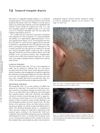
 April 2012 in “Informa Healthcare eBooks”
 Temporal triangular alopecia is a lifelong condition with hairless patches on the side of the head that may be present from birth.
 April 2026 in “Zenodo (CERN European Organization for Nuclear Research)”
 Ayurvedic treatment significantly reduced alopecia areata symptoms.
 2 citations
,
December 2023 in “Journal of Ayurveda and Integrated Medical Sciences”
2 citations
,
December 2023 in “Journal of Ayurveda and Integrated Medical Sciences” Ayurvedic treatment effectively cured a boy's alopecia areata with no side effects or recurrence.
 June 2022 in “Authorea (Authorea)”
 A 59-year-old woman was diagnosed with a rare hair loss condition called lipedematous alopecia.
January 2026 in “Updates in clinical dermatology” November 2022 in “Journal of Investigative Dermatology” Minoxidil and PRP can help convert miniaturized hair follicles back to normal in male pattern baldness.
October 2025 in “Nature Reviews Disease Primers” October 2025 in “Nature Reviews Disease Primers”  April 2026 in “Zenodo (CERN European Organization for Nuclear Research)”
 Ayurvedic treatment significantly reduced symptoms of alopecia areata.
 158 citations
,
February 2000 in “Archives of dermatology”
158 citations
,
February 2000 in “Archives of dermatology” Some people with pattern hair loss may also have scalp inflammation and scarring similar to lichen planopilaris.
192 citations
,
October 1998 in “Experimental Dermatology” Androgenetic alopecia involves complex hair follicle changes and knowledge gaps remain.
January 2022 in “Clinical Cases in Dermatology” A 4-year-old boy has a rare type of hair loss in a line pattern on his scalp.
 March 2026 in “Frontiers in Medicine”
 Different types of alopecia cause hair loss due to immune system issues, with some allowing regrowth and others causing permanent loss.
 June 2023 in “JAAD case reports”
 A rare scalp condition, cutis verticis gyrata, was found in a woman with primary scarring alopecia.
October 1966 in “Archives of Dermatology” A 19-year-old female with alopecia universalis experienced total hair loss, and previous treatments were ineffective.
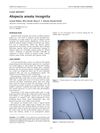 December 2007 in “CRC Press eBooks”
 Alopecia areata incognita causes widespread hair loss without patches and needs a scalp biopsy for diagnosis.
39 citations
,
November 2009 in “Clinical and Experimental Dermatology” Immune privilege collapse in hair follicles may cause permanent hair loss in certain conditions.
7 citations
,
January 2016 in “Dermatology online journal” Persistent pulling on hair can cause permanent hair loss.
 4 citations
,
October 2018 in “Experimental Dermatology”
4 citations
,
October 2018 in “Experimental Dermatology” Dermoscopy shows that diffuse alopecia areata progresses through specific hair growth stages.
 March 2012 in “Journal of The American Academy of Dermatology”
 Temporal triangular alopecia usually starts in early childhood and treatment with Minoxidil has limited effectiveness.
January 2024 in “Elsevier eBooks” December 2023 in “International Journal of Dermatology” Accurate diagnosis of alopecia areata incognito requires trichoscopy and histopathology.
January 2016 in “Indian dermatology online journal” The patient has frontal fibrosing alopecia (FFA).
 8 citations
,
March 2017 in “Experimental Dermatology”
8 citations
,
March 2017 in “Experimental Dermatology” Finasteride helps female-pattern hair loss.
 2 citations
,
June 1980 in “International Journal of Dermatology”
2 citations
,
June 1980 in “International Journal of Dermatology” Scalp biopsies are important for diagnosing hair loss conditions.
 August 2015 in “Dermatología Argentina”
 Frontal fibrosing alopecia causes hairline recession and eyebrow loss in postmenopausal women.
14 citations
,
January 2014 in “Indian Journal of Dermatology Venereology and Leprology” Frontal fibrosing alopecia can affect men's beards and leads to permanent hair loss.
April 2025 in “Journal of Ayurveda and Integrated Medical Sciences” Ayurvedic treatment led to significant hair regrowth in an 11-year-old with alopecia areata.
 March 2025 in “Kerala Journal of Ayurveda”
 Ayurvedic treatments successfully regrew hair and reduced hair loss in a woman with alopecia areata.
3 citations
,
November 2021 in “Frontiers in Medicine” Advanced male pattern baldness affects the back of the scalp, reducing hair follicles.