1 citations
,
January 2010 in “Biophysical journal” Hair fluorescence intensity can measure radiation exposure effectively.
10 citations
,
January 2004 in “PubMed” Radiation increases cell death in hair follicles, but certain treatments can protect against this effect.
 2 citations
,
January 1992 in “Neurologia medico-chirurgica”
2 citations
,
January 1992 in “Neurologia medico-chirurgica” The new therapy effectively targets brain tumors while minimizing damage to healthy tissue.
 3 citations
,
March 1932 in “Journal of the American Medical Association”
3 citations
,
March 1932 in “Journal of the American Medical Association” Radium exposure causes severe health issues, so strict safety measures are essential.
July 2026 in “Journal of Medical Imaging and Radiation Oncology” Higher radiation doses in neurointerventional procedures can cause skin reactions like hair loss and redness.
4 citations
,
March 1989 in “PubMed” Radiotherapy can cause various side effects, but symptoms improve after treatment, and staff protection is crucial.
 17 citations
,
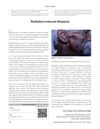
January 2010 in “International journal of trichology”
17 citations
,
January 2010 in “International journal of trichology” A man experienced hair loss from radiotherapy, which can be temporary or permanent depending on radiation dose, with potential treatments available.
8 citations
,
January 2024 in “Regenerative Biomaterials” The hydrogel effectively treats dental implant issues by killing bacteria, reducing inflammation, and improving implant success.
 39 citations
,
December 2011 in “PLoS ONE”
39 citations
,
December 2011 in “PLoS ONE” Radiofrequency exposure can stimulate hair growth by increasing IGF-1 in hair follicle cells.
1 citations
,
April 1961 in “OSTI OAI (U.S. Department of Energy Office of Scientific and Technical Information)” Radiation affects plant growth differently, with high doses being harmful, but some lower doses can increase yield.
52 citations
,
June 2009 in “Clinical Toxicology” Polonium poisoning is diagnosed by detecting it in urine and feces, and treated with supportive care, infection prevention, and chelation therapy.
37 citations
,
February 2008 in “PubMed” Keeping radiation doses under 16 Gy may reduce permanent hair loss.
June 2026 in “EJC Paediatric Oncology” High-dose thiotepa and twice-daily treatments increase the risk of permanent hair loss in children receiving craniospinal irradiation.
January 2017 in “Elsevier eBooks” Radiation therapy for cancer often causes skin problems like redness, dryness, and pain.
January 2011 in “Junshi yixue” Longer exposure to high-power millimeter wave radiation causes more severe skin damage in mice.
 9 citations
,
March 2022 in “Journal of radiation research”
9 citations
,
March 2022 in “Journal of radiation research” Boron neutron capture therapy for head and neck cancer can cause side effects like mouth sores and skin irritation, which vary depending on where the treatment is aimed.
January 2015 in “UNIFESP Institutional Repository (Universidade Federal de São Paulo)” A 30 Gy radiation dose effectively causes severe radiodermatitis in rabbits.
 163 citations
,
April 1953 in “Acta radiologica”
163 citations
,
April 1953 in “Acta radiologica” Radiation therapy with a higher dose for the brain improves survival in cerebellar medulloblastoma.
 September 2009 in “European Urology Supplements”
 IGRT resulted in lower acute toxicity for stage III prostate cancer patients.
36 citations
,
April 2005 in “British journal of dermatology/British journal of dermatology, Supplement” Radiation therapy is an effective treatment for severe scalp cellulitis with mild side effects and no long-term complications.
57 citations
,
January 2004 in “Journal of Radiation Research” Zinc sulphate may help reduce skin damage from radiation therapy.
3 citations
,
July 1969 in “PubMed” Radiation reduced zinc levels, growth, organ weights, and hair pigment in swine.
29 citations
,
November 2015 in “Acta Biomaterialia” Infrared light can trigger drug release from gold nanoparticle carriers in hair follicles.
22 citations
,
September 1986 in “Journal of Investigative Dermatology” Low-dose topical alpha-terthienyl may be a safer option for treating skin conditions with light therapy.
24 citations
,
August 2020 in “JAMA dermatology” Persistent radiation-induced hair loss is dose-dependent, and treatments like topical minoxidil can be effective.
May 2026 in “International Journal of Cosmetic Science” UV radiation damages hair similar to bleaching, but double bleaching causes more severe protein degradation.
22 citations
,
July 2024 in “Frontiers in Oncology” FLASH radiation reduces tissue damage more than conventional radiation.
 5 citations
,
March 2012 in “Microscopy Research and Technique”
5 citations
,
March 2012 in “Microscopy Research and Technique” UVB radiation changes the chemical makeup and dries out human hair but doesn't alter its appearance or texture.
January 1997 in “Purdue e-Pubs (Purdue University)” Whole hair strands can reliably measure gamma ray exposure using ESR techniques, but samples should be analyzed quickly or stored in liquid nitrogen.
 June 2025 in “Clinical Cosmetic and Investigational Dermatology”
 There's an urgent need for better treatments for hair loss caused by radiation therapy.