December 2003 in “The journal of investigative dermatology/Journal of investigative dermatology” Glycerol may improve wound healing and prevent keloids, a device can measure itch intensity, male pattern baldness is highly heritable, and fumaric acid esters may work for psoriasis by causing cell death in T cells.
May 2022 in “CRC Press eBooks” Skin diseases can greatly affect daily life and require careful treatment and medication review.
 4 citations
,
February 2022 in “JEADV Clinical Practice”
4 citations
,
February 2022 in “JEADV Clinical Practice” COVID-19 can cause various skin issues in children, mostly not severe, with chilblain-like lesions being common, especially in adolescents.
2 citations
,
October 2023 in “JDDG Journal der Deutschen Dermatologischen Gesellschaft” Dupilumab significantly improved a 5-year-old girl's prurigo nodularis without side effects.
April 2026 in “Clinical and Experimental Dermatology” Dupilumab effectively reduces symptoms of prurigo nodularis and is safe for long-term use.
March 2025 in “Journal of Investigative Dermatology” Cannabinoids may help manage epidermolysis bullosa symptoms, but more research is needed.
 March 2024 in “Korean Journal of Pharmacognosy”
 Nymphaea caerulea flower extract can improve scalp conditions by reducing oil, inflammation, stress hormones, and blood vessel issues.
 July 2022 in “The journal of investigative dermatology/Journal of investigative dermatology”
 Thymic stromal lymphopoietin (TSLP) promotes hair growth by stimulating specific skin cells.
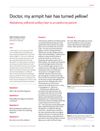
A 15-year-old boy's smelly, yellow armpit hair improved with clindamycin treatment.
 24 citations
,
July 2018 in “Stem cells”
24 citations
,
July 2018 in “Stem cells” Runx1 controls fat-related genes important for normal and cancer cell growth, affecting skin and hair cell behavior.
 17 citations
,
August 2019 in “Frontiers in Immunology”
17 citations
,
August 2019 in “Frontiers in Immunology” Non-invasive methods show promise for diagnosing skin diseases like psoriasis and lupus but need more research for regular use.
16 citations
,
June 2018 in “JAAD case reports” A JAK inhibitor improved both severe hair loss and chronic skin disease in one patient.
11 citations
,
July 1984 in “Australian Veterinary Journal” Some treatments worked for horse ringworm, but mass treatment should focus on stopping infection spread, not just hair regrowth.
 9 citations
,
January 2020 in “Skin appendage disorders”
9 citations
,
January 2020 in “Skin appendage disorders” Hair loss from conditions like LPP and FFA can potentially be reversed with the right treatment.
 9 citations
,
January 2013 in “Acta dermato-venereologica”
9 citations
,
January 2013 in “Acta dermato-venereologica” The conclusion is that "trichoknesis" should be recognized as a separate condition from trichodynia, characterized by itching instead of pain.
8 citations
,
June 2021 in “Frontiers in Medicine” The combination of the excimer lamp and liquor carbonis detergens is more effective for scalp psoriasis than the lamp alone.
 6 citations
,
February 2019 in “Scientific reports”
6 citations
,
February 2019 in “Scientific reports” A brain-produced steroid causes increased scratching in mice with a skin condition similar to eczema.
1 citations
,
January 2025 in “Journal of Cosmetic Dermatology” Maintaining a balanced scalp microbiome can help reduce itchiness.
1 citations
,
September 2024 in “Dermatological Reviews” Dupilumab effectively improves skin conditions, reduces symptoms, and enhances quality of life in certain dermatological issues.
1 citations
,
July 2024 in “JAAD Case Reports” Gabapentin may help relieve itchy scalp in lichen planopilaris patients.
1 citations
,
August 2021 in “Journal of Investigative Dermatology” ASLAN004 was safe and well-tolerated, supporting further development for treating certain diseases.
October 2025 in “Journal of Cosmetic Dermatology” Botulinum toxin Type A helps reduce hypertrophic scars and is generally safe.
July 2024 in “Journal of Investigative Dermatology” IL-13 protein is much higher in the skin of atopic dermatitis patients than in healthy skin.
 July 2024 in “Research Square (Research Square)”
 KATP channels may help reduce itching in liver disease.
 March 2023 in “JAAD case reports”
 Botulinum toxin A may be an effective alternative treatment for the scalp disorder folliculitis decalvans.
January 2022 in “Clinical Cases in Dermatology” A man has a common skin condition called seborrheic dermatitis, treated with special shampoos and sometimes medication.
June 2019 in “PRISM (University of Calgary)” DPCs and new biomaterials can greatly improve skin healing.

Different botulinum toxin products and concentrations can effectively reduce sweating, itching, bladder pressure, hair loss, and muscle spasms.
 March 2022 in “IntechOpen eBooks”
 Botulinum Neurotoxin-A can treat acne, oily skin, rosacea, hair loss, prevent scars, relieve nerve pain, reduce excessive sweating, and manage psoriasis, but more trials are needed to confirm its effectiveness.
 March 2005 in “Journal of The American Academy of Dermatology”
 Mycophenolate mofetil improved skin condition in a man with nephrogenic fibrosing dermopathy.