1 citations
,
January 2015 The gel with apigenin and celery juice promotes hair growth without causing skin irritation.
Wheat bran promotes hair growth by helping hair cells multiply.
11 citations
,
May 2011 in “The Journal of Dermatology” A man had two rare autoimmune diseases that might be connected.
The review suggested the study needed to clarify its purpose, compare with non-immortalized cells, and provide more details on methods.

A woman regrew her hair after receiving injections of special cell-derived vesicles.
October 2021 in “European urology open science” June 2007 in “Taiwan Journal of Ophthalmology” Young patients with Vogt-Koyanagi-Harada syndrome may have poor vision outcomes despite treatment due to frequent recurrences.

Engineered vesicles deliver mitochondria to improve diabetic wound healing.

IP-PA1 helps grow hair in mice and affects human cell growth-related genes differently than traditional hair growth treatments.
January 2026 in “Pediatrics International” Live vaccines can be safely given to infants with a FOXN1 variant if their immune function improves over time.
January 2026 in “Advanced Healthcare Materials” The new bioreactor improves skin grafts by evenly stretching cells and monitoring conditions for better growth.
25 citations
,
February 2024 in “Biomaterials” Stem cell-derived organoids can improve skin healing.
 March 2025 in “Nature Communications”
 NSC167409 can effectively inhibit the virus causing hand, foot, and mouth disease.
 March 2021 in “Indian Journal of Case Reports”
 A young woman with late-stage Vogt-Koyanagi-Harada disease was successfully treated at a hospital.
21 citations
,
January 2006 in “Hormone Research in Paediatrics” A mutation in the VDR gene affects hair cycling without needing ligand binding.
 208 citations
,
January 2013 in “Lab on a Chip”
208 citations
,
January 2013 in “Lab on a Chip” The Multi-Organ-Chip improves the growth and quality of skin and hair in the lab, potentially replacing animal testing.
3 citations
,
November 2022 in “International journal of molecular sciences” Bio-pulsed stimulation increases production of beneficial vesicles from bird stem cells that improve skin and hair cell functions.
212 citations
,
August 2004 in “Proceedings of the National Academy of Sciences” Hair follicle cells can create new blood vessels in the skin.
3 citations
,
October 2024 in “Cancers” Skin side effects from melanoma immunotherapy are common and may indicate better survival.
January 2021 in “Journal of clinical & experimental dermatology research” LustrivaTM improves hair thickness and reduces facial wrinkles safely.
June 2026 in “ACS Applied Nano Materials” New microneedles may improve vitiligo treatment.
1 citations
,
September 2025 in “Plant Science Today” The herbal mix of hibiscus and vitex shows promise for treating autoimmune diseases due to its effectiveness and low toxicity.
9 citations
,
October 2015 in “Cutaneous and ocular toxicology” Vemurafenib can cause scalp issues but can be managed without changing the dose.
July 2024 in “Journal of Investigative Dermatology” INTASYL is a promising, adaptable RNAi technology for treating skin cancers.
 March 2024 in “Clinical, cosmetic and investigational dermatology”
 Tofacitinib successfully treated vitiligo in a patient with lupus without side effects.
1 citations
,
April 2023 in “Heliyon” Disitamab vedotin and gemcitabine effectively treated bladder cancer without major side effects.
 14 citations
,
January 2006 in “Skinmed”
14 citations
,
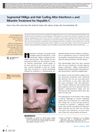
January 2006 in “Skinmed” A woman developed white patches on her skin and curly hair after hepatitis C treatment, likely due to the medication interferon alpha.
 November 2009 in “Regenerative Medicine”
 The regenerative medicine industry saw business growth with new partnerships, clinical trials, and financial investments.
19 citations
,
January 2013 in “Frontiers in Neuroanatomy” Zebrafish can help study and develop treatments for hearing loss.
1 citations
,
July 2018 in “Dermatologic Surgery” Different tumor cells in one basal cell carcinoma can cause mixed treatment responses, suggesting personalized treatment is needed.