 40 citations
,
April 2014 in “Genes & Development”
40 citations
,
April 2014 in “Genes & Development” Hormones during pregnancy and lactation keep skin stem cells inactive, preventing hair growth.
 3 citations
,
January 2015 in “Nasza Dermatologia Online”
3 citations
,
January 2015 in “Nasza Dermatologia Online” Some treatments for autoimmune hair loss work, but JAK inhibitors like tofacitinib are promising for regrowth.
November 2025 in “Biomedicines” JAK1 inhibitors can help reduce itchiness in atopic dermatitis.
 January 2025 in “FASKES Jurnal Farmasi Kesehatan dan Sains”
 Erythrina subumbrans leaves may help treat hair loss.
 August 2023 in “Medical Hypotheses”
 Metformin, usually used for diabetes, can also help treat hair loss from alopecia areata due to its ability to reduce inflammation and stimulate new hair growth.
January 2026 in “Journal of Clinical Medicine” Janus kinase inhibitors reduce inflammation markers in severe alopecia areata patients.
July 2024 in “JAAD Case Reports” Ruxolitinib helped regrow hair in a woman with a blood disorder and complete hair loss.
25 citations
,
March 2021 in “Australasian Journal of Dermatology” Ustekinumab successfully treated a man's resistant skin condition when other treatments failed.
 6 citations
,
April 2021 in “Frontiers in Immunology”
6 citations
,
April 2021 in “Frontiers in Immunology” A patient with lupus and long-term hair loss saw significant hair regrowth after using the drug tofacitinib.
 2 citations
,
June 2023 in “Indian journal of dermatology, venereology, and leprology”
2 citations
,
June 2023 in “Indian journal of dermatology, venereology, and leprology” Janus kinase inhibitors can regrow hair in alopecia areata but may cause side effects and hair loss may return if treatment stops.
 December 2024 in “Clinical and Experimental Dermatology”
 Switching to ritlecitinib improves hair regrowth and well-being in severe alopecia areata patients.
 May 2018 in “White Rose eTheses Online (University of Leeds, The University of Sheffield, University of York)”
 Alopecia areata may be treated by using EGCG to balance immune cells and reduce inflammation.
6 citations
,
November 2020 in “JAAD Case Reports” Tofacitinib may help treat both alopecia areata and inflammatory bowel disease.
November 2025 in “Journal of Investigative Dermatology” TEC kinases may help cause inflammation in vitiligo and could be targeted for treatment.
August 2022 in “Journal of Investigative Dermatology” Baricitinib reduces inflammation and mitochondrial damage in skin cells.
 1 citations
,
February 2024 in “JEADV. Journal of the European Academy of Dermatology and Venereology/Journal of the European Academy of Dermatology and Venereology”
1 citations
,
February 2024 in “JEADV. Journal of the European Academy of Dermatology and Venereology/Journal of the European Academy of Dermatology and Venereology” Baricitinib effectively promotes long-term hair regrowth in alopecia areata patients.
5 citations
,
August 2024 in “Frontiers in Immunology” Upadacitinib effectively treats psoriasiform eczema and some related conditions.
 1 citations
,
May 2025 in “The Journal of Rheumatology”
1 citations
,
May 2025 in “The Journal of Rheumatology” Upadacitinib may help treat difficult cases of systemic lupus erythematosus.
 September 2023 in “International Journal of Trichology”
 Tofacitinib helped a woman regrow hair with no major side effects.
 September 2025 in “Journal of the European Academy of Dermatology and Venereology”
 Baricitinib effectively promotes hair regrowth and improves well-being in severe alopecia areata patients.
May 2025 in “International Journal of Trichology” Topical tofacitinib may help regrow hair in children with alopecia totalis.
 May 2026 in “Journal of Neurosciences in Rural Practice”
 Tofacitinib may cause nerve damage in the brain, so monitor for neurological symptoms.
 January 2024 in “Case Reports in Dermatological Medicine”
 Baricitinib may effectively treat nail changes in alopecia areata.
June 2025 in “Veterinary Sciences” Oclacitinib effectively treated a diabetic cat's severe skin issues without raising glucose levels, and surgery fixed eyelid fusion.
8 citations
,
May 2025 in “Pharmaceuticals” In 2024, the FDA approved 27 innovative small-molecule drugs, with many offering significant treatment improvements.
2 citations
,
November 2019 in “International Journal of Dermatology and Venereology” Chronic autoimmune urticaria can be managed with specific therapies and requires improved diagnosis and treatment methods.
 August 2024 in “Clinical Cosmetic and Investigational Dermatology”
 Upadacitinib and narrowband UVB effectively treated a child's vitiligo and alopecia areata.
January 2025 in “Clinical and Experimental Vaccine Research” A woman experienced total hair loss after an HPV vaccine, but treatment helped regrow her hair.
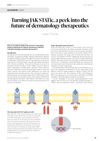 August 2024 in “New Zealand Medical Student Journal”
 JAK inhibitors show promise for treating skin diseases effectively and safely.
 April 2017 in “Journal of Investigative Dermatology”
 Blocking JAK-STAT5 signaling in mice leads to hair growth.