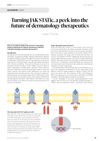
 August 2024 in “New Zealand Medical Student Journal”
 JAK inhibitors show promise for treating skin diseases effectively and safely.
 April 2017 in “Journal of Investigative Dermatology”
 Blocking JAK-STAT5 signaling in mice leads to hair growth.
 April 2018 in “Journal of Investigative Dermatology”
 Blocking a specific immune cell signal can trigger hair growth.
 24 citations
,
December 2018 in “Life sciences”
24 citations
,
December 2018 in “Life sciences” Lysophosphatidic acid is important for skin health and disease, and could be a target for new skin disorder treatments.
 March 2026 in “Biomedicines”
 New treatments like biologics and JAK inhibitors show promise for severe scalp inflammation when traditional methods fail.
 May 2025 in “Frontiers in Pharmacology”
 Targeting gut microbiome and metabolome may help treat autoimmune skin diseases like alopecia areata.

BMD-1141 effectively regrows hair in alopecia areata with less frequent dosing than current treatments.
88 citations
,
August 2019 in “Frontiers in immunology” Tyrosine kinases are important in skin autoimmune diseases and could be targets for new treatments.
January 2026 in “Journal of Investigative Dermatology” Female-pattern hair loss may involve an autoimmune-like process, suggesting new treatment options.
50 citations
,
May 2021 in “Frontiers in immunology” Certain immune cells contribute to skin autoimmune diseases, and some treatments can reverse hair loss in these conditions.
 October 2025 in “Dermatology and Therapy”
 Recognizing and treating related skin conditions can improve atopic dermatitis management.
24 citations
,
July 2021 in “Pharmaceutics” Ruxolitinib cream effectively targets and treats inflammatory skin diseases.
 August 2022 in “Revista de la Universidad Industrial de Santander/Salud UIS”
 Stress-related hair loss was reversed with a special medication.
15 citations
,
December 2018 in “International journal of environmental research and public health/International journal of environmental research and public health” EGCG may help treat alopecia areata by blocking certain immune responses and reducing specific harmful immune cells.
4 citations
,
July 2024 in “The Journal of Dermatology” Alopecia areata in Dubai mostly affects men, often involves autoimmune disorders, and has high healthcare costs, especially for psychological issues.
November 2025 in “FEBS Open Bio” JAK/STAT1 pathway causes hair loss during chemotherapy by reducing Shh in hair follicles.
6 citations
,
January 2024 in “Journal of Biotechnology and Biomedicine” Atopic dermatitis needs personalized treatment using various therapies, starting with topical corticosteroids.
19 citations
,
July 2022 in “PNAS Nexus” Similar treatments might work for different types of scarring hair loss.
 January 2025 in “Acta Dermatovenerologica Alpina Pannonica et Adriatica”
 JAK inhibitors can help regrow hair in alopecia areata but have potential long-term risks and require careful monitoring.
 April 2024 in “Frontiers in pharmacology”
 Brepocitinib 30mg is most effective for moderate-to-severe alopecia areata, but ritlecitinib 50mg may offer a better balance of safety and effectiveness.
45 citations
,
May 2024 in “International Journal of Molecular Sciences” Alopecia areata is caused by immune attacks on hair follicles, affecting hair growth and quality of life.
 14 citations
,
January 2020 in “Mediterranean Journal of Rheumatology”
14 citations
,
January 2020 in “Mediterranean Journal of Rheumatology” New JAK inhibitor drugs show promise for treating skin diseases but need more research on safety and effectiveness.

Upadacitinib effectively treated a patient with multiple inflammatory conditions.
 49 citations
,
August 2018 in “International Journal of Dermatology”
49 citations
,
August 2018 in “International Journal of Dermatology” Topical JAK inhibitors may help treat alopecia universalis by promoting hair regrowth.
 16 citations
,
July 2017 in “Rheumatology and Therapy”
16 citations
,
July 2017 in “Rheumatology and Therapy” Tofacitinib, a medication for arthritis, showed potential for treating severe hair loss in a small Brazilian case series, but more research is needed.
 1 citations
,
May 2023 in “Prospects in Pharmaceutical Sciences”
1 citations
,
May 2023 in “Prospects in Pharmaceutical Sciences” New cytokine-targeted therapies show promise for treating alopecia areata.
 October 2024 in “Journal of Education Health and Sport”
 Alopecia areata treatment should be personalized, using topical or systemic therapies based on severity, with promising options like JAK inhibitors needing more research.
 26 citations
,
January 2019 in “Expert Opinion on Investigational Drugs”
26 citations
,
January 2019 in “Expert Opinion on Investigational Drugs” New treatments for hair loss show promise, but more research is needed to confirm their safety and effectiveness.
 184 citations
,
February 2015 in “EBioMedicine”
184 citations
,
February 2015 in “EBioMedicine” A patient with Alopecia Areata had complete hair regrowth after using the drug baricitinib.
 April 2017 in “Journal of Investigative Dermatology”
 Hair loss patterns differ between males and females due to 5 master regulators and JAK-STAT signaling affects hair growth.