1 citations
,
August 2024 in “JAAD Case Reports” Tick bites can cause hair loss similar to alopecia areata, and baricitinib may help regrow hair.
 May 2023 in “The journal of investigative dermatology/Journal of investigative dermatology”
 A potential treatment for atopic dermatitis could be to increase PADI1 expression to improve skin barrier function.
6 citations
,
August 2016 in “Journal of Visualized Experiments” The CUBIC protocol allows detailed 3D visualization of proteins in mouse skin biopsies.
January 2018 in “Figshare” Ruxolitinib and tofacitinib are effective and safe for treating severe alopecia areata.
 April 2023 in “The journal of investigative dermatology/Journal of investigative dermatology”
 A PTH-based treatment improved hair regrowth better than ruxolitinib in a mouse model of hair loss.
227 citations
,
April 2023 in “The Lancet” Ritlecitinib effectively treats alopecia areata and is well-tolerated.
 1 citations
,
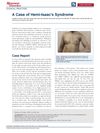
August 2021 in “Movement disorders clinical practice”
1 citations
,
August 2021 in “Movement disorders clinical practice” A man with Isaac's syndrome affecting only one side of his body improved after immune system-targeted treatment.
 32 citations
,
December 2003 in “Planta”
32 citations
,
December 2003 in “Planta” Hypaphorine from a fungus changes the internal structure of Eucalyptus root hairs, stopping their growth.
36 citations
,
August 2016 in “The Plant cell” A specific enzyme is crucial for the bean plant's relationship with certain beneficial soil bacteria and fungi.
 February 2026 in “Clinical Drug Investigation”
 Baricitinib significantly improves nail and hair symptoms in severe alopecia areata.
 3 citations
,
April 2019 in “The journal of investigative dermatology/Journal of investigative dermatology”
3 citations
,
April 2019 in “The journal of investigative dermatology/Journal of investigative dermatology” ILC1 cells contribute to hair loss in alopecia areata.
 2 citations
,
January 2000 in “Journal of Toxicologic Pathology”
2 citations
,
January 2000 in “Journal of Toxicologic Pathology” A single recessive gene causes sparse hair in certain Japanese White rabbits.
 October 2024 in “American Journal of Case Reports”
 Baricitinib improved hair loss and arthritis in a lupus patient.
13 citations
,
January 2020 in “Acta Dermato Venereologica” Ruxolitinib treatment led to unexpected hair regrowth in a patient with alopecia universalis.
 November 2025 in “SKIN The Journal of Cutaneous Medicine”
 Baricitinib significantly regrows hair in nasal, genital, and beard areas for severe alopecia areata.
 June 2023 in “British Journal of Dermatology”
 Baricitinib was effective in treating severe and very severe alopecia areata after 52 weeks.
 93 citations
,
May 2010 in “European Journal of Cancer”
93 citations
,
May 2010 in “European Journal of Cancer” BI 2536 had limited effectiveness against several advanced cancers and caused significant side effects.
 August 2025 in “Dermatology and Therapy”
 JAK inhibitors show promise for treating alopecia areata but have serious side effects.
66 citations
,
October 2002 in “Human molecular genetics online/Human molecular genetics” A gene mutation in mice causes skin defects and early death.
 7 citations
,
November 2010 in “Genesis”
7 citations
,
November 2010 in “Genesis” Mouse Scube3 affects teeth, tongue, vibrissae, and eye development, but not facial structure or limb growth.
 November 2017 in “Asian journal of pharmaceutical and clinical research”
 Three compounds from Dadap leaves may help treat hair loss.
 December 2025 in “Dermatology The American Medical Journal”
 JAK inhibitors are effective for long-term management of alopecia areata.
 January 2024 in “Case Reports in Dermatological Medicine”
 Baricitinib may effectively treat nail changes in alopecia areata.
1 citations
,
May 2022 in “European Journal of Dermatology” Longer treatment with vismodegib lowers relapse risk in basal cell carcinoma.
 April 2023 in “Journal of Investigative Dermatology”
 The document's conclusion cannot be provided because the content is not accessible.
July 2025 in “Journal of Investigative Dermatology” July 2025 in “Journal of Investigative Dermatology” TRIV-509 quickly improves skin barrier and cell health in atopic dermatitis.
52 citations
,
September 2014 in “Nature medicine” JAK inhibitors might help treat alopecia areata.
2 citations
,
May 2025 in “Archives of Dermatological Research” JAK inhibitors do not increase cancer risk in severe alopecia areata compared to traditional treatments.
24 citations
,
July 2021 in “Pharmaceutics” Ruxolitinib cream effectively targets and treats inflammatory skin diseases.