November 2023 in “Journal of Investigative Dermatology” JAK inhibitors are effective and generally safe for treating alopecia areata, but monitoring for side effects is important.
2 citations
,
December 2013 in “The Journal of Dermatology” 2 citations
,
October 2011 Majoon Ushba and Marham Gulabi effectively treat dermatophytosis.
 4 citations
,
August 2019 in “Journal of Dermatology”
4 citations
,
August 2019 in “Journal of Dermatology” The conclusion is that balancing cost and carbon emissions in hybrid power systems is crucial, especially when high reliability is needed, but the model needs to consider all device efficiencies and distribution losses.
 13 citations
,
November 2021 in “Pediatric Dermatology”
13 citations
,
November 2021 in “Pediatric Dermatology” Tofacitinib taken by mouth helps treat hair loss in children.
 April 2023 in “Revista colombiana de reumatología”
 JAK inhibitors like tofacitinib can effectively treat severe alopecia areata.
January 2014 in “The Journal of Dermatology” Korean adolescents with androgenetic alopecia often have a family history, milder symptoms than adults, and normal hormone levels.
 3 citations
,
December 2018 in “Journal of Pakistan Association of Dermatology”
3 citations
,
December 2018 in “Journal of Pakistan Association of Dermatology” Alopecia areata mainly affects young people, often showing as patchy hair loss on the scalp.
1 citations
,
August 2023 in “Journal of Investigative Dermatology” Farudodstat may help treat alopecia areata by protecting hair follicles.
July 2026 in “Journal of Drug Delivery Science and Technology” 4 citations
,
January 2011 in “Dermatopathology”  3 citations
,
June 2023 in “Journal of cosmetic dermatology”
3 citations
,
June 2023 in “Journal of cosmetic dermatology” A new drug, abrocitinib, helped a child with severe hair loss regrow hair.
May 2026 in “Pakistan Journal of Health Sciences” Comprehensive medical and psychosocial support is essential to improve the quality of life for alopecia areata patients.
4 citations
,
January 2020 in “PubMed” JAK inhibitors may become the first approved treatment for alopecia areata if they are proven safe and effective.
6 citations
,
April 2016 in “Australasian journal of dermatology” Renal transplant patients on tacrolimus and sirolimus may develop acne keloidalis nuchae.
September 2025 in “DiRROS repository (University of Maribor)” JAK inhibitors can effectively regrow hair in alopecia areata.
 February 2026 in “Clinical Cosmetic and Investigational Dermatology”
 Upadacitinib improves life quality for Alopecia Areata patients without worsening skin issues.
 February 2024 in “Australasian journal of dermatology”
 Janus kinase inhibitors may help treat lichen planopilaris.
2 citations
,
August 2009 in “Journal of advances in medical and biomedical research” Many high school girls in Zanjan have polycystic ovarian syndrome.
 16 citations
,
September 2008 in “American Journal of Orthodontics and Dentofacial Orthopedics”
16 citations
,
September 2008 in “American Journal of Orthodontics and Dentofacial Orthopedics” Wearing orthodontic headgear can cause reversible hair loss if detected early.
1 citations
,
November 2025 in “Journal of Health Psychology” Alopecia Areata patients experience higher social appearance anxiety due to visible hair loss.
Lichen spinulosus, usually seen in young people, can rarely occur in adults, as shown by a 52-year-old woman with a rough, bumpy rash.
14 citations
,
April 2023 in “Acta Dermato Venereologica” Upadacitinib effectively treated severe hair loss in a child.
April 2025 in “International Journal of Dermatology” JAK inhibitors effectively reduce alopecia areata symptoms in Black patients.
 24 citations
,
June 2016 in “Acta dermato-venereologica”
24 citations
,
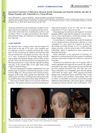
June 2016 in “Acta dermato-venereologica” Tofacitinib helped a young woman's severe hair loss and arthritis but not her plaque psoriasis.
20 citations
,
April 2000 in “Experimental dermatology” ODC transgenic mice can model human hair loss with skin lesions.
1 citations
,
July 2026 in “Dermatology and Therapy” JAK inhibitors are generally safe for alopecia areata and atopic dermatitis, with mostly mild side effects.
 2 citations
,
July 2023 in “Journal of dermatology”
2 citations
,
July 2023 in “Journal of dermatology” Alopecia areata causes a significant economic burden in Japan, mainly due to productivity loss.
 2 citations
,
April 2023 in “JEADV. Journal of the European Academy of Dermatology and Venereology/Journal of the European Academy of Dermatology and Venereology”
2 citations
,
April 2023 in “JEADV. Journal of the European Academy of Dermatology and Venereology/Journal of the European Academy of Dermatology and Venereology” JAK-inhibitors for alopecia areata are generally safe with mostly mild side effects and a low rate of treatment withdrawal.