36 citations
,
December 2021 in “The journal of allergy and clinical immunology/Journal of allergy and clinical immunology/The journal of allergy and clinical immunology” Two drugs, ritlecitinib and brepocitinib, improved scalp hair loss condition markers.
4 citations
,
October 2024 in “Journal of the American Academy of Dermatology” Abrocitinib may help treat alopecia areata effectively with mild side effects.
 3 citations
,
February 2024 in “Journal of the American Academy of Dermatology”
3 citations
,
February 2024 in “Journal of the American Academy of Dermatology” Topical tofacitinib cream may help treat certain hair loss conditions with fewer risks.
 January 2023 in “Journal of The American Academy of Dermatology”
 Baricitinib helped most teenagers with severe hair loss regrow hair and had mild side effects.
19 citations
,
August 2023 in “Journal of Dermatological Treatment” Abrocitinib may effectively treat stubborn alopecia universalis.
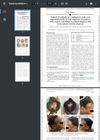 April 2025 in “JAAD Case Reports”
 Topical ruxolitinib and oral minoxidil together can regrow hair in certain types of hair loss.
2 citations
,
May 2020 in “JAAD case reports” Ruxolitinib can cause a delayed skin reaction on the nose.
1 citations
,
May 2026 in “Journal of Dermatological Treatment” JAK1 inhibitor may effectively treat alopecia areata when TNF-α inhibitors and corticosteroids fail.
42 citations
,
April 2021 in “JCI insight” Blocking JAK3 signaling can reverse hair loss from alopecia areata.
 July 2025 in “SKIN The Journal of Cutaneous Medicine”
 Adding dupilumab led to almost complete hair regrowth in a patient with alopecia areata who only partially responded to baricitinib.
January 2026 in “Archivio istituzionale della ricerca (Alma Mater Studiorum Università di Bologna)” Baricitinib effectively promotes hair regrowth and improves well-being in severe alopecia areata patients.
November 2025 in “FEBS Open Bio” JAK/STAT1 pathway causes hair loss during chemotherapy by reducing Shh in hair follicles.
 April 2023 in “The journal of investigative dermatology/Journal of investigative dermatology”
 A PTH-based treatment improved hair regrowth better than ruxolitinib in a mouse model of hair loss.
29 citations
,
December 2019 in “Expert review of clinical pharmacology” JAK inhibitors are a promising new treatment for hair loss and nail problems in alopecia areata.
1 citations
,
October 2025 in “Journal of Allergy and Clinical Immunology” A JAK1 variant causes hair loss, skin issues, and thyroid disease, but treatment with a specific inhibitor can help.
Ritlecitinib can reduce inflammation and help hair regrow in Alopecia Areata.
5 citations
,
October 2024 in “Reumatismo” Upadacitinib significantly improved alopecia universalis and psoriatic arthritis in a patient.
13 citations
,
April 2024 in “JAAD Case Reports” Deucravacitinib may effectively treat discoid lupus erythematosus.
2 citations
,
May 2017 in “Journal of the American Academy of Dermatology” Tofacitinib helped a 19-year-old regrow hair after other treatments failed.
17 citations
,
May 2019 in “BMJ Open” JAK/STAT inhibitors show promise for skin diseases but aren't yet approved.
 March 2026 in “Indian Journal of Dermatology”
 Baricitinib can cause excessive hair growth.
10 citations
,
September 2024 in “Life” Abrocitinib shows promise for treating various skin conditions beyond atopic dermatitis.
3 citations
,
September 2024 in “JAAD reviews.” Topical corticosteroids are recommended first for treating pediatric alopecia areata due to their safety and ease of use.
1 citations
,
January 2021 PRP is effective for treating patchy alopecia areata.
September 2025 in “International Journal of Molecular Sciences” Deucravacitinib may help treat various immune diseases beyond psoriasis, but more research is needed.
September 2025 in “Asian journal of pediatric dermatology.” Abrocitinib helped a 14-year-old girl with severe alopecia areata regrow her hair significantly.
 April 2025 in “Frontiers in Immunology”
 Tofacitinib effectively regrows hair in alopecia areata but may need continuous use.
New drugs, baricitinib and ritlecitinib, are effective for severe alopecia areata.
 November 2023 in “Dermatologica sinica/Zhōnghuá pífūkē yīxué zázhì”
 Upadacitinib helped regrow hair in a severe alopecia areata patient but stopping treatment caused hair loss to return.
 February 2026 in “Stem Cell Research & Therapy”
 Stem cell therapies show promise for hair regrowth in alopecia areata but need more research for safety and effectiveness.