 56 citations
,
January 2019 in “Lancet”
56 citations
,
January 2019 in “Lancet” JAK inhibitors help regrow hair in alopecia areata patients, improving their quality of life.
 April 2026 in “Zenodo (CERN European Organization for Nuclear Research)”
 The model improves understanding of androgen interactions by focusing on signal intensity and system capacity.
June 2026 in “British Journal of Dermatology” Oral JAK inhibitors effectively regrow hair in alopecia areata with a good safety profile.
 April 2024 in “Journal of translational medicine”
 MJ04, a new compound, effectively promotes hair growth and is a potential topical treatment for hair loss.
 June 2023 in “British journal of dermatology/British journal of dermatology, Supplement”
 Patients with alopecia areata face challenges accessing Janus kinase inhibitors, but some see positive results.
 December 2025 in “International Journal of Innovative Technologies in Social Science”
 Oral JAK inhibitors effectively treat alopecia areata and are generally well-tolerated.
 3 citations
,
August 2025 in “Frontiers in Pharmacology”
3 citations
,
August 2025 in “Frontiers in Pharmacology” Oral JAK inhibitors are safe for alopecia areata, but baricitinib may cause more acne and infections.
March 2023 in “Authorea (Authorea)” Early diagnosis and treatment of systemic-onset juvenile idiopathic arthritis are crucial for improvement.
 August 2024 in “New Zealand Medical Student Journal”
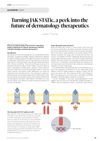
 JAK inhibitors show promise for treating skin diseases effectively and safely.
November 2025 in “Journal of Dermatological Treatment” Dexamethasone oral mini-pulse therapy effectively treats severe alopecia areata when JAK inhibitors can't be used.
July 2026 in “Chemical Engineering Journal” June 2025 in “British Journal of Dermatology” JAK inhibitors help regrow hair in alopecia areata, but their long-term safety is still unclear.
July 2026 in “Pediatric Dermatology” Young patients with alopecia areata are satisfied with Janus kinase inhibitors, noting hair regrowth and improved quality of life.
 223 citations
,
September 2018 in “Rheumatology”
223 citations
,
September 2018 in “Rheumatology” JAK inhibitors are effective in treating various immune-related diseases, not just rheumatoid arthritis.
July 2025 in “Journal of Investigative Dermatology” Switching Janus kinase inhibitors helped some patients with severe alopecia areata regrow hair, but insurance issues can worsen the condition.
 1 citations
,
February 2018 in “British Journal of Dermatology”
1 citations
,
February 2018 in “British Journal of Dermatology” The CWARTS tool is a promising method for assessing warts and could improve treatment and research.
8 citations
,
October 1979 in “PubMed” Jute-batching oil alone didn't cause cancer in mice, but it may promote cancer when combined with another carcinogen.
1 citations
,
October 2025 in “Journal of Allergy and Clinical Immunology” A JAK1 variant causes hair loss, skin issues, and thyroid disease, but treatment with a specific inhibitor can help.
3 citations
,
October 2024 in “Veterinary Medicine and Science” Topical moxidectin effectively treats mange in wombats.
 July 2026 in “International Journal of Multidisciplinary Sciences and Arts”
 Papaya seed oil and virgin coconut oil pomade effectively enhances hair shine and moisture.
 December 2023 in “Animal research and one health”
 Certain circular RNAs are crucial for wool growth and curvature in goats.
December 2009 in “Faculty Opinions – Post-Publication Peer Review of the Biomedical Literature” Noggin promotes skin tumors by activating Wnt and Shh pathways.
 March 2026 in “Zenodo (CERN European Organization for Nuclear Research)”
 The "Danti Original Source" method can reverse androgenetic alopecia.
July 2026 in “American Journal of Clinical Dermatology” Oral JAK inhibitors help regrow hair in alopecia areata with manageable side effects.
December 2025 in “Zagazig University Medical Journal” PDO threads may help regrow hair and increase thickness in hair loss.
1 citations
,
November 2023 in “Journal of Maxillofacial and Oral Surgery” 1 citations
,
March 2019 in “Dermatologic Surgery”  May 2024 in “Frontiers in medicine”
 A genetic mutation in the LIPH gene causes tightly curled hair that stops growing in some Japanese individuals.
November 2020 in “Zenodo (CERN European Organization for Nuclear Research)”