83 citations
,
June 2017 in “Journal of the American Academy of Dermatology” Topical JAK inhibitors may help children with alopecia areata regrow hair.
226 citations
,
May 2004 in “Journal of Biological Chemistry” Collagen XXII is a marker for tissue junctions, aiding in structural integrity and found in muscles, heart, skin, and arthritic joints.
53 citations
,
July 2018 in “Drug design, development and therapy” Janus kinase inhibitors show promise in treating alopecia areata but need better topical formulations.
Hibiscus leaves and apple skin could be effective in hair tonics to prevent hair loss.
 2 citations
,
January 2000 in “Journal of Toxicologic Pathology”
2 citations
,
January 2000 in “Journal of Toxicologic Pathology” A single recessive gene causes sparse hair in certain Japanese White rabbits.
 4 citations
,
March 2019 in “Biodiversitas Journal of Biological Diversity”
4 citations
,
March 2019 in “Biodiversitas Journal of Biological Diversity” Only 5 duku seedlings showed resistance to stem canker, linked to specific mother tree traits.
October 2024 in “JURNAL ILMU KEFARMASIAN INDONESIA” The extracts may help hair growth.
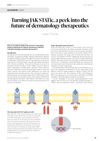 August 2024 in “New Zealand Medical Student Journal”
 JAK inhibitors show promise for treating skin diseases effectively and safely.

Variant G of the KRTAP20-1 gene improves wool curliness in Chinese Tan sheep.
 September 1995 in “Hair transplant forum international”
 The document's conclusion cannot be summarized because the content is not accessible or understandable.
 November 2021 in “American Journal of Tropical Medicine and Hygiene”
 Marking nuts can cause skin irritation and allergies.
 1 citations
,
January 1987 in “Journal of Society of Cosmetic Chemists of Japan”
1 citations
,
January 1987 in “Journal of Society of Cosmetic Chemists of Japan” The method accurately measures hair damage and strength, revealing effects of cosmetics and metal correlations.
3 citations
,
October 2024 in “Animals” Crimped wool has proteins linked to crimp formation, while straight wool has proteins linked to fiber fineness, which can improve wool quality and value.
51 citations
,
January 1997 in “PubMed” GABEB is a less severe skin condition caused by a gene mutation affecting collagen, leading to blisters and other symptoms.
March 2026 in “Journal of Ayurveda and Integrative Medicine” The Sonowal Kachari tribe uses 39 plants for medicine, mainly leaves, showing their valuable herbal knowledge.
February 2023 in “Zenodo (CERN European Organization for Nuclear Research)”  September 2019 in “Asian Journal of Pharmaceutical and Clinical Research”
 Teak seed extract is safe and reduces pain in mice.
90 citations
,
July 1993 in “Journal of Investigative Dermatology” November 2025 in “Archaeometry” Animal hair from 18th-century Mazamet burial sites shows locals used goat, badger, cow, or horse fur for clothing, indicating modest economic status.
 19 citations
,
May 2004 in “The American Journal of Dermatopathology”
19 citations
,
May 2004 in “The American Journal of Dermatopathology” The research found that a specific gene mutation causes fewer hair follicles and disrupted hair growth cycles, leading to thin and short hair in people with Hypotrichosis with Juvenile Macular Dystrophy.
January 2019 in “프로그램북(구 초록집)” Both tofacitinib and ruxolitinib are effective and tolerable for treating alopecia areata.
January 2022 in “Buletin penelitian tanaman rempah dan obat/Bulletin komunikasi penelitian tanaman rempah dan obat” The 3% bidara leaf extract hair tonic was most effective for hair growth.
 June 2024 in “Research Square (Research Square)”
 Jagged-1 in skin Tregs is crucial for timely wound healing by recruiting specific immune cells.
August 2025 in “Australasian Journal of Dermatology” Experts created guidelines for who in Australia can get subsidized JAK inhibitor therapy for alopecia areata.
Hibiscus leaf extract in hair tonic promotes hair growth effectively.
October 2022 in “Hair Transplantation” New punch designs for hair transplants have expanded options for surgeons.
 67 citations
,
February 1983 in “The Journal of Dermatologic Surgery and Oncology”
67 citations
,
February 1983 in “The Journal of Dermatologic Surgery and Oncology” Vigilon, a new wound dressing, promotes faster and better healing with less pain.
 March 2006 in “Hair transplant forum international”
 The document's conclusion cannot be summarized because the content is not understandable.
 April 2017 in “Journal of Investigative Dermatology”
 A boy with Oculodentodigital syndrome had a unique GJA1 gene mutation causing his symptoms.