 August 2023 in “Journal of Health and Beauty”
 K-30 treatment restores protein and weight in damaged hair, making it similar to healthy hair.
50 citations
,
July 2008 in “British Journal of Dermatology” 27 citations
,
November 2007 in “Genomics” Mutations in specific keratin genes cause improper hair structure in mice due to faulty keratin protein assembly.
87 citations
,
September 2012 in “Journal of Cell Science” Keratins are crucial for tissue strength, and mutations in keratin genes can lead to various diseases, highlighting the need for targeted therapies.
1 citations
,
February 2023 in “Journal of Natural Fibers” Higher keratin protein levels are important for the wool's shine in Magra sheep.
 February 2026 in “International Journal of Molecular Sciences”
 PDLLA filler can improve hair thickness and shine by reducing age-related hair decline.
December 2025 in “The Journal of Cell Biology” Keratin 15 helps maintain skin cell growth and repair.
40 citations
,
September 2010 in “Journal of Biological Chemistry” Keratin K80 is an ancient protein found in various tissues, important for cell structure and tissue differentiation.
 April 2023 in “Cancer research”
 KRTAP2-3 could help predict cancer recurrence by identifying specific cancer cells.
Halo KS-7 bacteriophage effectively kills drug-resistant Klebsiella pneumoniae and could help treat infections.
25 citations
,
February 2021 in “Diabetes” Dock5 is important for skin healing and could help treat diabetic wounds.
 February 2025 in “Archives animal breeding/Archiv für Tierzucht”
 Certain gene combinations improve cashmere quality and production in Liaoning goats.
 4 citations
,
April 2024 in “Complex & Intelligent Systems”
4 citations
,
April 2024 in “Complex & Intelligent Systems” NLKFill improves high-resolution image inpainting by effectively capturing image details and enhancing speed.
46 citations
,
September 2007 in “Journal of Investigative Dermatology” 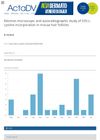 1 citations
,
January 1971 in “Acta dermato-venereologica”
1 citations
,
January 1971 in “Acta dermato-venereologica” Mice hair follicles take in the amino acid cystine.
![[4-t-Butylphenyl]-N-(4-imidazol-1-yl phenyl)sulfonamide (ISCK03) Inhibits SCF/c-kit Signaling in 501mel Human Melanoma Cells and Abolishes Melanin Production in Mice and Brownish Guinea Pigs](/images/assets/4eb017dc-711d-4926-bcd0-c3b8f48e3a99/small/19974.jpg) 26 citations
,
July 2007 in “Biochemical Pharmacology”
26 citations
,
July 2007 in “Biochemical Pharmacology” ISCK03 stops melanin production in human melanoma cells and lightens skin color in mice and guinea pigs.
 January 2012 in “Durham e-Theses (Durham University)”
 Keratin 15 affects cell behavior and characteristics in skin cells.
 1 citations
,
January 2023 in “Biochemical and biophysical research communications”
1 citations
,
January 2023 in “Biochemical and biophysical research communications” Keratin 79 is linked to liver damage and may help diagnose liver diseases.
 1 citations
,
July 2023 in “Nature communications”
1 citations
,
July 2023 in “Nature communications” MOF controls key genes for skin development by regulating mitochondrial and ciliary functions.
 April 2018 in “D-Scholarship@Pitt (University of Pittsburgh)”
 Keratin-75 is secreted by ameloblasts in a unique way without a signal peptide.
September 2023 in “Journal of the American Academy of Dermatology” Oral difelikefalin significantly reduces itch in notalgia paresthetica.
7 citations
,
February 2020 in “Analytical and Bioanalytical Chemistry” 44 citations
,
May 1997 in “Journal of Biological Chemistry” The human keratin 6a gene's specific sequences trigger expression in skin layers after injury.
24 citations
,
October 2019 in “Genes” A new sheep gene, KRTAP36-1, may help breed sheep with better wool by reducing prickle factor.
July 2024 in “Journal of Investigative Dermatology” A new test helps find drugs to treat head and neck cancer by targeting c-Rel.
19 citations
,
April 1999 in “British Journal of Dermatology” Keratin 2e shows a unique pattern in developing fetal skin, different from other keratins.
27 citations
,
April 2018 in “Artificial Cells Nanomedicine and Biotechnology” Recombinant human hair keratin proteins can effectively stop bleeding.
12 citations
,
January 2021 in “Dermatology Research and Practice” The 1927 nm Thulium laser effectively and safely treats postinflammatory hyperpigmentation in darker skin tones.
32 citations
,
November 1998 in “Journal of Biological Chemistry” Mouse and human keratin 16 can both form filaments, with differences likely due to the tail domain, not the helical domain.
 November 2022 in “Journal of Investigative Dermatology”
 DermaCult™ Keratinocyte Expansion Medium allows human skin cells to grow longer while keeping their ability to develop properly.