2 citations
,
July 2025 in “Drug development & registration” A new algorithm accurately analyzes animal coat and skin colors quickly and easily.
70 citations
,
February 2016 in “EMBO reports” Scientists found a specific group of itch-sensing nerve cells in mice important for feeling itch but not for sensing heat or touch.
32 citations
,
January 2016 in “Development” Sebaceous lipids are crucial for keeping skin and eyes healthy in mice.
 161 citations
,
July 2003 in “ACM Transactions on Graphics”
161 citations
,
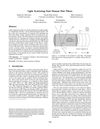
July 2003 in “ACM Transactions on Graphics” Researchers developed a new model for more realistic computer graphics rendering of hair by considering how light scatters on hair fibers.
 26 citations
,
April 2011 in “Skin Research and Technology”
26 citations
,
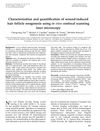
April 2011 in “Skin Research and Technology” In vivo confocal scanning laser microscopy is an effective, non-invasive way to study and measure new hair growth after skin injury in mice.
6-Gingerol can slow down hair growth by affecting certain proteins.
January 2000 in “The Mouseion at the JAXlibrary (Jackson Laboratory)” The lanceolate hair-J mutation in mice helps understand human hair disorders like Netherton's syndrome.
19 citations
,
January 2020 in “Journal of Biophotonics” A PEG-400/oleic acid mixture best improves drug delivery monitoring through hair follicles.
54 citations
,
February 1994 in “Journal of Investigative Dermatology” September 2016 in “Journal of dermatological science” TSC2 is crucial for proper hair follicle development and patterning.
Otter rabbit, mink, and blue fox fur can be identified by their unique hair structures.
1 citations
,
December 2024 in “The Journal of Dermatology” The study developed mouse models to help research and treat hair and sweat gland issues.
30 citations
,
October 2010 in “Biochemical and biophysical research communications” The Gsdma3 gene is essential for normal hair development in mice.
69 citations
,
May 1997 in “Veterinary Pathology” The angora mouse mutation causes long hair and hair defects due to a gene deletion.
 18 citations
,
April 2016 in “Toxicological Research”
18 citations
,
April 2016 in “Toxicological Research” Lavender oil significantly promotes hair growth in mice.
 4 citations
,
May 2025 in “npj Parkinson s Disease”
4 citations
,
May 2025 in “npj Parkinson s Disease” PINK1 is important for controlling gut immune responses linked to early Parkinson's disease.
7 citations
,
January 2009 in “DOAJ (DOAJ: Directory of Open Access Journals)” D-004 did not harm sperm cells in mice.
1 citations
,
April 2012 in “Cancer Research” Antizyme reduces tumor growth and normalizes skin cell development affected by MEK.
January 2022 in “International journal of dermatology and venereology” A Chinese man with KID syndrome had a new mutation in the GJB2 gene.
 76 citations
,
March 2005 in “Journal of Molecular Medicine”
76 citations
,
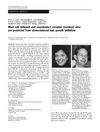
March 2005 in “Journal of Molecular Medicine” Certain mice without specific receptors or mast cells don't lose hair from stress.
2 citations
,
January 2007 in “Jounal of The Korean Society of cosmetology” 28 citations
,
June 1995 in “The Journal of Dermatology” The flaky skin mouse mutation is a natural model for studying human psoriasis.
January 2002 in “Academic Journal of Kunming Medical College” Human-hair keratin artificial tendons are biocompatible and degrade well in rabbits.
1 citations
,
October 2019 in “PubMed” Removing the p75 gene in mouse skin cells didn't affect their skin or hair growth.
18 citations
,
June 2010 in “Cell Stress and Chaperones” Heat treatment increases hair loss in certain mice.

Hair follicle stem cells are crucial for touch sensation and proper nerve structure in mice.
 62 citations
,
April 2008 in “Neurobiology of aging”
62 citations
,
April 2008 in “Neurobiology of aging” Scientists found a gene in mice that causes early hearing loss.
75 citations
,
February 2017 in “Aging” SkQ1 antioxidant improved health and lifespan in mice.
The model explains how mammal ear hair cells respond to sound and adapt.
June 2020 in “Comparative medicine” NSG mice had the most mites, and genetic factors affect immune response and susceptibility.