 1 citations
,
November 2020 in “Biochemical Society transactions”
1 citations
,
November 2020 in “Biochemical Society transactions” Different types of skin stem cells can change and adapt, which is important for developing new treatments.
 1 citations
,
May 2017 in “InTech eBooks”
1 citations
,
May 2017 in “InTech eBooks” Some natural remedies may help with hair regrowth, but more research is needed to confirm their effectiveness and safety.
 1 citations
,
January 2015 in “Journal of Pigmentary Disorders”
1 citations
,
January 2015 in “Journal of Pigmentary Disorders” Treating melasma in men is difficult, especially for the deeper skin layers, and may need more than just topical treatments.
 1 citations
,
November 2008
1 citations
,
November 2008 Yonnyuniksoogobon-dan taken orally promotes hair growth by affecting growth factors in hair roots.
 July 2026 in “npj Regenerative Medicine”
 Gli2 and Serpinh1 are key for skin wound healing by helping fibroblasts close wounds.
 March 2026 in “IP Indian Journal of Clinical and Experimental Dermatology”
 Wrinkles, dry skin, and hair changes are common in elderly skin, while infections and eczema are also prevalent.

Exosomes show promise for skin treatments but need more research and regulation in India.
Dissecting cellulitis of the scalp mainly affects Black males and requires early diagnosis and management.
 December 2025 in “The Journal of Basic and Applied Zoology”
 Red Sokoto goat fetuses develop firmer, pigmented skin with hair follicles as they grow.
 November 2025 in “Journal of Multidisciplinary Healthcare”
 Combining fire needle therapy with doxycycline improves severe acne more than doxycycline alone.
 October 2025 in “Iraqi postgraduate medical journal”
 Combining laser treatment with steroid cream is more effective for alopecia areata than using the cream alone.
 July 2025 in “Bulgarian Portal for Open Science”
 Granulation and epithelialization are crucial for healing large skin wounds.
 July 2025 in “Clinical Cosmetic and Investigational Dermatology”
 Immune cells and cytokines significantly affect pathological scar development.
 January 2025 in “The Atlantic Journal of Medical Science and Research”
 Many dermatology patients experience anxiety and depression, especially those with acne or psoriasis.
 January 2024 in “RSC pharmaceutics”
 Removing the outer skin layer increases drug absorption and offers non-invasive treatment options, with some methods allowing for quick skin recovery.
 October 2023 in “Dermatology practical & conceptual”
 Folliculitis Decalvans and Frontal Fibrosing Alopecia can coexist in people with darker skin, showing features of both conditions.
 July 2023 in “Indian Journal of Postgraduate Dermatology”
 Postgraduate dermatology students should focus on practical training, core dermatology, and systematic learning, especially in their second and third years.
 July 2023 in “Research Square (Research Square)”
 Two patients got Cushing's syndrome after treatment with Triamcinolone Acetonide for mouth fibrosis, but recovered after stopping the treatment.
 March 2022 in “Folia Medica Indonesiana”
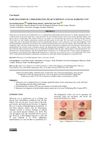
 The lump on a woman's scalp was a rare, potentially cancerous tumor from the hair follicle, not a common cyst.
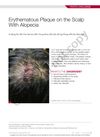
The woman has a scalp condition causing hair loss.
 November 2019 in “Harper's Textbook of Pediatric Dermatology”
 The document is a detailed medical reference on skin and genetic disorders.
 April 2019 in “The journal of investigative dermatology/Journal of investigative dermatology”
 Targeting cholesterol, fatty acids, fibrosis, and mast cells may help treat CCCA.
 February 2019 in “International journal of research in dermatology”
 The combined treatments were highly effective for improving atrophic acne scars.
 January 2019 in “Springer eBooks”
 Acne can appear or persist in adulthood due to hormonal changes, external factors, or substance use, and requires appropriate treatment.
 October 2018 in “Springer eBooks”
 The document concludes that various hair disorders have different treatments, including medication, surgery, and addressing underlying causes.
 September 2017 in “The journal of investigative dermatology/Journal of investigative dermatology”
 Blocking CCR5 can prevent and improve hair loss in alopecia areata.
 September 2017 in “The journal of investigative dermatology/Journal of investigative dermatology”
 Human hair follicles have a unique way of using energy and might use the Cori cycle; blocking CCR5 could help treat hair loss.
 April 2017 in “The journal of investigative dermatology/Journal of investigative dermatology”
 HSD11b1 affects skin nerves and increases non-histaminergic itch.
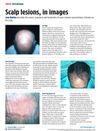 January 2015 in “Independent Nurse”
 Different scalp conditions can lead to hair loss or tumors, with treatments varying from creams to surgery; early detection is crucial.

Wound healing is complex and requires more research to enhance treatment methods.