
A natural, eco-friendly treatment using casein and tannic acid strengthens hair by 21% while keeping it elastic.
 March 2025 in “International Journal of Molecular Sciences”
 The study created a mouse model to better understand hair follicle stem cells' role in hair growth and repair.

Variant G of the KRTAP20-1 gene improves wool curliness in Chinese Tan sheep.
 January 2024 in “Authorea (Authorea)”
 Using laccase to add poly(tyrosine) to wool makes it less likely to shrink and stronger.
August 2022 in “Biomedicines” Turning off the Lhx2 gene in mouse embryos leads to slower wound healing and scars.
August 2015 in “Han'gug dongmul jawon gwahag hoeji/Han-guk dongmul jawon gwahak hoeji/Journal of animal science and technology” TRα and CRABPII genes change their activity levels during goat fetal skin development.
 3 citations
,
January 2021
3 citations
,
January 2021 Non-surgical treatments like thread lifts, PRP therapy, HIFU, and radiofrequency effectively rejuvenate and tighten facial skin.
365 citations
,
March 2021 in “Frontiers in Bioengineering and Biotechnology” Nanocarriers can improve drug delivery through the skin by overcoming barriers.
 March 2026 in “Pharmaceutics”
 TheDES improve drug delivery through the skin but need more safety checks.
2 citations
,
November 2024 in “International Journal of Pharmaceutics X” Desmopressin-loaded liposomes can effectively deliver drugs through the skin, improving bioavailability and patient compliance.
January 2025 in “Pharmaceuticals” Nanocarriers can improve antioxidant delivery to the skin but face safety and production challenges.
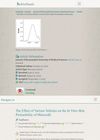 October 2022 in “Journal of Kermanshah University of Medical Sciences”
 Different substances can affect how well the skin absorbs minoxidil, a hair loss drug. Caprylic acid helps the skin absorb it the best, followed by propylene glycol and water.
380 citations
,
March 2000 in “Proceedings of the National Academy of Sciences” Overexpressing GLI-1 in mice skin can cause tumors like human basal cell carcinomas.
333 citations
,
March 2000 in “Proceedings of the National Academy of Sciences” Overexpressing GLI-1 in mice skin can cause tumors like human basal cell carcinomas.
207 citations
,
July 2006 in “Development” MTS24 marks a new type of skin cell that helps hair growth and repair.
 96 citations
,
September 2021 in “International Journal of Molecular Sciences”
96 citations
,
September 2021 in “International Journal of Molecular Sciences” Chitosan, a natural substance, can be used to create tiny particles that effectively deliver various types of drugs, but more work is needed to improve stability and control of drug release.
79 citations
,
December 2017 in “Cosmetics” Effective sunscreen formulations can reduce skin absorption and enhance protection.
53 citations
,
July 2021 in “International Journal of Molecular Sciences” Geranium pyrenaicum extracts show potential for cancer, antiviral, and enzyme inhibition treatments.
50 citations
,
March 2018 in “BMC Genomics” Non-coding RNAs help control hair growth cycles in cashmere goats, suggesting ways to improve cashmere production.
 46 citations
,
April 2014 in “PLOS ONE”
46 citations
,
April 2014 in “PLOS ONE” Gray hair may be caused by lower antioxidant activity in hair cells.
29 citations
,
April 2000 in “Journal of histochemistry and cytochemistry/The journal of histochemistry and cytochemistry” ICAM-1 helps regulate hair growth cycles and skin remodeling.
25 citations
,
January 2024 in “Journal of Lipids” Cubosomes improve drug delivery for skin and eye diseases by enhancing adhesion, retention, and release.
23 citations
,
June 2023 in “Cell Reports” Early hair follicle development involves distinct cell populations and Wnt signaling influences cell identity.
20 citations
,
January 2022 in “REVIEWS ON ADVANCED MATERIALS SCIENCE” Nanoparticles can make cosmetics more effective but have challenges like cost and safety.
19 citations
,
January 2019 in “Animals” PDGFA helps activate hair growth in cashmere goats.
17 citations
,
October 2023 in “Molecules” Plant-derived PDRN from ginseng roots effectively heals skin and improves its barrier.
 16 citations
,
October 2023 in “Molecular cancer”
16 citations
,
October 2023 in “Molecular cancer” New treatments like nanotechnology show promise in improving skin cancer therapy.
14 citations
,
May 2016 in “International Journal of Molecular Sciences” PP2Acα is essential for proper hair and skin development.
 11 citations
,
January 2023 in “BioMed Research International”
11 citations
,
January 2023 in “BioMed Research International” Microbial biosurfactants could be a safer and environmentally friendly alternative to chemical surfactants in cosmetics.
11 citations
,
June 2017 in “Asian-Australasian journal of animal sciences” Fox genes are important for hair growth and development in cashmere goats.