19 citations
,
April 1999 in “British Journal of Dermatology” Keratin 2e shows a unique pattern in developing fetal skin, different from other keratins.
18 citations
,
January 2015 in “Experimental Dermatology” New mutations in KRT83 and KRT86 are linked to the hair disorder monilethrix.
 15 citations
,
October 2022 in “Allergy”
15 citations
,
October 2022 in “Allergy” Dupilumab treatment reduces Th2-related markers and helps hair growth in alopecia areata, showing Th2's role in the condition.
14 citations
,
September 2016 in “Journal of Photochemistry and Photobiology B Biology” UV exposure damages hair, increasing thiols and altering protein structure.
14 citations
,
October 2006 in “Journal of Investigative Dermatology” The keratin naming system was updated to include 54 genes, especially for hair-related keratins.
 11 citations
,
March 2001 in “Clinics in Dermatology”
11 citations
,
March 2001 in “Clinics in Dermatology” Hair microscopy is useful for diagnosing hair disorders, but clear definitions are needed for accurate genetic analysis.
9 citations
,
January 2011 in “American Journal of Dermatopathology” Pilomatrixoma involves abnormal hair keratin production and cell death, causing debris and cysts.
8 citations
,
May 2020 in “International journal of biological macromolecules” Certain treatments can increase protein binding to natural hair but are less effective on permed hair.
 7 citations
,
February 1998 in “Polymer journal”
7 citations
,
February 1998 in “Polymer journal” Keratin structure in hair is stable at pH 5-6 but disrupts between pH 6-7.
 6 citations
,
July 2015 in “Journal of Investigative Dermatology”
6 citations
,
July 2015 in “Journal of Investigative Dermatology” Chicken feather gene mutation helps understand human hair disorders.
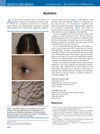 6 citations
,
August 2012 in “The Journal of Pediatrics”
6 citations
,
August 2012 in “The Journal of Pediatrics” A 12-year-old girl was diagnosed with monilethrix, a genetic condition causing fragile, beaded hair that breaks easily, with no effective treatment available.
 5 citations
,
February 2009 in “International Journal of Cosmetic Science”
5 citations
,
February 2009 in “International Journal of Cosmetic Science” Coenzyme Q10 helps reduce aging in human hair.
3 citations
,
October 1994 in “Journal of Dermatological Science” The new antibody, TYHF-1, specifically targets certain hair-related structures.
1 citations
,
July 2023 in “Journal of developmental biology” Bird foot scales develop differently and can repair but not fully regenerate due to the lack of specialized stem cell areas.
1 citations
,
April 2008 in “Pigment Cell & Melanoma Research” Foxn1 is essential for hair pigmentation by directing pigment transfer to hair cells.

Alopecia areata patients show increased inflammation and OX40 activation, suggesting a new treatment target.
May 2020 in “International journal of dermatology and venereology” Hair matrix cysts are rare skin nodules with unique features, often needing surgical removal.
 January 2014 in “International Journal of Trichology”
 Hair is culturally and economically valuable, and its weight is now used to measure the effectiveness of hair growth treatments.
April 2012 in “J. Willard Marriott Library” Cannabinoids like THC and THCA get into hair through skin oils, not hair color.
April 2009 in “The FASEB Journal” Keratin biomaterials from human hair help nerve regeneration by activating Schwann cells.
September 2009 in “Hair transplant forum international” Genetic testing can help understand male pattern baldness.
119 citations
,
January 2000 in “British Journal of Dermatology” Different parts of the nail express different keratins, showing unique patterns of differentiation.
58 citations
,
November 2004 in “The journal of investigative dermatology/Journal of investigative dermatology” The Foxn1 gene is essential for normal nail and hair development.
54 citations
,
March 2009 in “BioEssays” Hormones control keratin production in skin and hair.
54 citations
,
January 1995 in “Human Molecular Genetics” Monilethrix is linked to a gene cluster on chromosome 12.
52 citations
,
October 1995 in “Experimental Cell Research” Human hair keratin genes hHa2 and hHb1 are located on chromosomes 17 and 12.
34 citations
,
June 2020 in “British journal of dermatology/British journal of dermatology, Supplement” Frontal fibrosing alopecia is linked to increased immune system activity and reduced stem cells, suggesting early treatment targeting this pathway might prevent hair follicle damage.
33 citations
,
February 2012 in “British Journal of Dermatology” Mutations in the p63 gene affect skin adhesion, barrier integrity, and hair growth.
31 citations
,
December 1991 in “Annals of the New York Academy of Sciences” ORS and hair matrix cells balance growth and differentiation better than normal keratinocytes, with human dermal fibroblasts crucial for proper differentiation.
21 citations
,
May 2014 in “Toxicological Sciences” Toluene diisocyanate exposure can cause immune sensitization by interacting with proteins in hair follicles and sebaceous glands.