8 citations
,
October 2024 in “Frontiers in Cell and Developmental Biology” Telocytes help organize male reproductive tissues and their changes can lead to diseases.
 4 citations
,
February 2011 in “Dermatology reports”
4 citations
,
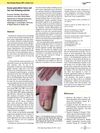
February 2011 in “Dermatology reports” Acitretin can cause excess tissue growth and hair loss.
17 citations
,
January 2016 in “Journal of Drug Delivery” PEG and keratin scaffolds can effectively deliver protein drugs by controlling release based on pH levels.
April 1996 in “Journal of Dermatological Science”  May 2024 in “Journal of colloid and interface science”
 The hydrogel helps skin heal by encouraging new blood vessel growth.
 September 2022 in “JAAD case reports”
 The man has a genetic skin condition called pachyonychia congenita.
5 citations
,
July 1999 in “Journal of Anatomy” Methylene blue staining effectively reveals detailed nerve structures in rat snouts.
2 citations
,
May 2022 in “bioRxiv (Cold Spring Harbor Laboratory)” Rare Gli1+ fibroblasts are crucial for skin wound healing.
 June 2022 in “Scientific Reports”
 Prevelex, a polyampholyte, can create a cell-repellent coating on microdevices, which can be useful in biomedical applications like hair follicle regeneration.
9 citations
,
April 1999 in “Mammalian Genome” Acidic keratin genes are on CFA9 and basic keratin genes are on CFA27 in dogs.
41 citations
,
May 2012 in “Advanced Healthcare Materials” Human hair keratins improve cell adhesion and growth on culture surfaces.
 January 2024 in “Advanced Science”
 New microspheres help heal skin wounds and regrow hair without scarring.
5 citations
,
March 1943 in “Archives of Dermatology and Syphilology” A rare case of severe scalp hair loss and nail issues in keratosis follicularis was observed.
 May 2026 in “Scientific and Technical Bulletin оf State Scientific Research Control Institute of Veterinary Medical Products and Fodder Additives аnd Institute of Animal Biology”
 Zinc carbonate nanoparticles are not irritating or absorbed by the skin.
38 citations
,
July 1993 in “Journal of Investigative Dermatology” 106 citations
,
April 1986 in “British Journal of Dermatology” Dermal papilla cells from human hair follicles form unique structures and don't live as long as other skin cells in lab conditions.
 June 2020 in “Journal of Investigative Dermatology”
 Scientists successfully grew mini hair follicles using human skin cells, which could help treat baldness.
January 2002 in “Linchuang pifuke zazhi” A young woman had a rare scalp tumor usually found in older women.
 December 2012 in “Journal of undergraduate research in Alberta”
 Elongating cilia boosts SKP stem cell renewal, especially with PDGF.
 7 citations
,
January 1998 in “EXPERIMENTAL ANIMALS”
7 citations
,
January 1998 in “EXPERIMENTAL ANIMALS” The skin of both rat strains showed similar lectin binding patterns.
2 citations
,
August 1987 in “Analytical Biochemistry” A new method isolated previously undetected hair proteins rich in glycine and tyrosine.
8 citations
,
January 2025 in “Journal of Investigative Dermatology” Fetal skin has diverse fibroblast types that change as it develops.
 13 citations
,
June 2018 in “Dermatopathology”
13 citations
,
June 2018 in “Dermatopathology” A new classification system for skin cysts was proposed to improve diagnosis.
3 citations
,
December 2013 in “American Journal of Dermatopathology” A rare skin growth in a baby was successfully removed without coming back.
June 2026 in “Skin Appendage Disorders” Pili annulati may be more common than thought, so recognizing its features is important for diagnosis.
69 citations
,
May 2002 in “Journal of Investigative Dermatology” Congenital atrichia with papular lesions is often misdiagnosed, and new diagnostic criteria can improve accuracy.
 109 citations
,
September 2011 in “Human molecular genetics online/Human molecular genetics”
109 citations
,
September 2011 in “Human molecular genetics online/Human molecular genetics” New treatments targeting specific genes show promise for treating keratin disorders.
419 citations
,
March 2005 in “Proceedings of the National Academy of Sciences” Hair-follicle stem cells can become neurons.
27 citations
,
February 2003 in “European Journal Of Oral Sciences” SVpgC2a cells show abnormal growth and keratin changes, modeling early cancer development.
20 citations
,
October 2001 in “British Journal of Ophthalmology” A patient with congenital erythropoietic porphyria showed eye issues due to porphyrin buildup.