1 citations
,
January 2015 in “Journal of clinical case reports” KFSD causes scarring hair loss and skin roughness, mainly in males.
 July 2026 in “International Journal of Innovative Technologies in Social Science”
 Current treatments for keratosis pilaris provide temporary relief, but more research is needed for better solutions.
 May 2026 in “Repository of the University of Ljubljana (University of Ljubljana)”
 Chemical exfoliants, especially with glycolic acid, are more effective for keratosis pilaris.
 April 2026 in “Clinical Dermatology Review”
 Keratosis pilaris significantly affects quality of life and shows specific skin changes.
 February 2026 in “HCA Healthcare Journal of Medicine”
 Recognizing keratosis pilaris in all skin tones helps diagnose related skin issues and reduce distress.
 February 2026 in “Trials”
 The Exfoliate-Dissolve-Repair skincare approach may effectively treat keratosis pilaris and reduce the need for corticosteroids.
 February 2026 in “International Journal of Homoeopathic Sciences”
 Homeopathic treatment with Arsenicum album improved keratosis pilaris symptoms in one case.
 December 2025 in “Cureus”
 Topical treatments like AHAs, BHAs, and urea may help keratosis pilaris, but evidence is limited.
December 2025 in “Journal of Cosmetic Dermatology” The new treatment improved keratosis pilaris symptoms and mood in 28 days.

Genetic testing can help diagnose skin conditions but needs more research for full effectiveness.
January 2024 in “Indian Journal of Dermatology” Unilateral keratosis follicularis squamosa may be a new subtype, successfully treated with asiaticoside ointment.
December 2023 in “Journal of clinical medicine” Some leukemia treatments can cause skin reactions similar to keratosis pilaris.
 December 2023 in “Journal of dermatology”
 The study concluded that key signs of Keratosis follicularis spinulosa decalvans are changes in terminal hair and vellus hair follicles, which likely start the inflammation and damage to hair follicles.
 March 2023 in “International journal of integrated medical research”
 Keratosis pilaris is a common skin condition where hair follicles get clogged with keratin, mostly on the arms and thighs.
January 2022 in “Clinical dermatology review” A girl with a rare skin condition called Keratosis Follicularis Spinulosa Decalvans showed no significant improvement with treatment.
December 2020 in “Pathology” A man's skin condition and poor diet led to a scurvy diagnosis.
September 2016 in “European Journal of Pediatric Dermatology/PD. European journal of pediatric dermatology” Ulerythema ophryogenes causes hair thinning and inflammation, with limited treatment options.
 17 citations
,
February 2015 in “Cell Death and Disease”
17 citations
,
February 2015 in “Cell Death and Disease” Inhibiting AP1 in mice skin causes structural changes and weakens the skin barrier.
 89 citations
,
June 2012 in “Anais Brasileiros de Dermatologia”
89 citations
,
June 2012 in “Anais Brasileiros de Dermatologia” Actinic keratosis can lead to skin cancer, is more common in fair-skinned people, and can be reduced with sunscreen and treated effectively.
 27 citations
,
December 2014 in “Current problems in dermatology”
27 citations
,
December 2014 in “Current problems in dermatology” Photodynamic therapy is the preferred treatment for skin precancer due to its effectiveness and safety.
26 citations
,
December 1979 in “Journal of Cutaneous Pathology” Seborrheic keratoses may partly come from hair follicle cells.
17 citations
,
January 2014 in “Journal of Oral and Maxillofacial Pathology” Seborrheic keratosis is a common, harmless skin growth that can look like cancer, so it may need a biopsy.
 13 citations
,
July 2007 in “Pediatric dermatology”
13 citations
,
July 2007 in “Pediatric dermatology” Vitamin D3 ointment improved skin bumps on the chin but didn't give lasting results after stopping use.
13 citations
,
February 1980 in “Journal of Cutaneous Pathology” Rubbing seborrheic keratoses causes specific skin changes and may link them to hair follicles.
10 citations
,
May 2023 in “Journal of Investigative Dermatology” Actinic keratosis is more common in older men with certain genetic traits, but smoking seems to reduce its odds.
 9 citations
,
July 2017 in “Dermatologic Therapy”
9 citations
,
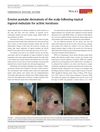
July 2017 in “Dermatologic Therapy” Two elderly men developed scalp inflammation after using a gel for skin lesions, which healed with treatment except for some permanent hair loss.
 6 citations
,
November 2018 in “Photodiagnosis and Photodynamic Therapy”
6 citations
,
November 2018 in “Photodiagnosis and Photodynamic Therapy” A wearable cap-like device using light therapy reduced scalp skin lesions by 71% and was painless.
 5 citations
,
May 2006 in “Dermatologic Surgery”
5 citations
,
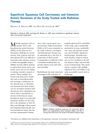
May 2006 in “Dermatologic Surgery” Radiation therapy successfully treated an elderly man's skin cancer and pre-cancerous scalp lesions.
 4 citations
,
May 2020 in “PLOS ONE”
4 citations
,
May 2020 in “PLOS ONE” Ingenol mebutate gel changes gene expression related to skin development and immune response in actinic keratosis.
 April 2024 in “Dermatovenerologiâ, kosmetologiâ”
 Actinic keratosis is a sun-induced skin condition that can potentially turn into skin cancer and requires various treatments to prevent this.