5 citations
,
November 2001 in “Auris Nasus Larynx” Accurate diagnosis of Winer's dilated pore in the ear is crucial to avoid unnecessary aggressive treatment.
5 citations
,
November 1979 in “Archives of dermatology” Tretinoin cream successfully treated a woman's skin condition called Fox-Fordyce disease.
 3 citations
,
January 1988 in “PubMed”
3 citations
,
January 1988 in “PubMed” The review found that basal cell carcinomas on the scalp are not more aggressive than those in other locations.
 3 citations
,
September 2021 in “Experimental and Therapeutic Medicine”
3 citations
,
September 2021 in “Experimental and Therapeutic Medicine” Early diagnosis of Keratosis pilaris atrophicans faciei can lead to better, personalized treatments.
 3 citations
,
January 2019 in “Journal of Dermatology”
3 citations
,
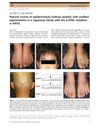
January 2019 in “Journal of Dermatology” The p.P25L mutation in the KRT5 gene causes a rare skin condition that worsens over time and may lead to hair loss starting in young adulthood.
3 citations
,
March 2013 in “American Journal of Dermatopathology” Ossification in trichilemmal cysts is more common than previously believed.
1 citations
,
January 2019 in “Pan African Medical Journal” Keratosis pilaris causes small skin bumps, mainly in women, and treatments offer only temporary relief.
 1 citations
,
September 2015 in “Serbian Journal of Dermatology and Venereology/Serbian Journal of Dermatology and Venerology”
1 citations
,
September 2015 in “Serbian Journal of Dermatology and Venereology/Serbian Journal of Dermatology and Venerology” A 19-year-old male had two rare skin conditions causing scarring and permanent hair loss.
 1 citations
,
March 2014 in “Turkderm”
1 citations
,
March 2014 in “Turkderm” Trichoscopy helps tell different hair loss types apart using specific scalp and hair patterns.
 July 2026 in “International Journal of Innovative Technologies in Social Science”
 Current treatments for keratosis pilaris provide temporary relief, but more research is needed for better solutions.
May 2026 in “Journal of International Medical Research” Atrichia with papular lesions causes irreversible hair loss from infancy and is often misdiagnosed.
 December 2025 in “TURKDERM”
 Facial trichostasis spinulosa is a chronic condition with significant cosmetic impact, especially in young women.
January 2025 in “Clinical Case Reports” Follicular porokeratosis may be linked to diabetes and can lead to hair loss.
August 2024 in “Skin Research and Technology” TAF can be identified by excessive skin thickening and clogged hair follicles, helping distinguish it from similar skin conditions.
May 2024 in “JAAD Case Reports” A young man was diagnosed with a rare hair loss condition usually seen in older women.
February 2024 in “Pediatric Dermatology” A 5-year-old girl with a rare genetic disorder, lipoid proteinosis, showed reduced new lesions but persistent scars after avoiding skin trauma.
 December 2022 in “Curēus”
 Genetic testing confirmed a young girl has Atrichia with Papular Lesions due to mutations in the hairless gene.
 November 2022 in “JAAD case reports”
 A man with skin and hair symptoms improved partially with specific treatment.
September 2021 in “Pediatrics in review” A baby with KID syndrome died from infections and organ failure at 18 months old.
 March 2021 in “CRC Press eBooks”
 The document concludes that different patterns of hair thickness and scalp changes can help diagnose types of non-scarring hair loss.
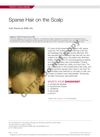
A 5-year-old girl has sparse, dry, and brittle hair but is otherwise healthy.
July 2018 in “Elsevier eBooks” Early treatment is key to prevent permanent hair loss from scalp conditions that cause scarring.
January 2018 in “Indian Dermatology Online Journal” A child with Olmsted syndrome showed mild improvement in hair and skin issues with treatment.
May 2017 in “Journal of the American Academy of Dermatology” Monilethrix is a rare, inherited condition causing fragile hair and hair loss, with no cure but some treatments may help.
 January 2013 in “The Pan African medical journal”
 Monilethrix causes short, fragile hair with no specific treatment available.
January 2004 in “Laboratory Animal Science and Administration” The hairless mutant gene causes early hair loss and affects skin and thymus development in mice.
 November 1966 in “British Journal of Dermatology”
 The meeting discussed various skin conditions, treatments, and unusual cases, highlighting the effectiveness of tetracycline in treating rosacea.
January 1962 in “Archives of Dermatology” A 5-year-old girl has lipoid proteinosis, causing voice issues, hair thinning, skin lesions, and tongue movement problems.

Higher TGF-β signaling may increase skin cancer risk in organ transplant recipients.
157 citations
,
October 2002 in “Journal of Cutaneous Pathology” p63 may influence skin cancer development and cell differentiation.