A woman's Cushing's syndrome caused by adrenal cancer improved after surgery.
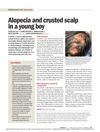
January 1983 in “Archives of Dermatology” Penicillium might rarely cause scalp infection in children.
 March 2026 in “Open MIND”
 Early treatment of scalp infections can prevent permanent hair loss.
 August 2025 in “Drug Design Development and Therapy”
 Current treatments for androgenetic alopecia are complex and promising, but more research is needed.
January 2022 in “Clinical Cases in Dermatology” A 7-year-old girl's scalp infection was cured with oral medication and medicated shampoo.
April 2021 in “Cermin Dunia Kedokteran” Two siblings with tinea capitis improved after treatment with ketoconazole.
April 2021 in “Cermin Dunia Kedokteran” Two siblings with scalp fungus improved after 2 months of treatment.
December 2020 in “Jurnal RSMH Palembang (Online)” A man with a fungal scalp infection got better after treatment with griseofulvin, cetirizine, and ketoconazole shampoo.
 April 2019 in “Dermatology reports”
 A 12-year-old boy's hair fully regrew after 8 weeks of treatment for tinea capitis, and dermoscopy was useful for diagnosis and monitoring.
Griseofulvin is still the best treatment for tinea capitis.
December 2016 in “Indonesian Journal of Tropical and Infectious Disease/Indonesian Journal of Tropical an Infectious Disease” Double pulse dose terbinafine effectively treats kerion type of tinea capitis.
 February 2013 in “Journal of the American Academy of Dermatology”
 A woman's hair loss looked like a different condition due to her hairstyle, and treatment stopped further hair loss but didn't regrow hair.
 December 2012 in “Faculty Opinions – Post-Publication Peer Review of the Biomedical Literature”
 There are several promising treatments for hair loss, including dutasteride, latanoprost, ketoconazole shampoo, anti-androgens, laser/light treatment, and platelet-rich plasma, but more research is needed.
March 2004 in “Journal of the American Academy of Dermatology” Middle-aged women with cicatricial alopecia/lichen planopilaris responded well to treatments like ketoconazole shampoo and steroids.
 January 2026 in “The mycota”
 Fungal-based ingredients in haircare products offer natural benefits like moisturizing and scalp health, supporting eco-friendly solutions.
 April 2025 in “Medical Science”
 The ketogenic diet may help manage PCOS symptoms but needs more research for long-term effects.
 August 2024 in “Indian Journal Of Clinical Practice”
 A balanced diet and healthy lifestyle help manage PCOS symptoms.

The ketogenic diet might improve certain skin conditions, but more research is needed to confirm its effectiveness.
March 2021 in “Berkala Ilmu Kesehatan Kulit dan Kelamin” The best treatment for male pattern baldness is a combination of topical minoxidil and oral finasteride.
 November 2009 in “Cambridge University Press eBooks”
 Minoxidil and finasteride combined can effectively treat hair loss.

Female pattern hair loss, common in women, can be treated with various methods like minoxidil, anti-androgen treatments, and light therapy, but early intervention and realistic expectations are crucial.
28 citations
,
March 1973 in “The Journal of Clinical Endocrinology & Metabolism” Altered DHEA metabolism in hair follicles may be linked to hair loss in balding men.
 6 citations
,
October 2014 in “Experimental Dermatology”
6 citations
,
October 2014 in “Experimental Dermatology” Prostaglandins and the enzyme AKR1C3 could play a role in skin cancer and hair loss, and further research is needed to understand these mechanisms.
 1 citations
,
January 2021 in “Prague medical report”
1 citations
,
January 2021 in “Prague medical report” Men might have a version of the female disease, polycystic ovarian syndrome, shown by changes in hormone levels and early baldness, but more research is needed to fully understand it.
 April 2026 in “Inflammation and Regeneration”
 AKR1C enzymes in scalp glands decrease with age, possibly affecting hair loss.
Age-related changes in scalp glands may affect hair health, but sulforaphane might help.
As people age, certain enzymes in scalp glands decrease, affecting hair health.
 September 2019 in “Journal of Investigative Dermatology”
 Targeted therapy with Ustekinumab significantly improved a skin condition called ILVEN, which is caused by mutations in the CARD14 gene.
 September 2017 in “Journal of Investigative Dermatology Symposium Proceedings”
 Prostaglandin D2 increases testosterone production in skin cells through a process involving reactive oxygen species, which could be a new target for treating hair loss and other skin conditions driven by testosterone.
 January 2022 in “Current Enzyme Inhibition”
 New nonsteroidal molecules can potentially increase dihydrotestosterone in neurons by blocking certain enzymes, without affecting prostate and seminal vesicle weight.