1 citations
,
January 1976 in “Clinical Science” Minoxidil with a diuretic effectively lowers blood pressure in moderately hypertensive men with minimal side effects.
January 2021 in “Asian Journal of Research in Dermatological Science” May 2026 in “Aesthetic Plastic Surgery”  October 2007 in “Inpharma Weekly” 5 citations
,
February 1985 in “Archives of Dermatology”
October 2007 in “Inpharma Weekly” 5 citations
,
February 1985 in “Archives of Dermatology” Topical minoxidil can help regrow hair in some people.
January 2006 in “The Chinese Journal of Clinical Pharmacology” 2.2% minoxidil gel effectively and safely treats alopecia areata.
1 citations
,
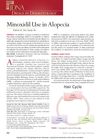
January 2011 in “Journal of the American Academy of Dermatology” The combination of minoxidil and cyclosporine improved hair growth in short anagen syndrome.
 1 citations
,
August 2017
1 citations
,
August 2017 Minoxidil helps stimulate hair growth and enlarge small follicles in common hair loss, but doesn't stop it, and its effects can be boosted when combined with finasteride.
 52 citations
,
February 1985 in “Archives of Dermatology”
52 citations
,
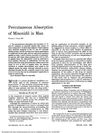
February 1985 in “Archives of Dermatology” Minoxidil absorbs poorly through skin, with low risk of side effects at 1-2% concentration.
February 2023 in “Reactions Weekly”  November 2024 in “Skin Health and Disease”
 Minoxidil is effective for promoting hair growth and has various dermatological uses.
November 2008 in “Central Plains Medical Journal” Combining zinc with 2% minoxidil is effective for long-term treatment of hair loss.
 40 citations
,
September 2017 in “F1000Research”
40 citations
,
September 2017 in “F1000Research” Oral minoxidil effectively reduces hair shedding in women with CTE, with no major side effects.
 17 citations
,
April 2002 in “Contact Dermatitis”
17 citations
,
April 2002 in “Contact Dermatitis” Minoxidil 5% caused skin discoloration in a man using it for hair loss.
 17 citations
,
October 2013 in “F1000Research”
17 citations
,
October 2013 in “F1000Research” A 2-year-old boy grew excessive hair after using minoxidil for hair loss, but it improved when the treatment stopped.
 18 citations
,
March 1984 in “BMJ”
18 citations
,
March 1984 in “BMJ” Minoxidil helps hair regrowth in alopecia, but more research needed.
January 2026 in “Revista Colombiana de Ciencias Químico Farmacéuticas” Combining Minoxidil and finasteride is more effective for hair growth but may cause side effects.
 13 citations
,
April 2009 in “Acta Medica Scandinavica”
13 citations
,
April 2009 in “Acta Medica Scandinavica” Minoxidil lowers blood pressure and causes hair growth, with some side effects.
 9 citations
,
February 2022 in “European Journal of Pharmaceutics and Biopharmaceutics”
9 citations
,
February 2022 in “European Journal of Pharmaceutics and Biopharmaceutics” A new treatment for hair loss uses tiny lipid carriers to deliver a mix of minoxidil and latanoprost directly to hair follicles, promoting hair growth and being well tolerated by the skin.
April 2021 in “International Journal of Research in Dermatology” The combination of minoxidil and finasteride is more effective for hair growth than minoxidil alone.
The 2% minoxidil cream is stable, spreads well on the skin, and helps with hair growth.

Combining minoxidil with other treatments like finasteride or PRP improves hair growth and satisfaction more than using minoxidil alone.
 26 citations
,
April 1977 in “PubMed”
26 citations
,
April 1977 in “PubMed” Minoxidil, a blood pressure drug, can cause excessive hair growth, but this can be successfully treated with a hair removal agent called calcium thioglycolate.
December 2025 in “Journal of Pharmacy And Bioallied Sciences” Trichoscopy effectively shows early positive effects of minoxidil in male pattern hair loss, improving patient satisfaction.
 September 2025 in “Editora Pasteur eBooks”
 Low-dose oral minoxidil is as effective as or better than topical minoxidil for hair growth but may cause mild side effects.
 February 2026 in “Drug Delivery and Translational Research”
 Chitosan-coated nanocapsules improve minoxidil delivery for better hair regrowth.
2 citations
,
October 2012 in “Indian Journal of Dermatology, Venereology and Leprology” Minoxidil may help reduce early hair loss after a hair transplant.
 34 citations
,
February 1992 in “The Journal of Clinical Endocrinology and Metabolism”
34 citations
,
February 1992 in “The Journal of Clinical Endocrinology and Metabolism” Finasteride and minoxidil together promote hair growth better than either alone.
January 2008 in “Acta Anatomica Sinica” Minoxidil promotes hair growth by delaying the hair's resting phase.
44 citations
,
January 1997 in “British Journal of Dermatology” Stopping 5% topical minoxidil can reverse unwanted hair growth on the face and limbs.