7 citations
,
October 1988 in “Clinics in Dermatology” Minoxidil may help hair regrowth in alopecia areata by affecting T-cells.
May 2021 in “Faculty Opinions – Post-Publication Peer Review of the Biomedical Literature” July 2021 in “Faculty Opinions – Post-Publication Peer Review of the Biomedical Literature” 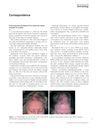 12 citations
,
November 2011 in “International Journal of Dermatology”
12 citations
,
November 2011 in “International Journal of Dermatology” A woman developed a scalp condition from using minoxidil, which improved with a different treatment but left scarring.
 38 citations
,
October 1988 in “Clinics in Dermatology”
38 citations
,
October 1988 in “Clinics in Dermatology” Minoxidil can help grow hair and make hair follicles bigger, but it can also cause side effects.
 January 2023 in “Skin appendage disorders”
 Minoxidil, platelet-rich plasma, and microneedling all help with pattern hair loss, but their effectiveness varies.
June 2025 in “British Journal of Dermatology” Low-dose oral minoxidil is increasingly used by dermatologists in the UK and Ireland to treat various hair loss conditions.
 April 2024 in “Journal of the American Academy of Dermatology”
 Low-dose minoxidil helps hair grow longer and thicker in people with short anagen syndrome.

The new minoxidil gel may improve hair loss treatment by staying on the scalp longer and penetrating better.
 19 citations
,
October 2017 in “European Journal of Pharmaceutics and Biopharmaceutics”
19 citations
,
October 2017 in “European Journal of Pharmaceutics and Biopharmaceutics” The gel made of minoxidil and hydroxypropyl-β-cyclodextrin improves hair growth and is good for long-term use.
 August 2016 in “International journal of scientific research”
 Using minoxidil with finasteride in a cream helps maintain hair thickness after stopping oral finasteride.
 2 citations
,
March 2021 in “Journal of Cosmetic Dermatology”
2 citations
,
March 2021 in “Journal of Cosmetic Dermatology” Combining platelet-rich plasma therapy with low dose oral minoxidil improved hair growth in men with hair loss, with slightly higher satisfaction at the higher minoxidil dose.
 April 2020 in “Dermatology and therapy”
  April 2024 in “Journal of dermatology research reviews & reports”
 Using a laser helmet with Minoxidil works better for male hair loss than Minoxidil alone, with no extra side effects.
 27 citations
,
September 2018 in “Medicines”
27 citations
,
September 2018 in “Medicines” Oleic acid nanovesicles improve minoxidil absorption in hair follicles for alopecia treatment.
March 2026 in “Journal of the American Academy of Dermatology” Lower doses of oral minoxidil can promote hair growth without major heart risks.
 January 2015 in “Przegla̧d dermatologiczny”
 Intralesional triamcinolone is the most effective treatment for alopecia areata, followed by excimer light therapy, and then topical minoxidil. The scalp responds better to treatment than the beard area.
 5 citations
,
October 1988 in “Clinics in Dermatology”
5 citations
,
October 1988 in “Clinics in Dermatology” Minoxidil promotes hair growth but exact mechanism is unknown.
December 2019 in “Arak Medical University Journal” Adding 7% chamomile extract to minoxidil reduces skin side effects in treating male hair loss.
 May 2026 in “Journal of the American Academy of Dermatology”
 Sublingual minoxidil safely increases hair growth in transgender people on testosterone therapy.
 July 2023 in “International journal of advanced research in medical and pharmaceutical sciences”
 The gel combining minoxidil and Aloe vera could be an effective, non-irritating treatment for hair loss.
 January 2025 in “Dermatologic Therapy”
 Low-dose oral minoxidil may help with symptoms and hair regrowth in lichen planopilaris without serious side effects.
 10 citations
,
February 2016 in “Anais Brasileiros de Dermatologia”
10 citations
,
February 2016 in “Anais Brasileiros de Dermatologia” Topical minoxidil can cause excessive hair growth in children, so use it carefully.
 September 2023 in “Journal of Cosmetic Dermatology”
 Minoxidil, a hair loss treatment, may help nails grow faster.
4 citations
,
March 1991 in “Dermatitis” Minoxidil can cause skin reactions, so testing is important for those with side effects.
March 2008 in “International Society of Hair Restoration Surgery” Minoxidil and finasteride help treat hair loss in men.
August 2022 in “International Journal of Dermatology” Low-dose oral and sublingual minoxidil seem safe for children with hair disorders.
 August 2023 in “Journal of Cosmetic Dermatology”
 Both minoxidil-spironolactone and minoxidil-finasteride treatments work for hair loss, but minoxidil-spironolactone is slightly more effective, especially in women.
January 2009 in “Gynäkologische Endokrinologie” Minoxidil solution can effectively treat hair thinning in women.
 May 2013 in “Reactions Weekly”
 Using minoxidil can cause severe skin reactions in some people.