 78 citations
,
April 1994 in “Archives of dermatology”
78 citations
,
April 1994 in “Archives of dermatology” The study found that Keratosis Pilaris Atrophicans is a genetic skin condition that starts in childhood, involves inflammation and scarring, and current treatments are only somewhat effective.
42 citations
,
August 1995 in “British journal of dermatology/British journal of dermatology, Supplement” RXR-alpha is strongly expressed in both normal and psoriatic skin and may help in skin cell differentiation and hair growth.
33 citations
,
May 2017 in “Journal of Clinical Oncology” ETC-159 was safe up to 30 mg, but no tumor shrinkage was seen.
 28 citations
,
February 2012 in “PLoS ONE”
28 citations
,
February 2012 in “PLoS ONE” A PKP1 gene mutation causes skin fragility and hair loss in Chesapeake Bay retriever puppies.
9 citations
,
June 2014 in “Molecular biology reports” KAP9.2 and Hoxc13 genes are important for cashmere growth and vary in activity during different stages.
1 citations
,
July 2024 in “Journal of Investigative Dermatology” TAK-279 effectively reduces psoriasis symptoms and is safe.
21 citations
,
September 2019 in “Journal of the American Academy of Dermatology” Ixekizumab effectively treats generalized pustular psoriasis.
 April 2017 in “Journal of Investigative Dermatology”
 Triptolide effectively and safely reduces actinic keratosis lesions in mice.
 4 citations
,
June 2020 in “Journal of Cosmetic Dermatology”
4 citations
,
June 2020 in “Journal of Cosmetic Dermatology” The edge out punch is a tool that lowers the chance of damaging hair follicles during hair transplant surgery.
 May 2024 in “bioRxiv (Cold Spring Harbor Laboratory)”
 KAP-depleted hair causes less immune response and is more biocompatible for implants.
 January 2026 in “http://isrctn.com/”
 The food supplement may help reduce hair shedding and improve hair growth.
35 citations
,
January 2006 in “Cancer Research” Mice with extra PKCδ resist chemical-induced skin cancer but not UV-induced.
September 2013 in “Oncology Times” Oncology specialists are disappointed by the discontinuation of the effective lymphoma treatment Bexxar.
34 citations
,
April 1982 in “BMJ” 24 citations
,
February 2002 in “The journal of investigative dermatology/Journal of investigative dermatology” Two new proteins, hKAP1.6 and hKAP1.7, are found in the hair follicle cortex.
1 citations
,
February 2024 in “Preprints.org” Ginsenoside compound K shows promise for treating metabolic diseases like obesity and diabetes, but more research is needed on its safety and effectiveness.
98 citations
,
May 2016 in “Genes” Understanding wool keratin-associated proteins in sheep can help improve wool quality through selective breeding.
 November 2023 in “Materials Today Bio”
 The new treatment using nanoparticles with ISX9 can effectively regrow hair without major side effects.
 April 2026 in “Tissue Engineering and Regenerative Medicine”
 The GPRC6A-Duox1 axis helps control hair growth and loss by affecting hydrogen peroxide production.
June 2023 in “Clinical Cosmetic and Investigational Dermatology” Pentoxifylline effectively improves pretibial pruritic papular dermatitis.
4 citations
,
April 2025 in “Antioxidants” Alpha-ketoglutarate protects rabbit skin cells from oxidative damage by activating a specific cell pathway.
 4 citations
,
September 2010 in “Journal of Dermatological Science”
4 citations
,
September 2010 in “Journal of Dermatological Science” A new gene location for Keratosis follicularis squamosa was found on chromosome 7p14.3-7p12.1.
 26 citations
,
March 2018 in “Dermatology and Therapy”
26 citations
,
March 2018 in “Dermatology and Therapy” EPC-CM can reduce skin aging signs by boosting the skin's defense system.
16 citations
,
March 2023 in “Gels” Paeonol-loaded gels may help reduce inflammation and skin damage in atopic dermatitis.
 17 citations
,
January 2010 in “Acta Dermato Venereologica”
17 citations
,
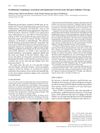
January 2010 in “Acta Dermato Venereologica” EGFR inhibitors can cause yellowish skin eruptions.
September 2023 in “Journal of the American Academy of Dermatology” Oral difelikefalin significantly reduces itch in notalgia paresthetica.
March 2026 in “Experimental Dermatology” The new model helps understand and develop treatments for genetic skin disorders like AEC.
 6 citations
,
April 2010 in “Cellular Reprogramming”
6 citations
,
April 2010 in “Cellular Reprogramming” Pig skin cells can turn into mesodermal cells but lose their ability to become neural cells.
 1 citations
,
January 2023 in “Biochemical and biophysical research communications”
1 citations
,
January 2023 in “Biochemical and biophysical research communications” Keratin 79 is linked to liver damage and may help diagnose liver diseases.
5 citations
,
March 2020 in “Thoracic Cancer” CT-707 is effective and safe for treating certain Chinese lung cancer patients.