41 citations
,
July 2016 in “Journal of Investigative Dermatology” Dysplastic nevi have unique gene expressions, making them distinct from common melanocytic nevi.
30 citations
,
June 2022 in “Animals” Key genes, including KRT39 and KRT74, influence hair length in Inner Mongolia cashmere goats.
30 citations
,
January 2013 in “Human Mutation” A mutation in the HOXC13 gene causes hair and nail problems in a Syrian family.
29 citations
,
October 2017 in “Journal of proteomics” The research found specific proteins that affect fiber characteristics and hair growth in sheep and goats.
29 citations
,
July 2015 in “Journal of Medical Genetics” A genetic variant in the KRT25 gene causes tightly curled hair.
27 citations
,
November 2007 in “Genomics” Mutations in specific keratin genes cause improper hair structure in mice due to faulty keratin protein assembly.
18 citations
,
August 2015 in “International Journal of Molecular Sciences” Ovine hair follicle stem cells can regenerate haired skin and may improve wool production.
17 citations
,
March 2012 in “Journal of biological chemistry/The Journal of biological chemistry” Hairless protein affects hair follicle structure by regulating the Dlx3 gene.
15 citations
,
May 2014 in “Journal of Biological Chemistry” A chimeric keratin partially improved skin structure in mice lacking keratin 5, but didn't fully restore normal skin.
 12 citations
,
February 2008 in “Journal of The American Academy of Dermatology”
12 citations
,
February 2008 in “Journal of The American Academy of Dermatology” Combining skin tissue pathology with genetics has greatly improved the diagnosis and understanding of certain skin diseases.
 11 citations
,
October 2018 in “The Journal of Dermatology”
11 citations
,
October 2018 in “The Journal of Dermatology” Decorin helps keep hair follicle stem cells and may prevent age-related hair loss.
10 citations
,
August 2020 in “Current protocols in stem cell biology” Scientists developed a way to create skin and hair cells from human stem cells, which could help treat burns and restore hair.
9 citations
,
August 2024 in “International Journal of Molecular Sciences” Promising treatments for EBS include anti-inflammatory drugs, antibiotics, creams, mTOR inhibitors, and gene editing, but more trials are needed.
9 citations
,
May 2021 in “JEADV. Journal of the European Academy of Dermatology and Venereology/Journal of the European Academy of Dermatology and Venereology” Topical minoxidil may help treat a rare genetic hair condition with no fully effective treatments yet.
6 citations
,
January 2022 in “Gene” Scientists found 53 keratin genes in yaks that are important for hair growth and share similarities with those in other animals.
 6 citations
,
July 2015 in “Journal of Investigative Dermatology”
6 citations
,
July 2015 in “Journal of Investigative Dermatology” Chicken feather gene mutation helps understand human hair disorders.
 3 citations
,
October 2022 in “Frontiers in Surgery”
3 citations
,
October 2022 in “Frontiers in Surgery” Proteomics combined with other technologies can lead to a better understanding of skin diseases.
 3 citations
,
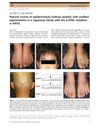
January 2019 in “Journal of Dermatology”
3 citations
,
January 2019 in “Journal of Dermatology” The p.P25L mutation in the KRT5 gene causes a rare skin condition that worsens over time and may lead to hair loss starting in young adulthood.
2 citations
,
September 2017 in “Biotechniques/BioTechniques” Researchers created a mouse cell line to study hair growth and test hair growth drugs.
1 citations
,
October 2017 in “Frontiers in Physiology” Hair follicle keratin may have been used in tooth enamel evolution.
 June 2026 in “Communications Biology”
 Hoxc13 and hair keratin are needed for forming rough skin on frog mating pads.
 May 2026 in “Journal of Health and Allied Sciences NU”
 Optimized culture conditions improve human epidermal stem cell growth for skin regeneration.
 April 2026 in “Frontiers in Cell and Developmental Biology”
 CD200- cells in hair follicles have a higher ability to regenerate hair.
 April 2026 in “Institutional Repositories DataBase (IRDB)”
 CD200- cells in hair follicles have a higher ability to regenerate hair.
 February 2026 in “bonndoc (University of Bonn)”
 New gene variants were found for rare skin and hair disorders, improving understanding and treatment.
 December 2025 in “Frontiers in Veterinary Science”
 Key genes like KRT27 and IGF-2 are crucial for hair follicle development in Qianhua Mutton Merino sheep.
 October 2025 in “Frontiers in Veterinary Science”
 Key proteins affecting cashmere fiber quality were identified for better breeding.
Genes and metabolites affect cashmere fiber thickness, which can improve cashmere quality.
July 2025 in “Journal of Investigative Dermatology” Scarring alopecia involves increased immune cells and specific gene changes near damaged hair follicles.
A KRT32 gene variant causes loose anagen hair syndrome.