34 citations
,
September 2019 in “ACS Biomaterials Science & Engineering” Probiotic nanoscaffolds significantly improved burn healing and infection control in mice.
December 2025 in “Regenerative Biomaterials” The hydrogel effectively heals diabetic wounds by reducing inflammation, providing oxygen, and preventing infection.
 May 2017 in “Journal of The American Academy of Dermatology”
 PLAU and SerpinB2 affect cell death differently in various forms of leprosy and could be targets for new treatments.
 1 citations
,
August 2023 in “Military Medical Research”
1 citations
,
August 2023 in “Military Medical Research” Smart hydrogel dressings could improve diabetic wound healing by adjusting to wound conditions and controlling drug release.
July 2024 in “Journal of Investigative Dermatology” ATR12-351 ointment safely delivers LEKTI protein to the skin, reducing enzyme activity in Netherton syndrome.
Equine hoof progenitor cells can help develop therapies for hoof diseases like laminitis.
8 citations
,
February 2022 in “PLoS ONE” Bacillus subtilis strain Ydj3 boosts sweet pepper growth, yield, and vitamin C by colonizing roots.
 4 citations
,
October 2022 in “Microbial Cell Factories”
4 citations
,
October 2022 in “Microbial Cell Factories” Certain bacteria from the Citrullus colocynthis plant may be a new source of antibiotics to fight drug-resistant diseases.
8 citations
,
January 2019 in “Journal of cosmetic dermatology” Modified phenol peels effectively reduced stubborn skin pigmentation in patients with Lichen Planus Pigmentosus.
 1 citations
,
March 2019 in “International Journal of Current Pharmaceutical Research”
1 citations
,
March 2019 in “International Journal of Current Pharmaceutical Research” The essential oils from Hedyotis corymbosa, Inula racemose, and Holostemma adakodien have significant antibacterial and antifungal properties.
 4 citations
,
April 2022 in “International Journal of Biological Macromolecules”
4 citations
,
April 2022 in “International Journal of Biological Macromolecules” The mix of bacterial cellulose and soybean protein helps wounds heal faster, regrow hair, and reduces scarring and inflammation.
August 2025 in “Marine Drugs” The new composite material is safe and has anticoagulant properties.
January 2026 in “Materials Today Bio” The hydrogel speeds up diabetic wound healing by reducing inflammation and promoting skin repair.
 4 citations
,
July 2024 in “Cureus”
4 citations
,
July 2024 in “Cureus” The treatment improved neck wrinkles and skin laxity.
6 citations
,
October 2024 in “Frontiers in Bioengineering and Biotechnology” A special hydrogel helps stem cells heal wounds better by boosting growth factors.
The new hydrogel helps heal burn wounds better than current options by reducing bacteria and inflammation.
 July 2023 in “Journal of exploratory research in pharmacology”
 A new psoriasis lotion called "Psorisbye" improved symptoms in a patient within one week.
NIMO-CH hydrogel effectively heals wounds with minimal scarring and promotes hair growth.
February 2025 in “Drug Delivery and Translational Research” 14 citations
,
January 2014 in “Tropical Journal of Pharmaceutical Research” Urtica dioica L. extract may help treat tinea corporis but is less effective than terbinafine.
 4 citations
,
July 2021 in “Armaghane Danesh”
4 citations
,
July 2021 in “Armaghane Danesh” These plant extracts can kill some bacteria.
83 citations
,
September 2021 in “Advanced functional materials” The DNA hydrogel helps heal diabetic wounds by absorbing fluids, warming, sticking to tissue, killing bacteria, and aiding tissue and hair regrowth.
2 citations
,
July 2024 in “Biomedicines” Bone marrow cells improved tendon health better than platelet-rich plasma.
Urtica dioica L. extract may help treat skin fungus but is less effective than standard treatment.
 June 2014 in “Basic & Clinical Pharmacology & Toxicology”
 Some plant extracts may treat livestock diseases, certain animal treatments are safe and effective, but more research on drug safety and resistance is needed.
 January 2024 in “Brazilian Journal of Hair Health”
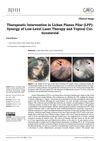
 Combining low-level laser therapy with topical corticosteroids effectively improved Lichen Planopilaris symptoms.
A new hydrogel made from human hair keratin can help regenerate skin and fight bacteria.
 February 2024 in “Jurnal Kesehatan Yamasi Makassar”
 Pondoh salak fruit peel extract is effective in shampoo and has strong antimicrobial properties.
 1 citations
,
June 2025 in “Journal of Materials Science Materials in Medicine”
1 citations
,
June 2025 in “Journal of Materials Science Materials in Medicine” AgVO₃-HAp/GO@PCL scaffolds improve wound healing and tissue regeneration effectively.
July 2025 in “Carbohydrate Polymers” The green alga Parachlorella sp. has potential for use in cosmetics and health products due to its antioxidant, anti-hypertensive, and hair growth properties.