 4 citations
,
May 2020 in “Journal of The American Academy of Dermatology”
4 citations
,
May 2020 in “Journal of The American Academy of Dermatology” Cicatricial pattern hair loss is likely advanced common baldness, not a type of lichen planopilaris.
71 citations
,
June 1993 in “Journal of Investigative Dermatology” Lactobacillus and fermented Korean berry can help hair grow faster.
 7 citations
,
January 2012 in “International Journal of Trichology”
7 citations
,
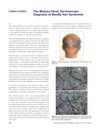
January 2012 in “International Journal of Trichology” A man with Woolly Hair Syndrome had very curly, fragile hair, and doctors used a special scalp examination to diagnose him without invasive tests.
 November 2025 in “Clinical Cosmetic and Investigational Dermatology”
 LIPH mutations cause woolly hair in some Chinese people.
April 2016 in “Journal of the American Academy of Dermatology” A 4-year-old girl had a rare hair disorder affecting only part of her scalp.
30 citations
,
January 1963 in “PubMed” May 2023 in “Pharmaceuticals” Three specific mutations in the LIPH gene can cause hair loss by damaging the protein's structure and function.
July 2026 in “Journal of the American Academy of Dermatology” April 2016 in “Journal of the American Academy of Dermatology” Treatment improved some symptoms but not all.
53 citations
,
July 2002 in “Journal of Investigative Dermatology” The Dfl mutation in mice causes poor sebaceous gland function and complete hair loss.
2 citations
,
July 2013 in “PubMed” The pubic hair loss was likely due to anorexia nervosa.
124 citations
,
April 1992 in “Journal of Endocrinology/Journal of endocrinology” Beard hair follicles have more androgen receptors than non-balding scalp hair follicles.
 44 citations
,
September 2019 in “The EMBO Journal”
44 citations
,
September 2019 in “The EMBO Journal” Lymphatic vessels are essential for hair follicle growth and skin regeneration.
December 2011 in “URMIA MEDICAL JOURNAL” Glycoconjugate sugars are important for hair follicle development.
136 citations
,
July 2014 in “Proceedings of the National Academy of Sciences of the United States of America” FGF5 gene mutations cause unusually long eyelashes by affecting hair growth regulation.
 July 2024 in “Biological and Pharmaceutical Bulletin”
 Licorice extract helps hair growth and may treat hair loss.
November 2016 in “The Molecular Biology Society of Japan” 22 citations
,
December 1991 in “PubMed” September 2024 in “Dermatology Reports” Sonidegib often causes hair loss, and LC-OCT helps identify early signs.
29 citations
,
January 2003 in “Genomics” A new mouse mutation causes skin and hair issues, influenced by another gene.
15 citations
,
November 1983 in “British journal of dermatology/British journal of dermatology, Supplement” Testosterone increases hamster hair growth; cyproterone acetate reduces it.
 8 citations
,
March 2019 in “Progress in Human Geography”
8 citations
,
March 2019 in “Progress in Human Geography” Hair significantly shapes body identity and social interactions, influencing how we perceive and relate to our bodies.
 65 citations
,
August 2007 in “Experimental Dermatology”
65 citations
,
August 2007 in “Experimental Dermatology” Human hair follicles can make and process prostaglandins, which may affect hair growth.
January 1981 in “Purdue e-Pubs (Purdue University)” Pig skin is similar to human skin, with no major changes as they age.
 December 2022 in “The journal of pediatrics/The Journal of pediatrics”
 A young girl's foot lesion was actually a rare condition caused by a hair fragment under the skin, not a parasite.
Transplanted rat hair follicles grew hair and had increased but not fully restored nerve connections in mice.
 27 citations
,
January 2006 in “Colloids and Surfaces B: Biointerfaces”
27 citations
,
January 2006 in “Colloids and Surfaces B: Biointerfaces” Researchers found that bulge cells from human hair can grow quickly in culture and have properties of hair follicle stem cells, which could be useful for skin treatments.
 January 2019 in “Global Dermatology”
 Genetic hair shaft abnormalities can be seen with microscopes and often affect scalp hair.
 17 citations
,
November 2018 in “Dermatology”
17 citations
,
November 2018 in “Dermatology” Most patients with frontal fibrosing alopecia had facial bumps, with Hispanic/Latino and premenopausal women being more affected, suggesting a more severe condition.