23 citations
,
December 1991 in “Annals of the New York Academy of Sciences” Balding scalps slow down hair growth.

Glycyrrhizic acid and licorice extract can significantly reduce unwanted hair growth.
 May 2026 in “Scientific Reports”
 Overexpression of LRIG3 in skin causes hair loss.

Hairlessness in mammals is caused by combined changes in genes and regulatory regions.
7 citations
,
June 2012 in “Journal of dairy science” Bovine milk fats applied to mouse skin can promote hair growth similar to known hair growth treatments.
18 citations
,
January 2015 in “Journal of medical genetics” New genes linked to woolly hair have been found, which could help treat it and change hair texture.
May 2002 in “Therapeutische Umschau” Hypertrichosis and hirsutism can cause psychological issues, with laser treatments being the most promising for permanent hair removal.
3 citations
,
May 2002 in “PubMed” The document concludes that treatment for excessive hair growth depends on the cause, with options including hair removal methods and medications like anti-androgens or insulin-sensitizing drugs.
1 citations
,
January 1963 in “The Anatomical Record” Glyceride levels in mouse skin are higher during hair growth.
 196 citations
,
March 2016 in “Nature Communications”
196 citations
,
March 2016 in “Nature Communications” Genetic factors influence hair traits like shape, color, and greying in Latin Americans.
 1 citations
,
September 2016 in “Dermatologic Surgery”
1 citations
,
September 2016 in “Dermatologic Surgery” New hair loss subtype found, mimics common baldness.
5 citations
,
March 2016 in “CRC Press eBooks” Hirsutism treatments can slow new hair growth, but existing hair needs removal, and eflornithine helps reduce hair growth.
 April 2022 in “Our Dermatology Online”
 A woman had unusual hair growth on one side of her chin without a known cause.
1 citations
,
January 2018 in “International Journal of Trichology” Circle hairs are harmless, spiral-shaped body hairs that don't need medical treatment.
April 2017 in “Journal of dermatological science” Removing PLCg1 from skin cells caused thicker oil glands and less hair in mice.
July 2002 in “Journal of Cosmetic Dermatology” Laser and Eflornithine are more effective for hair removal than traditional methods.
5 citations
,
January 1976 in “Journal of Endocrinology” Oriental men may have lower androgen activity affecting hair growth despite similar testosterone levels to Caucasian men.
39 citations
,
July 2005 in “Current medical research and opinion” Topical cream eflornithine 11.5% can slow hair growth and may help reduce hair removal frequency.
January 2000 in “Chinese Journal of Dermatology” Ligustrum lucidum may boost hair growth by maintaining key growth factors.
January 2007 in “Linchuang pifuke zazhi” A 15-year-old boy had a rare skin growth on his buttock.
September 2017 in “Journal of Investigative Dermatology” LRIG1 protein affects hair growth by regulating skin receptors, leading to hair loss when overexpressed.
July 2025 in “Pigment International” Follicular vitiligo causes hair to gray without skin color loss.
 2 citations
,
October 2010 in “Journal of dermatological treatment”
2 citations
,
October 2010 in “Journal of dermatological treatment” External treatments can change hair growth patterns in nude mice.
 February 2022 in “CRC Press eBooks”
 Hair disorders include hair loss, excessive hair growth, and ingrown hairs, with various treatments available depending on the cause.
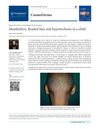 January 2026 in “Cosmoderma”
 A 9-year-old girl has a rare hair disorder causing beaded, sparse hair.
December 2004 in “PLoS ONE” The Foxn1(-/-) phenotype disrupts hair growth and affects skin stem cells.
Hairless mammals evolved quickly in both gene and non-gene areas related to skin and hair.
13 citations
,
August 2005 in “Journal of Investigative Dermatology Symposium Proceedings” Mutations in the DSG4 gene cause fragile, sparse hair in humans, mice, and rats.
 77 citations
,
July 2020 in “Cell”
77 citations
,
July 2020 in “Cell” Muscles and nerves that cause goosebumps also help control hair growth.
20 citations
,
December 2010 in “Journal of Morphology” Lizard claws have hair-like keratins similar to those in mammals.