 42 citations
,
February 2021 in “Signal Transduction and Targeted Therapy”
42 citations
,
February 2021 in “Signal Transduction and Targeted Therapy” Hair follicle regeneration possible, more research needed.
31 citations
,
January 2019 in “Frontiers in Veterinary Science” Laser therapy improved surgical scar healing in dogs.
27 citations
,
July 2013 in “The journal of investigative dermatology/Journal of investigative dermatology” Lasers have become precise tools in skin treatment and diagnosis, with ongoing advancements improving their effectiveness.
 26 citations
,
March 1986 in “Clinical and Experimental Dermatology”
26 citations
,
March 1986 in “Clinical and Experimental Dermatology” Scalp hair grows at 0.37 mm/day, forearm hair at 0.18 mm/day, and thigh hair at 0.30 mm/day, with no significant differences found in people with certain hair conditions.
 16 citations
,
January 2019 in “Skin appendage disorders”
16 citations
,
January 2019 in “Skin appendage disorders” Intralesional corticosteroids work best for mild alopecia areata, and DPCP works best for moderate to severe cases.
11 citations
,
September 2021 in “Lasers in Medical Science” 10 citations
,
May 2024 in “Lasers in Surgery and Medicine” Laser hair removal effectively reduces hidradenitis suppurativa symptoms with few side effects.
 8 citations
,
November 2019 in “Dermatologic Clinics”
8 citations
,
November 2019 in “Dermatologic Clinics” AGA treatments like minoxidil and LLLLT are safe and effective for gender minority patients.
4 citations
,
June 2025 in “Journal of Cosmetic Dermatology” The triple-wavelength diode laser effectively and safely reduces hair and improves skin appearance in people with darker skin.
 4 citations
,
September 2021 in “Biomolecules”
4 citations
,
September 2021 in “Biomolecules” Using Platelet-Rich Plasma and Adipose-Derived Mesenchymal Stem Cells together can improve healing, including wound healing, bone regeneration, and hair growth.
 4 citations
,
July 1992 in “Clinics in Dermatology”
4 citations
,
July 1992 in “Clinics in Dermatology” Skin surgery has significantly advanced since 1950, with improvements in chemical peels, hair restoration, lasers, and Mohs surgery, and the development of less invasive techniques and specialized training.
 2 citations
,
November 2014
2 citations
,
November 2014 Common cosmetic dermatology techniques improve skin damaged by the sun and aging.
 2 citations
,
August 2016 in “Lasers in Surgery and Medicine”
2 citations
,
August 2016 in “Lasers in Surgery and Medicine” Photodynamic therapy can remove nonpigmented hair in mice and might work for humans.
1 citations
,
October 2022 in “Journal of Cosmetic Dermatology” Combining microneedling with 2% minoxidil is more effective and safe for treating female pattern hair loss than using minoxidil alone.
 January 2017 in “Springer eBooks”
 The document explains various skin conditions and their treatments.
 December 2025 in “TURKDERM”
 Facial trichostasis spinulosa is a chronic condition with significant cosmetic impact, especially in young women.
January 2025 in “Dermatologic Therapy” Combining punch excision with superficial X-ray effectively improves keloid scars safely.
January 2024 in “SAGE Open Medical Case Reports” Combining surgery and photodynamic therapy effectively treated a rare scalp condition when other treatments failed.
PRP works well with other treatments for better skin, hair, and scar results.
 April 2019 in “Advances in Cosmetic Surgery”
 The document concludes that ongoing medical therapy is crucial for preventing hair loss, and surgical options can restore hair, with future treatments for hair loss being promising.
 December 2018 in “Lasers in Surgery and Medicine”
 Science improves peace by advancing medical treatments, like laser therapies and non-invasive imaging.

Surgeons should evaluate new technologies critically, offer a range of services including non-surgical options, and be aware of marketing influences to meet patient needs and maintain a successful practice.
 January 2016 in “Georg Thieme Verlag eBooks”
 More East Asians are accepting and getting facial plastic surgery, with a focus on natural-looking results and using both surgical and nonsurgical methods.
November 2015 in “Springer eBooks” Laser hair removal can be effective for people with darker skin tones.
 July 2014 in “Facial Plastic Surgery Clinics of North America”
 Cosmetic surgery should be personalized for different ethnic groups to ensure the best results and patient satisfaction.
 August 2012 in “Nature Cell Biology”
 Hair grows when stem cell offspring in the follicle base proliferate, influenced by the dermal papilla.

Use the least toxic, most specific treatments for skin diseases, considering side effects and individual patient needs.
 May 2006 in “Women's Health Medicine”
 Excessive hair growth in women, often from high androgen levels, is usually caused by PCOS, and can be treated with hair removal, medication, and possibly weight loss.
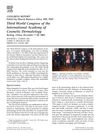 July 2004 in “Clinics in Dermatology”
 The Third World Congress of the International Academy of Cosmetic Dermatology discussed various topics like hair disorders, skin conditions, wound healing, shampoo technology, acne treatment, and the use of lasers in dermatology.
September 2001 in “PubMed”