 March 2026 in “Dermatology Reports”
 FFA has higher long-term remission rates than LPP.
28 citations
,
May 2015 in “Molecular Neurobiology” LSD1 is crucial for regenerating hair cells in zebrafish.
Linalool in personal care products may worsen frontal fibrosing alopecia by damaging hair follicle stem cells and triggering harmful immune responses.
10 citations
,
January 2020 in “Journal of Materials Chemistry B” The biofilm enhances skin healing by promoting cell growth and blood vessel formation.
12 citations
,
June 2020 in “The anatomical record” miR-203a-3p helps hair follicle stem cells become specialized by targeting Smad1.
 6 citations
,
May 2013 in “PloS one”
6 citations
,
May 2013 in “PloS one” The Foxn1(-/-) nude mouse shows disrupted and expanded skin stem cell areas due to high Lhx2 levels.
 24 citations
,
July 2017 in “Structure”
24 citations
,
July 2017 in “Structure” FGF9 controls which receptors it binds to through a process where two FGF9 molecules join, and changes in FGF9 can lead to incorrect receptor activation.
 April 2016 in “Journal of Investigative Dermatology”
 Lymphoid-specific helicase (Lsh) is crucial for skin growth, change, and healing after injury.
1 citations
,
October 2025 in “PLoS ONE” LncRNA RP11-818O24.3 may help treat hair loss by boosting hair follicle stem cell growth and differentiation.
25 citations
,
October 2007 in “Developmental biology” Clim proteins are essential for maintaining healthy corneas and hair follicles.
 September 2025 in “Digital Commons - RU (Rockefeller University)”
 FOXC1 is essential for keeping hair follicle stem cells inactive and maintaining their environment for healthy hair growth.
7 citations
,
August 2019 in “American Journal of Dermatopathology” Frontal fibrosing alopecia on limbs shows permanent inflammatory hair loss, not typical scarring.
 1 citations
,
November 1992 in “Indian Dermatology Online Journal”
1 citations
,
November 1992 in “Indian Dermatology Online Journal” FUE is a popular hair restoration method that uses body hair and leaves no scars.
28 citations
,
December 2001 in “European Journal of Pharmacology” M50054 may help treat hepatitis and hair loss from chemotherapy.
 September 2023 in “Medicina Estética Revista Científica de la Sociedad Española de Medicina Estética (SEME)”
 The FDA approved Litfulo® for treating severe alopecia areata in people aged 12 and older.
 89 citations
,
February 2002 in “Australasian journal of dermatology”
89 citations
,
February 2002 in “Australasian journal of dermatology” A premenopausal woman had hair loss and skin issues, treated with topical steroids.
66 citations
,
June 2004 in “Development” FGF signaling is crucial for starting feather development in chicken embryos.
3 citations
,
May 2016 in “Dermatopathology” Lrig1 could be a marker for advanced sebaceous carcinoma.
22 citations
,
April 2013 in “International Journal of Dermatology” Frontal fibrosing alopecia can occur with lichen planus pigmentosus, needing careful diagnosis and treatment.
 12 citations
,
January 2015 in “Indian Journal of Dermatology, Venereology and Leprology”
12 citations
,
January 2015 in “Indian Journal of Dermatology, Venereology and Leprology” A mother and daughter with similar hair loss conditions and identical HLA types suggest a genetic link between the conditions.
July 2026 in “bioRxiv (Cold Spring Harbor Laboratory)” FAKΔe4 helps cells sense and respond to different stiffness levels in their environment.
3 citations
,
December 2024 in “Stem Cell Reports” Low fucosylation boosts stem cell growth in the eye.
4 citations
,
March 2023 in “Cancer Innovation” Flexible bioelectronics show promise in non-invasive cancer detection and treatment but need improvements in stability and effectiveness.
January 2011 in “Xibei nongye xuebao” The K14 promoter is more active in skin cells than the K5 promoter.
 15 citations
,
May 2003 in “The Laryngoscope”
15 citations
,
May 2003 in “The Laryngoscope” FGF-1 causes spiral ganglion neurites to branch more.
 25 citations
,
March 2013 in “British Journal of Dermatology”
25 citations
,
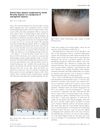
March 2013 in “British Journal of Dermatology” Woman has discoid lupus, frontal fibrosing, and androgenetic alopecia.
 13 citations
,
March 2020 in “Genes”
13 citations
,
March 2020 in “Genes” Disrupting the FGF5 gene in rabbits leads to longer hair by extending the hair growth phase.
 84 citations
,
August 2023 in “Drugs”
84 citations
,
August 2023 in “Drugs” Ritlecitinib is approved in the USA and Japan for treating severe hair loss in people aged 12 and older.
235 citations
,
July 1999 in “Journal of biological chemistry/The Journal of biological chemistry” Human hair is made up of different keratins, some strong and some weak, with specific types appearing at various stages of hair growth.
165 citations
,
December 2004 in “Differentiation” BMP signaling is crucial for skin and hair growth.