11 citations
,
July 2022 in “Frontiers in Immunology” Four specific genes are linked to keloid formation and could be potential treatment targets.
12 citations
,
June 2016 in “Clinical and experimental dermatology” A new genetic mutation in the TRPV3 gene causes Olmsted-like syndrome in a Mongolian family.
1 citations
,
March 2024 in “PubMed” Surgery with a carbon-dioxide laser successfully treated a Labrador's tongue condition, but some hair regrew.
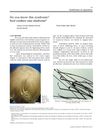
The document concludes that Loose Anagen Hair Syndrome is a benign condition where hair is thin and easily pulled out, often improving with age.
29 citations
,
September 1942 in “Archives of ophthalmology” Vogt-Koyanagi syndrome often leads to partial or complete blindness and responds poorly to treatment.
 2 citations
,
February 1981 in “Journal of the Royal Society of Medicine”
2 citations
,
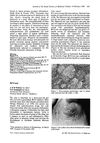
February 1981 in “Journal of the Royal Society of Medicine” A three-year-old girl survived a rare serious infection caused by BCG vaccination, which improved after treatment with a leprosy drug.
2 citations
,
April 1970 in “Archives of Dermatology” Ichthyosis serpentina may be a variant linked to bamboo hair, with a possible genetic component.
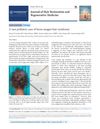
Loose anagen hair syndrome in children may improve with age, but treatment results vary.
10 citations
,
October 2009 in “Photomedicine and laser surgery” IPL treatment can significantly reduce hair in faun tail but may need local anesthesia.
27 citations
,
December 1999 in “American Journal of Dermatopathology” Necrobiosis lipoidica may need new criteria for accurate diagnosis due to similarities with another condition.
 9 citations
,
November 2017 in “Journal of Glaucoma”
9 citations
,
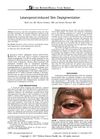
November 2017 in “Journal of Glaucoma” Latanoprost eye drops may cause skin depigmentation.
 1 citations
,
June 2024 in “British Journal of Dermatology”
1 citations
,
June 2024 in “British Journal of Dermatology” Mycophenolate mofetil effectively improved skin pigmentation and itching in a woman with lichen planus pigmentosus and frontal fibrosing alopecia.
3 citations
,
August 2024 in “Molecular Biology Reports” LncRNA018392 helps goat skin cells grow by increasing CSF1R.
333 citations
,
March 2000 in “Proceedings of the National Academy of Sciences” Overexpressing GLI-1 in mice skin can cause tumors like human basal cell carcinomas.
 January 2022 in “Revista Dermatológica Centro Uraga”
 Monilethrix is a genetic hair disorder affecting hair shape, seen in two brothers.
 65 citations
,
November 2004 in “Journal of the American Academy of Dermatology”
65 citations
,
November 2004 in “Journal of the American Academy of Dermatology” Bimatoprost can cause excessive eyelash growth.
6 citations
,
January 2011 in “European Journal of Dermatology” It's important to consider genetic hair disorders when diagnosing hair loss.
 December 2023 in “Communications biology”
 Targeting the HEDGEHOG-GLI1 pathway could help treat keloids.
5 citations
,
August 1925 in “Archives of dermatology” An 8-year-old boy with Recklinghausen's Disease shows various symptoms and is from a family with close genetic ties.
17 citations
,
September 2018 in “Matrix Biology” Laminin-511 is essential for proper melanocyte movement and development in mice.
 2 citations
,
August 2012 in “Journal of the American Academy of Dermatology”
2 citations
,
August 2012 in “Journal of the American Academy of Dermatology” Two patients with the same genetic mutation had both blistering skin and easily pulled out hair.
 July 2022 in “The journal of investigative dermatology/Journal of investigative dermatology”
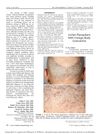
 A patient with a PLEC mutation has epidermolysis bullosa, muscular dystrophy, and myasthenia gravis, which improved with steroid treatment.
 5 citations
,
April 2014 in “The American Journal of Dermatopathology”
5 citations
,
April 2014 in “The American Journal of Dermatopathology” Foreign-body granuloma may be a marker for late-stage Lichen Planopilaris and should be considered in diagnosis.
May 2015 in “European Journal of Paediatric Neurology” ECCL should be considered in patients with specific skin and eye lesions.
16 citations
,
March 2011 in “Ophthalmic genetics” A patient with Birt-Hogg-Dubé Syndrome also had choroidal melanoma, suggesting the need for careful eyelid exams in such patients.
 April 2021 in “BMJ Case Reports”
 Accurate diagnosis of pseudolymphomatous folliculitis is crucial to avoid mistaking it for more serious conditions.
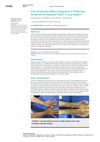
Doctors should consider Netherton syndrome in patients with chronic skin and hair issues to avoid misdiagnosis.
April 2025 in “Journal of Diabetes & Metabolic Disorders” Monitoring TGF-β and linc-PINT expression may help identify and treat high-risk heart arrhythmia patients.
 January 2025 in “Clinical Dermatology Review”
 Trichoscopy helps accurately diagnose Netherton syndrome, often mistaken for atopic dermatitis.
3 citations
,
August 2022 in “International Journal of Molecular Sciences” TSC2-/meth cells can cause skin lesions, hair growth, and lung issues, and may be treated with chromatin remodeling agents.